Do Male Seahorses Give Birth?
Yes, it is accurate to say that male seahorses give birth.
Do male seahorses give birth?
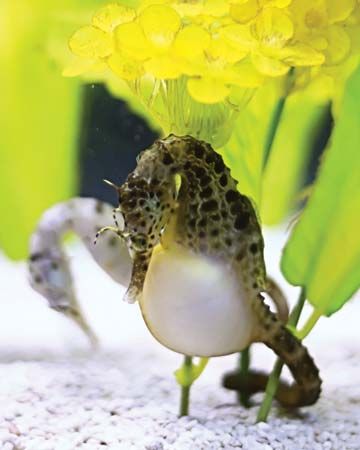
Yes, it is accurate to say that male seahorses give birth.
In this unique reproductive process, the female deposits her eggs into a specialized brood pouch located on the male’s abdomen or tail. The male then fertilizes the eggs within this pouch, where they remain for a period ranging from 10 days to six weeks, depending on the species.12
During this time, the male provides essential care by regulating the pouch’s internal chemistry, providing nutrients and oxygen to the developing embryos. As the pregnancy progresses, he gradually adjusts the fluid within the pouch to match the surrounding seawater. Once the eggs hatch, the male undergoes muscular contractions to expel the fully developed, miniature offspring into the water.12
How long is the typical gestation period for a seahorse?
The typical gestation period for a seahorse ranges from 10 days to six weeks, depending on the specific species.12
While the term “gestation” is traditionally defined in relation to mammals, the male seahorse performs a similar role by carrying fertilized eggs in a specialized brood pouch. During this period, the male provides the developing embryos with nutrients and oxygen while regulating the pouch’s internal chemistry to match the surrounding seawater.132
What is the purpose of the seahorse’s courtship dance?
The courtship dance of the seahorse serves as a vital reproductive behaviour that facilitates mating and ensures successful fertilization. Because seahorses are generally sedentary and possess specialized reproductive roles, this elaborate interaction is essential for synchronizing the pair and preparing the female to deposit her eggs into the male’s brood pouch.25
Broadly, courtship in animals functions as a communication system that helps reduce hostility between potential partners and serves as an isolating mechanism to prevent interbreeding between different species. For seahorses, the dance allows the pair to establish the necessary bond for the female to use her ovipositor to transfer eggs to the male, where they are subsequently fertilized. In some species, this process helps maintain a monogamous pair bond that can last throughout the entire breeding season.6725
Are there other animals where the male cares for the young?
While parental care is most commonly provided by females, there are several species in which the male takes on the primary or exclusive role of caring for the young. This behavior is relatively rare but occurs across various animal groups, often when the benefits of care outweigh the costs for the male.8
Examples of male-only or primary male parental care include:
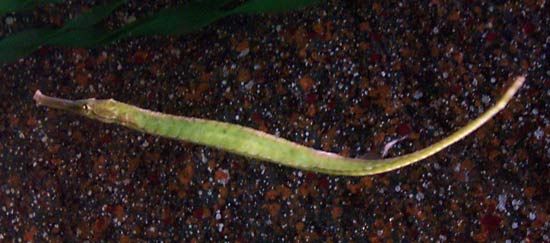
- Syngnathidae (Seahorses and Pipefishes): These are perhaps the most well-known examples, where males possess a specialized brood pouch to carry, nourish, and protect developing eggs until they hatch.82
- Giant Water Bugs: In this family of insects, the female deposits eggs directly onto the male’s back, where he carries and protects them until they are ready to hatch.8
- Mouth-brooding Frogs and Fish: In certain species, males protect the developing offspring by carrying them in their mouths.8
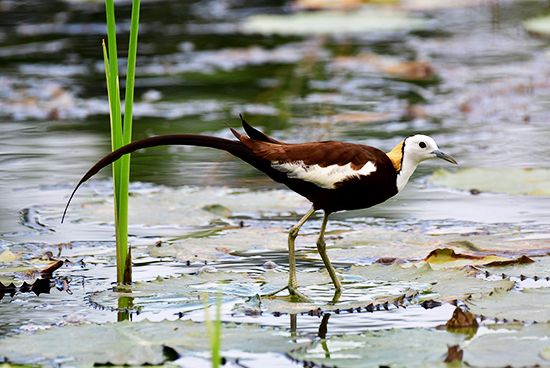
- Shorebirds (e.g., Jacanas): In some bird species, females may lay eggs in the nests of several different males, leaving the males to perform the majority of the incubation and care.8
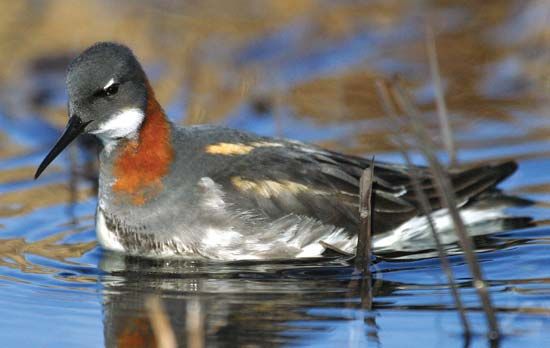
- Phalaropes: These birds exhibit a reversal of typical sex roles; males provide the parental care for the eggs, which allows the females to seek additional mates.1
Sources
- 14 Questions About Aquatic Animals Answered - Which male sea creature keeps its young in a pouch? — Encyclopædia Britannica
- Do male seahorses give birth? — Encyclopædia Britannica
- Why do so few baby seahorses survive? — Encyclopædia Britannica
- Gestation — Encyclopædia Britannica
- seahorse — Encyclopædia Britannica
- Reproductive behaviour - Courtship — Encyclopædia Britannica
- Courtship — Encyclopædia Britannica
- Animal social behavior - Social interactions involving the costs and benefits of parental care — Encyclopædia Britannica
- evolutionary psychology - Searching across species for broad theoretical principles — Encyclopædia Britannica
- How do fish reproduce? — Encyclopædia Britannica
Published on · 2 min read