Why Do So Few Baby Seahorses Survive?
The survival rate of baby seahorses to maturity is remarkably low, with fewer than 1 in 200 individuals surviving. This high mortality rate is primarily due…
Why do so few baby seahorses survive?
The survival rate of baby seahorses to maturity is remarkably low, with fewer than 1 in 200 individuals surviving. This high mortality rate is primarily due to the fact that parents provide no care for their offspring once they are born; the young must fend for themselves immediately.12
Because they are left to survive on their own, baby seahorses are highly vulnerable to ocean currents that may sweep them away from essential, nutrient-rich feeding grounds. Furthermore, they face constant threats from numerous predators in their environment.1
While the male provides a unique form of protection by carrying fertilized eggs in a brood pouch for several weeks, this care ends at birth. Compared to other fish species that release hundreds of thousands of eggs at once, seahorses produce relatively small broods—ranging from 100 to 2,000 eggs—which contributes to the overall low number of survivors.12
How do male seahorses nourish their young inside the brood pouch?
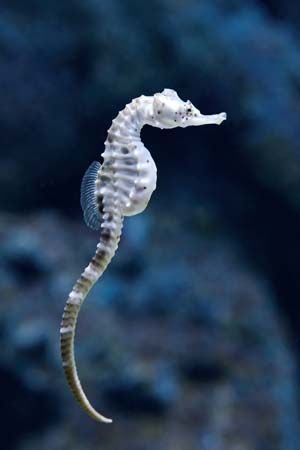
Male seahorses nourish their developing young within a specialized brood pouch through a sophisticated biological process. Once the female deposits her eggs into the pouch, they become embedded in the pouch wall and are coated in a nutrient-rich fluid.32
To support the growing embryos, the male performs several critical functions:
- Chemical Regulation: He gradually adjusts the chemistry of the fluid inside the pouch, transitioning it from his own internal body fluids to salt water as the pregnancy progresses.24
- Nutrient Provision: The male produces inorganic compounds to nourish the young.2
- Hormonal Support: He releases the hormone prolactin, which facilitates the breakdown of proteins originally contributed by the female, making them available for the developing offspring.2
This process ensures the embryos receive necessary oxygen and nutrients until they are ready to hatch and be expelled as miniature versions of the adults.32
What are some of the primary predators that hunt juvenile seahorses?
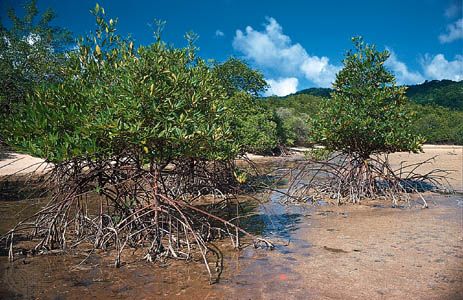
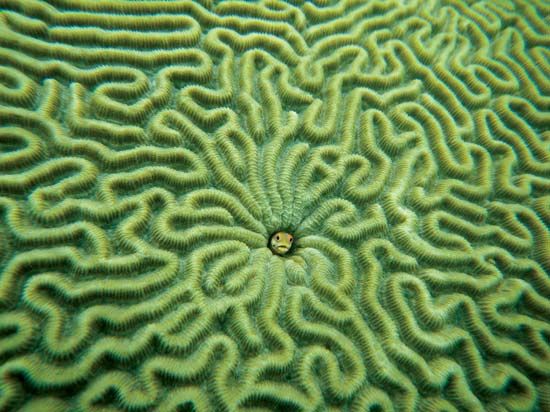
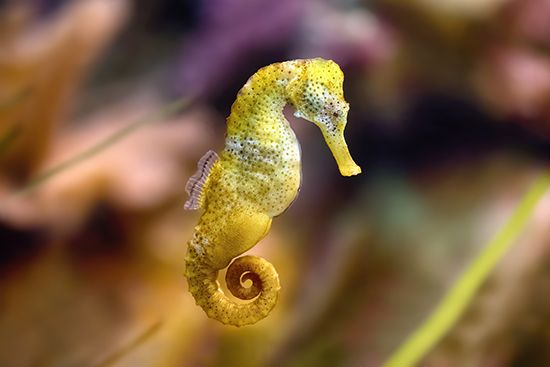
Juvenile seahorses face significant survival challenges due to their small size and lack of parental care after birth. While the provided information does not list every specific predator, it notes that they are vulnerable to various crabs and other fishes that inhabit their coastal environments, such as coral reefs, mangroves, and sea grass beds.21
Because they are essentially defenseless and must fend for themselves immediately upon being expelled from the male’s brood pouch, these young seahorses are highly susceptible to predation. Their survival often depends on their ability to utilize camouflage to blend into their surroundings and avoid detection by these predators.21
How do seahorses use camouflage to survive in their natural habitats?
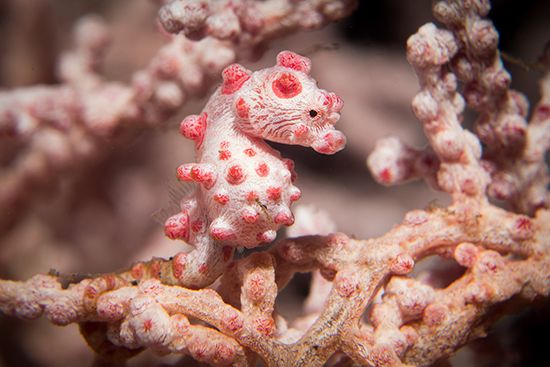
Seahorses utilize a combination of physical adaptations and behavioral strategies to achieve camouflage, which is essential for both avoiding predators and acting as successful ambush predators.52
Their primary methods of concealment include:
- Coloration Changes: Seahorses possess the ability to change their color to match their surroundings, allowing them to blend seamlessly into their environment. This is often achieved through the use of chromatophores—specialized cells that can disperse or concentrate pigments to alter the animal’s appearance.26
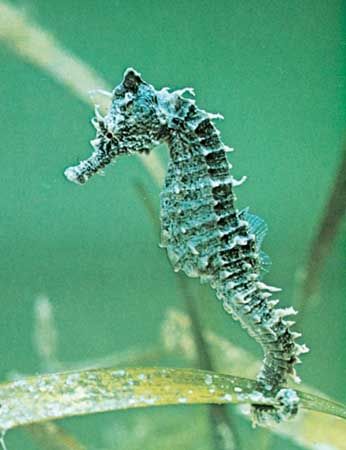
- Morphological Adaptations: Many seahorses feature long skin filaments that help them mimic the appearance of the sea grasses or other marine growths where they reside. Their bodies are also covered in bony plates, which contribute to their unique, often irregular, shapes that break up their outline against the background.25
- Behavioral Positioning: Seahorses are sedentary animals that typically cling to plants or corals using their prehensile tails.2 By maintaining a vertical posture among these structures, they effectively camouflage themselves while simultaneously presenting a less recognizable profile to predators accustomed to horizontal prey.2
Sources
- Why do so few baby seahorses survive? — Encyclopædia Britannica
- seahorse — Encyclopædia Britannica
- 14 Questions About Aquatic Animals Answered - Which male sea creature keeps its young in a pouch? — Encyclopædia Britannica
- Do male seahorses give birth? — Encyclopædia Britannica
- coloration - Background matching — Encyclopædia Britannica
- coloration - Physiological control — Encyclopædia Britannica
- gasterosteiform - Ecology and behaviour — Encyclopædia Britannica
Published on · 3 min read