Glasswort
Glasswort is a genus (Salicornia) comprising about 30 species of annual succulent herbs within the Amaranthaceae family. These plants are halophytes, meaning…
What is glasswort?
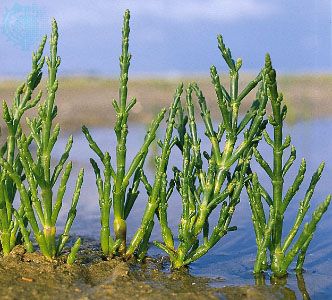
Glasswort is a genus (Salicornia) comprising about 30 species of annual succulent herbs within the Amaranthaceae family. These plants are halophytes, meaning they are specially adapted to thrive in salt marshes and coastal beaches by accumulating salts within their stems and leaves.12
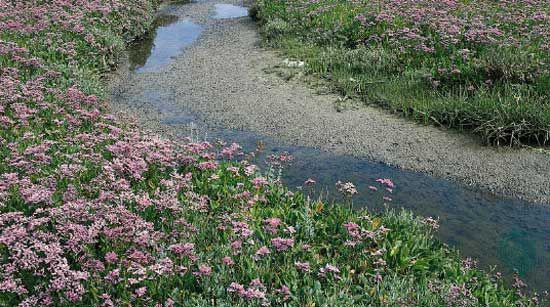
Physically, glassworts are typically small with jointed, bright green stems that often shift to red or purple during the autumn. Their leaves are reduced to minute, scalelike structures. The plant earned its name from its historical use in glassmaking, as the ashes of burnt glassworts provided significant amounts of potash.13
Beyond their industrial history, several species—such as samphire—are edible and can be consumed raw or cooked. They are also commonly referred to as pickleweed.13
What are other examples of halophytic plants?
Halophytic plants are specially adapted to survive in saline environments, such as coastal marshes, estuaries, and arid regions with high soil salinity. Beyond glassworts, several other groups of plants exhibit these unique adaptations:3
- Grasses, Sedges, and Rushes: These plants are characteristic of salt marshes, where they form thick mats and thrive despite frequent flooding by saltwater or brackish water.3
- Mangroves: These are specialized shrubs and trees that grow in tropical and subtropical coastal wetlands. They are uniquely adapted to oxygen-poor, saline soils through specialized root systems, such as prop roots and pneumatophores, which facilitate gas exchange. Notable examples include the red mangrove and black mangroves.45
- Samphire: Often grouped with glassworts, these succulent, salt-tolerant plants include various species such as rock samphire and the golden samphire (Limbarda crithmoides). They are capable of isolating and storing excess salt in vacuoles within their cells.6
How do plants survive in high-salt environments?
Plants that thrive in high-salinity environments, known as halophytes, have evolved specialized mechanisms to manage the challenges of osmotic pressure and ion toxicity. In saline soils, high salt concentrations outside the roots typically cause water to flow out of the plant, leading to dehydration and wilting. To counter this, these plants employ several survival strategies:73
- Osmolyte Synthesis: Plants expend energy to synthesize osmolytes—water-soluble organic molecules—within their root cells. These molecules help balance internal osmotic pressure, allowing the plant to maintain hydration while excluding excess salts from their tissues.7
- Salt Accumulation and Sequestration: Some species, such as glassworts, actively accumulate salts in their stems and leaves. Within the plant cell, these salts are often sequestered in vacuoles, where they are kept away from sensitive metabolic processes in the cytoplasm.897
- Excretion: Certain plants possess specialized salt glands capable of excreting concentrated salt solutions, effectively removing excess ions from their systems.10
These adaptations allow halophytes to maintain turgor and continue functioning in environments where most other vegetation would suffer from severe dehydration and ion toxicity.973
What other plants were historically used in manufacturing?
Historically, a wide variety of plants have been essential to manufacturing, serving as primary sources for textiles, dyes, paper, and industrial materials.
Textile and Cordage Fibers
Many plants have been cultivated for their long, flexible fibers used in weaving and rope making:
- Flax (Linum usitatissimum): One of the oldest textile fibers, used to produce linen for apparel and household goods, as well as industrial items like canvas and twine.1314
- Hemp, Jute, and Kenaf: These plants provide strong bast fibers used for textiles, rope, and heavy-duty paper products.1513
- Cotton (Gossypium): A major source of seed-hair fiber used globally for textiles.13
Natural Dyes
Before the rise of synthetic alternatives, plants were the primary source of colorants:
- Madder (Rubia tinctorium): The roots were used to extract alizarin, a significant red dye.16
- Indigo (Indigofera tinctoria) and Dyerswoad (Isatis tinctoria): These provided the blue dye indigo, which remains a staple for denim.16
- Weld (Reseda luteola) and North American Oak (Quercus tinctoria): These were key sources of yellow pigments.16
- Logwood (Haematoxylon campechianum): Still used today, its heartwood yields dyes for silk and leather.16
Papermaking and Industrial Materials
- Wood: Coniferous and deciduous trees are the primary sources of pulp for paper.17
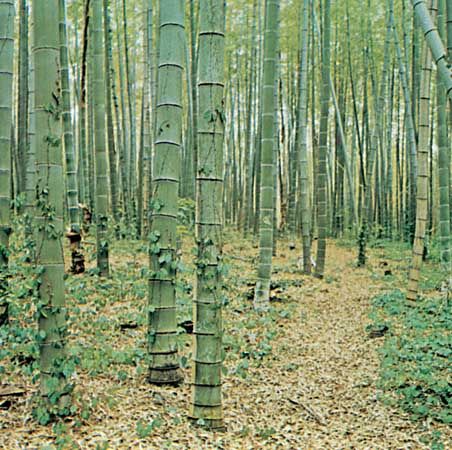
- Agricultural Fibers: Straw, bagasse (sugarcane residue), and bamboo have been used commercially for papermaking.15
- Rubber Trees (Hevea brasiliensis): The latex from these trees became the foundation of the modern rubber industry, essential for tires and other industrial components.1819
Sources
- glasswort — Encyclopædia Britannica
- glasswort — Merriam-Webster
- Salt marsh — Encyclopædia Britannica
- Samphire — Encyclopædia Britannica
- mangrove — Encyclopædia Britannica
- mangrove: Top Questions — Encyclopædia Britannica
- Biosphere - Salinity — Encyclopædia Britannica
- cell - The vacuole — Encyclopædia Britannica
- Osmotic pressure — Encyclopædia Britannica
- salt gland — Merriam-Webster
- salinity — Encyclopædia Britannica
- sodium - Biological properties — Encyclopædia Britannica
- dye - Natural dyes — Encyclopædia Britannica
- papermaking - Wood — Encyclopædia Britannica
- papermaking - Natural fibres other than wood — Encyclopædia Britannica
- natural fibre — Encyclopædia Britannica
- rubber - Development of the natural rubber industry — Encyclopædia Britannica
- rubber tree — Encyclopædia Britannica
- flax — Encyclopædia Britannica
Published on · 3 min read