Glenelg River
The Glenelg River is a river located in southwestern Victoria, Australia. It originates at Mt. William in the Grampians, east of Balmoral, and flows west and…
What is Glenelg River?
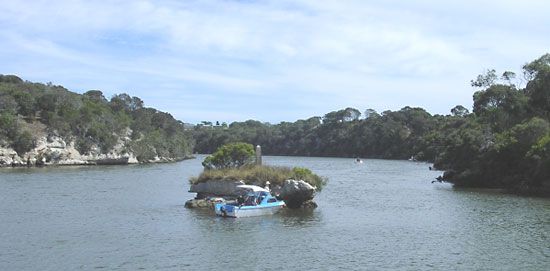
The Glenelg River is a river located in southwestern Victoria, Australia. It originates at Mt. William in the Grampians, east of Balmoral, and flows west and south for over 280 miles (450 km) before emptying into Discovery Bay near the South Australian border.1
At Casterton, the river joins its primary tributary, the Wannon River. Although the river is prone to drying up, it is dammed to create the Rocklands Reservoir, which serves as a component of the Wimmera-Mallee Stock and Domestic Supply System.1
The river was surveyed in 1836 by Thomas Mitchell, the former surveyor general of New South Wales. Originally known as Nangeela, it was renamed to honor Lord Glenelg, who served as the British secretary of state for the colonies at the time.1
What are the Grampians and why are they important?
The Grampians are a mountain range in southwestern central Victoria, Australia, extending southwest from the Great Dividing Range. Composed primarily of hard sandstone, the range is renowned for its dramatic landscape, which features deep gorges, unique weathered rock formations, and a diverse array of wildflowers. The highest point in the range is Mt. William, which reaches an elevation of 3,827 feet (1,166 meters).2
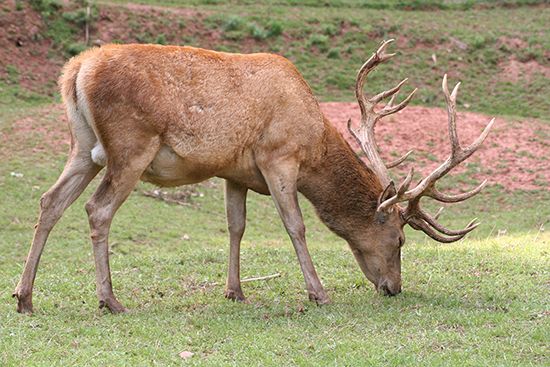
The area is ecologically significant as a habitat for various wildlife. It is home to populations of red deer, which, despite not being native to the region, are protected under state policy. The range was visited in 1836 by Major Sir Thomas Mitchell, the surveyor general of New South Wales, who named the mountains after the Grampian Mountains in Scotland.32
How do reservoirs like Rocklands help with water supply?
Reservoirs like the Rocklands Reservoir serve as critical components of water supply systems by managing the natural variability of river flows. Because streamflow often fluctuates between periods of excess and drought, reservoirs function by impounding water during high-flow periods and allowing for its gradual release during times of low flow.5
Specifically, the Rocklands Reservoir is an integral part of the Wimmera-Mallee Stock and Domestic Supply System, helping to ensure a consistent water supply for agricultural and domestic needs in a region where the river is otherwise prone to drying up.6
Beyond simple storage, reservoirs are often designed as multipurpose projects that can provide several essential services, including:
- Flood Control: By capturing excess water, they help prevent downstream flooding.57
- Irrigation: They provide a reliable source of water for agricultural fields.57
- Hydroelectric Power: Many reservoirs are equipped to generate electricity.57
- Emergency Reserves: They provide water for critical needs such as fire control and supply during system failures.5
Who was Thomas Mitchell and what did he explore?
Sir Thomas Livingstone Mitchell (1792–1855) was a Scottish soldier and the surveyor general of New South Wales, known for his extensive mapping and exploration of Australia.8
After serving in the Peninsular War, Mitchell arrived in Australia in 1827. He became surveyor general in 1828, overseeing the development of critical infrastructure, including roads through the Blue Mountains. His major expeditions included:8
- 1831–32: Explored the region between the Castlereagh and Gwydir rivers.8
- 1835: Traced the Darling River to its junction with the Murray River.8
- 1836: Explored western Victoria, naming the region “Australia Felix” (Happy Australia) due to its fertility. During this journey, he also visited and named the Grampians mountain range.829
- 1845–46: Conducted a final expedition seeking an overland route to Port Essington.8
Mitchell documented his findings in several publications, including Three Expeditions into Eastern Australia and Journal of an Expedition into the Interior of Tropical Australia.8
Sources
- Glenelg River — Encyclopædia Britannica
- Grampians — Encyclopædia Britannica
- Victoria - Plant and animal life — Encyclopædia Britannica
- Grampian Mountains — Encyclopædia Britannica
- reservoir — Encyclopædia Britannica
- water infrastructure in India - Dams — Encyclopædia Britannica
- Great Artesian Basin — Encyclopædia Britannica
- Sir Thomas Livingstone Mitchell — Encyclopædia Britannica
- Australia - Culture — Encyclopædia Britannica
Published on · 3 min read