Gordon River
The Gordon River is a vital component of Tasmania’s water infrastructure, primarily serving as a major source for hydroelectric power generation. The Gordon…
How does the Gordon River contribute to Tasmania’s water resources and climate?
The Gordon River is a vital component of Tasmania’s water infrastructure, primarily serving as a major source for hydroelectric power generation. The Gordon River hydroelectric project, completed in its first stage in 1978, utilizes the Gordon Dam and dams on the Serpentine and Huon rivers to create Lake Gordon and Lake Pedder. Lake Gordon stands as one of Australia’s largest freshwater storage reservoirs, with a massive capacity of 399,621,000,000 cubic feet.1
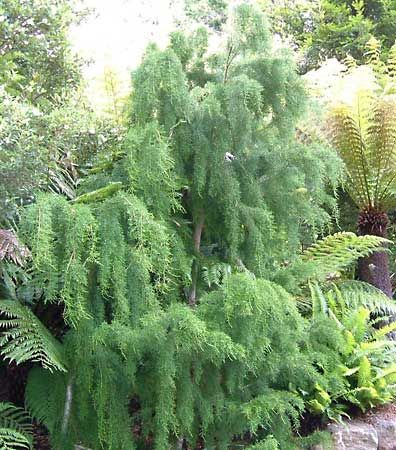
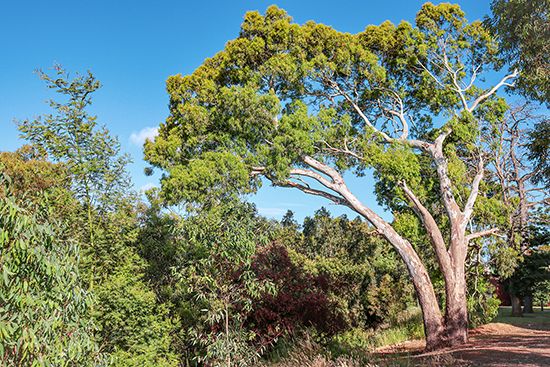
While the provided information does not explicitly detail the river’s direct influence on regional climate patterns, it highlights the river’s role in sustaining the Tasmanian Wilderness, a UNESCO World Heritage site. The watershed supports cool temperate rainforests characterized by species such as the Huon pine and eucalyptus, which are integral to the local ecosystem within the Franklin-Gordon Wild Rivers National Park.12
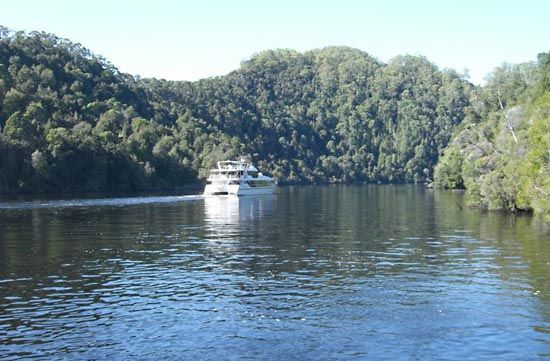
How has the Gordon River influenced the formation of the landscape in western Tasmania?
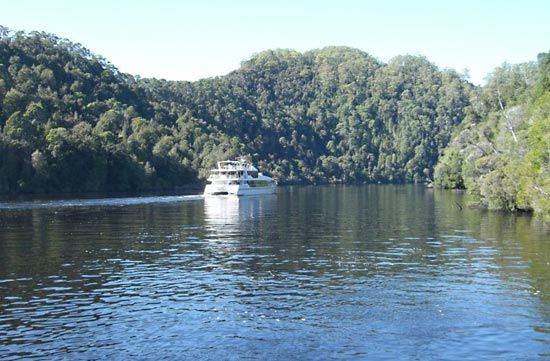
The Gordon River has played a significant role in shaping the rugged landscape of southwestern Tasmania. Originating in the inaccessible mountains of the King William Range, the river carves through the terrain, creating spectacular gorges as it flows northwest toward Macquarie Harbour.12
The river’s path has defined the ecological and geological character of the region:
- Topographical Diversity: The river system traverses a varied landscape ranging from high-altitude central highlands to undulating hills and deep valleys.12
- Rainforest Development: In its lower valley, the river supports dense, cool temperate rainforests, home to iconic species such as the Huon pine and eucalyptus.12
- Human and Natural History: The confluence of the Gordon and its tributary, the Franklin River, is a site of significant archaeological interest, where evidence of prehistoric human activity has been discovered.2
Today, much of the river’s course is protected within the Franklin-Gordon Wild Rivers National Park, a central component of the Tasmanian Wilderness World Heritage site.12
How has the Gordon River’s surrounding wilderness been protected, and what conservation efforts are in place?
The protection of the Gordon River and its surrounding wilderness is the result of significant environmental activism and government intervention. In the late 20th century, the lower Gordon River became the focus of a major conservation controversy as environmentalists protested the potential impact of hydroelectric dam construction on the region’s pristine wilderness.1
These efforts culminated in 1983, when the Australian national government intervened to halt the construction of a proposed dam below the junction of the Gordon and Franklin rivers. Today, much of the watershed is safeguarded within the Franklin-Gordon Wild Rivers National Park, which was established in 1981 and later expanded.12
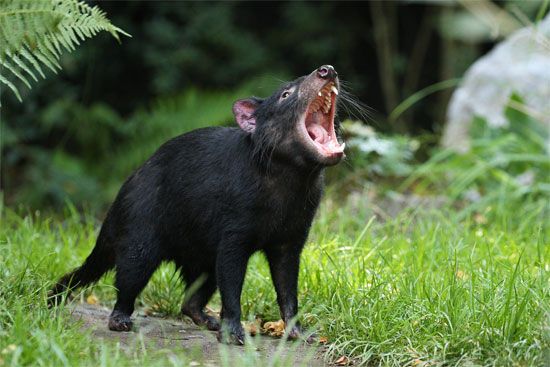
This park is a central component of the Tasmanian Wilderness, a World Heritage site designated in 1982. The area is managed to preserve its ecological diversity, including its cool temperate rainforests and unique wildlife, such as the Tasmanian devil. While industrial interests historically competed for the region’s natural resources, the current protected status ensures that the landscape remains a sanctuary for both natural history and significant archaeological sites.132
How has the Gordon River been impacted by hydroelectric projects, and what controversies have arisen?
The Gordon River has been significantly altered by hydroelectric development, which has created both massive infrastructure and intense environmental debate.
Hydroelectric Impact
The first stage of the Gordon River hydroelectric project was completed in 1978. This development included the construction of the Gordon Dam and additional dams on the Serpentine and Huon rivers. These projects resulted in the creation of two major reservoirs:
- Lake Gordon: One of Australia’s largest freshwater storage reservoirs, covering 105 square miles (272 square km).
- Lake Pedder: A large reservoir covering 93 square miles (242 square km).
Conservation Controversy
The expansion of these projects sparked a major conservation controversy, as environmentalists raised concerns regarding the impact of future dams on the region’s pristine wilderness. The tension reached a peak over plans to construct a dam below the junction of the Gordon and Franklin rivers. In 1983, the national government intervened to halt this construction, ultimately leading to the protection of much of the watershed within the Tasmanian Wilderness World Heritage site.
Sources
- Gordon River — Encyclopædia Britannica
- Franklin-Gordon Wild Rivers National Park — Encyclopædia Britannica
- Tasmanian Wilderness — Encyclopædia Britannica
- Southwest National Park — Encyclopædia Britannica
Published on · 3 min read