Guereza
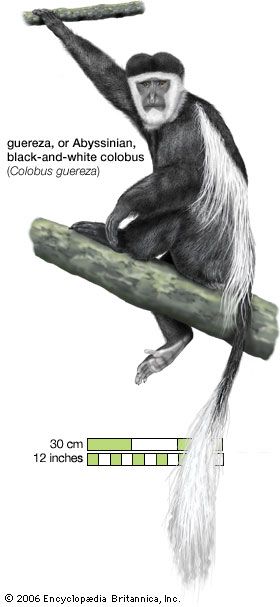
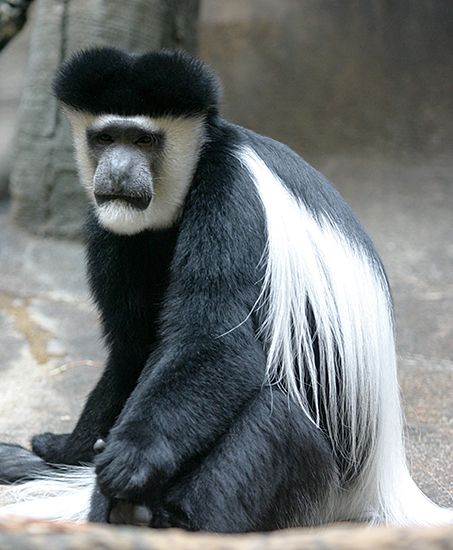
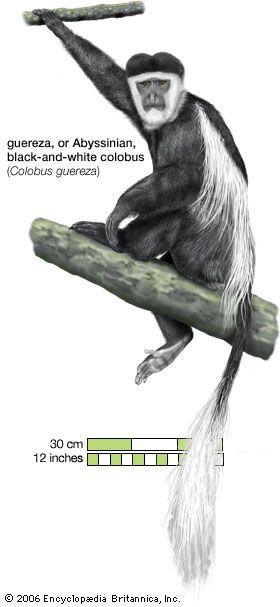
The term guereza refers to several species of colobus monkeys characterized by their distinctive black and white pelts.
What is guereza?
The term guereza refers to several species of colobus monkeys characterized by their distinctive black and white pelts.12
The most well-known species is Colobus guereza, often called the mantled guereza or the Abyssinian black-and-white colobus. These primates are native to central and eastern equatorial Africa, including the East African mountains of Uganda and the northern Democratic Republic of the Congo. The name itself is derived from a native Ethiopian term.12
What are the main differences between colobus monkeys and other primates?
Colobus monkeys, which belong to the subfamily Colobinae, possess several distinct biological and behavioral traits that set them apart from other Old World monkeys and primates.34
Key Differences
- Specialized Digestive System: Unlike many other monkeys that possess cheek pouches for food storage, colobus monkeys lack these pouches. Instead, they have complex, three- or four-chambered stomachs. This adaptation allows for the bacterial fermentation of cellulose and hemicellulose, enabling them to thrive on a diet consisting largely of leaves and seeds.34
- Reduced Thumbs: A defining physical characteristic of the three colobus genera is that they are all more or less thumbless, a trait that distinguishes them from many other primates that rely on opposable thumbs for manual dexterity.34
- Unique Reproductive Mimicry: In red and olive colobus species, subadult males develop swellings around their sex organs that mimic those of females. This unusual feature, which is not found in black-and-white colobus or most other primates, is thought to help young males integrate into troops without being evicted by dominant adults.3
- Locomotion and Social Behavior: Colobus monkeys are highly adapted to life in the trees, capable of making long, agile leaps. While some species, such as the black-and-white colobus, are territorial and engage in loud “jumping-roaring” displays, others like the red colobus live in large, non-territorial troops.3
How do guerezas use their long tails for movement?
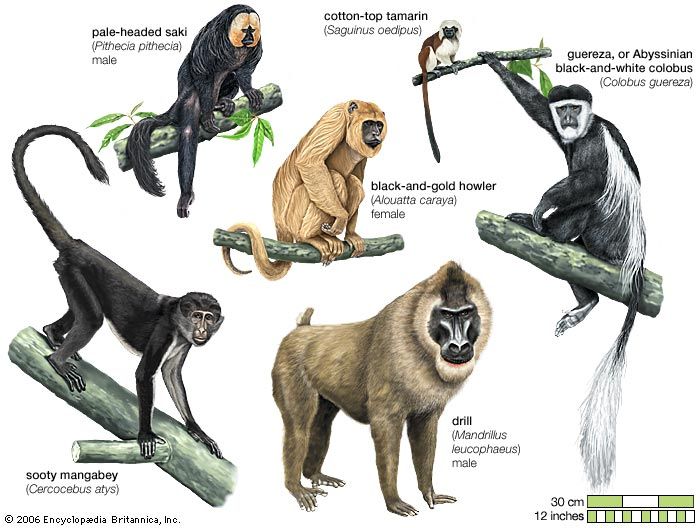
Sorry, the Britannica knowledge base does not contain information regarding how guerezas use their long tails for movement. While it is noted that these monkeys possess tails significantly longer than their bodies and feature a long white brush on the tail, the provided sources do not describe the tail as a functional tool for locomotion, such as being prehensile.1
What role do these monkeys play in their forest ecosystems?
Colobus monkeys, including the guereza, play a specialized role in their forest ecosystems primarily through their unique dietary adaptations. As members of the subfamily Colobinae, these monkeys possess complex, multi-chambered stomachs that allow them to ferment cellulose and hemicellulose found in leaves and seeds.13
By consuming a diet rich in foliage that many other animals cannot digest, they occupy a specific ecological niche as specialized folivores. This digestive process enriches the nutrient content of their diet, allowing them to thrive in environments where they might otherwise face significant competition for food.13
Furthermore, their presence and behavior influence their habitats in several ways:
- Territoriality: Species like the black-and-white colobus live in defined territories, which they mark through loud “jumping-roaring” displays, helping to regulate population distribution within the forest canopy.1
- Resilience: While some species are sensitive to habitat alteration, black-and-white colobus are noted for being more resilient to forest changes caused by logging or fire compared to other colobus species.1
Sources
- guereza — Encyclopædia Britannica
- guereza — Merriam-Webster
- colobus — Encyclopædia Britannica
- monkey - Old World monkeys versus New World monkeys — Encyclopædia Britannica
- Locomotion - Arboreal amphibians and reptiles — Encyclopædia Britannica
- Locomotion - Climbing birds and mammals — Encyclopædia Britannica
- red colobus — Merriam-Webster
Published on · 3 min read