Guinea Worm
In 1986, former U.S. President Jimmy Carter launched a global campaign to eradicate guinea worm disease. Following a 1988 visit to Ghana, where he witnessed…
How did former U.S. President Jimmy Carter contribute to guinea worm eradication efforts?
In 1986, former U.S. President Jimmy Carter launched a global campaign to eradicate guinea worm disease. Following a 1988 visit to Ghana, where he witnessed the widespread impact of the parasite, Carter significantly expanded these efforts through the Carter Center, an organization based in Atlanta.
The initiative involved a collaborative approach alongside the World Health Organization and UNICEF. By focusing on surveillance, health education, and the provision of clean drinking water, the campaign sought to break the transmission cycle of the disease. Although initial goals for total eradication by 1995 and 2000 were not met, the sustained efforts of these organizations led to a dramatic reduction in cases, limiting the disease to only a few endemic countries by 2010.1
What role do water fleas play in the transmission of guinea worm disease?
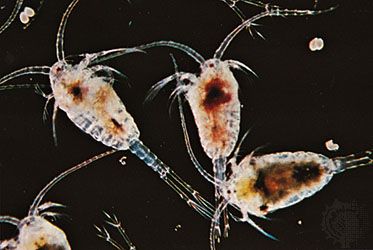
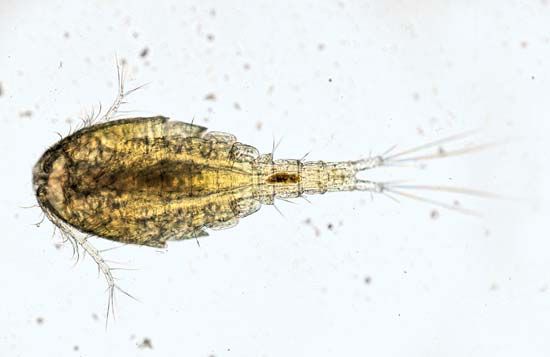
Water fleas (Cyclops) serve as the essential intermediate host in the life cycle of the guinea worm. Their role in the transmission of guinea worm disease occurs through the following process:
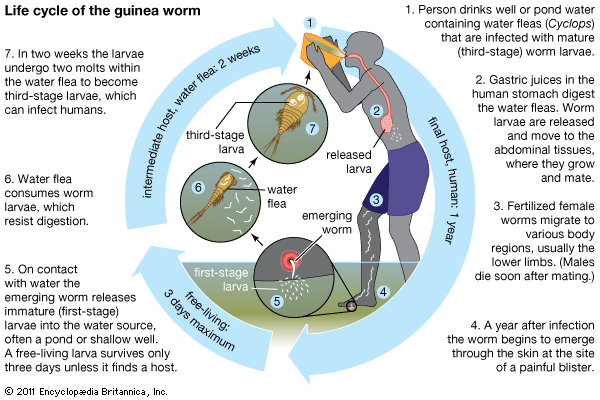
- Ingestion of Larvae: When an infected person enters a water source to soothe the burning pain of an emerging worm, the parasite releases thousands of immature larvae into the water. These larvae are then consumed by water fleas.
- Development: Within the body of the water flea, the larvae undergo two molts over approximately two weeks to become mature, third-stage larvae. At this stage, they are infectious to humans.
- Human Infection: Humans become infected by drinking water contaminated with these infected water fleas. Once ingested, the host’s gastric juices kill the water fleas, releasing the larvae to migrate into the abdominal tissues, where they mature and mate.
Because the transmission cycle relies entirely on the consumption of these contaminated crustaceans, prevention strategies focus heavily on filtering drinking water and treating water supplies with pesticides to eliminate the fleas.21
What are some of the challenges in completely eradicating guinea worm disease?
Completely eradicating guinea worm disease presents significant challenges, primarily because the disease is deeply tied to the availability of safe drinking water and the behavior of affected populations.
Key obstacles to total eradication include:
- Lack of Safe Water Infrastructure: The disease is transmitted through the consumption of water contaminated with infected water fleas. In many endemic regions, communities lack access to reliable, clean drinking water, forcing residents to rely on ponds or streams that may harbor the parasite.13
- Behavioral Factors: Because the disease causes intense burning pain, infected individuals often enter water sources to seek relief. This action directly facilitates the release of thousands of larvae into the water, perpetuating the transmission cycle.1
- Surveillance and Detection: Effective eradication requires rigorous, consistent surveillance to identify and isolate cases early. In remote or underserved areas, achieving the level of health education and monitoring necessary to prevent every instance of water contamination is logistically difficult.1
- Resource Limitations: While prevention methods like water filtration and the use of pesticides to kill water fleas are effective, they require sustained implementation and resources that may be scarce in the remaining endemic regions.1
What is a guinea worm and how does it infect humans?
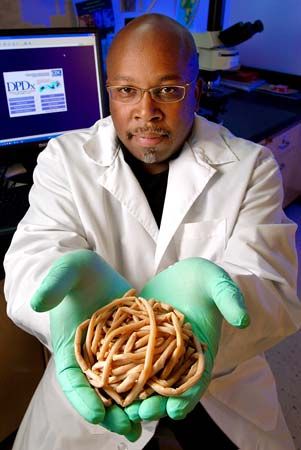
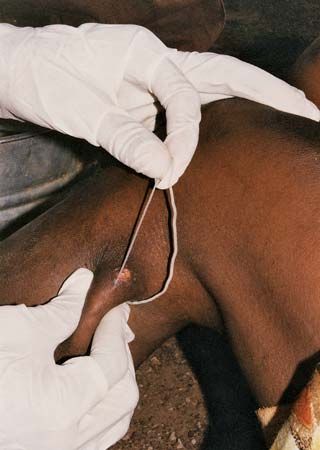
The guinea worm (Dracunculus medinensis) is a parasitic nematode responsible for guinea worm disease (dracunculiasis). Adult females can grow to lengths of 50 to 120 cm, while males are significantly smaller and die shortly after mating within the host.21
How Infection Occurs
Humans become infected by drinking water contaminated with water fleas (Cyclops) that harbor infectious, third-stage larvae. The infection process follows these steps:15
- Ingestion: Once consumed, the human host’s gastric juices kill the water fleas, releasing the larvae into the digestive tract.15
- Migration and Maturation: The larvae bore through the intestinal wall into the abdominal tissues, where they mature and mate.15
- Emergence: Approximately one year after infection, the fertilized female migrates through the body—often toward the lower legs—and bores through the skin to create a painful blister.21
- Transmission: When an infected person immerses the blister in water to relieve the burning pain, the worm releases thousands of larvae into the water, where they are ingested by water fleas, restarting the cycle.21
Sources
- Guinea worm disease — Encyclopædia Britannica
- guinea worm — Encyclopædia Britannica
- water supply system - Developments in water treatment — Encyclopædia Britannica
- water purification - Determining water quality — Encyclopædia Britannica
- Guinea worm — Merriam-Webster
Published on · 3 min read