Ghats
The Western Ghats and Eastern Ghats differ significantly in their physical characteristics, climate, and biological diversity.
How do the Eastern and Western Ghats differ in terms of their flora, fauna, and climate?
The Western Ghats and Eastern Ghats differ significantly in their physical characteristics, climate, and biological diversity.
Climate and Geography
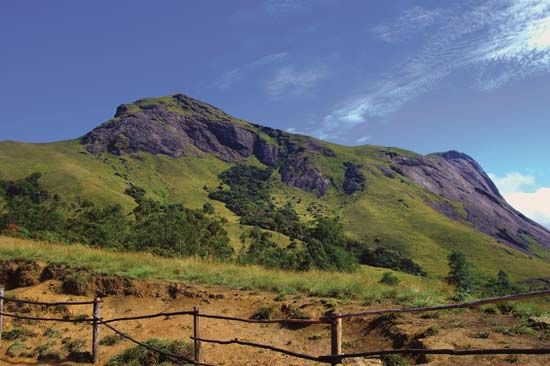
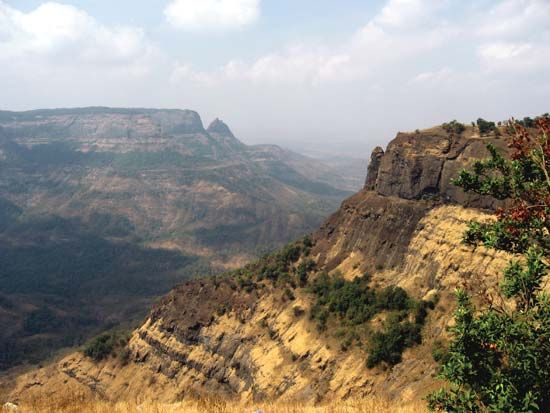
The Western Ghats act as a critical barrier to the southwest monsoon, trapping moisture and creating a tropical monsoon climate with extremely heavy rainfall on their seaward slopes. This makes them the principal watershed for peninsular India. In contrast, the Eastern Ghats are a series of discontinuous, lower-elevation hill masses that receive significantly less precipitation, resulting in a drier environment.12
Flora and Fauna
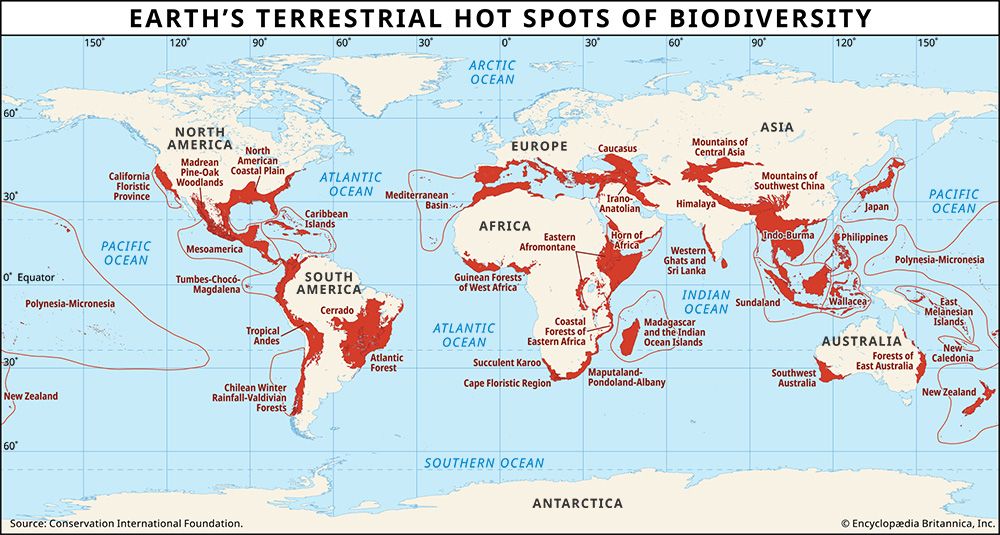
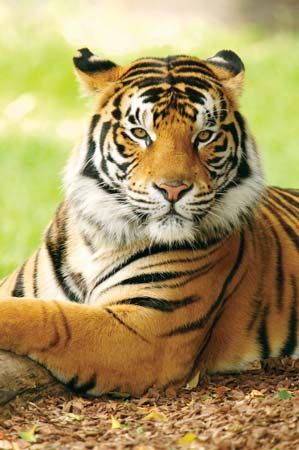
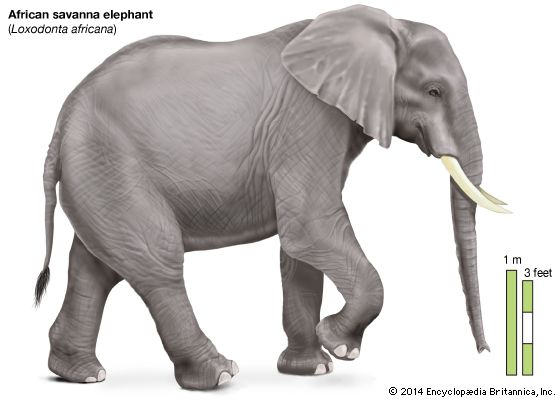
- Western Ghats: Recognized as a biodiversity hot spot, this range supports diverse ecosystems ranging from tropical wet evergreen forests to montane grasslands. It is home to over 300 globally threatened species, including significant populations of tigers and Asian elephants, as well as unique fauna like the Nilgiri tahr and lion-tailed macaque.13
- Eastern Ghats: The slopes of these mountains are characterized by sparse forests that contain valuable timber, but they lack the dense, high-rainfall-dependent evergreen forests found in the Western Ghats.2
What role did the Ghats play in India’s history, particularly during the colonial period?
Sorry, the Britannica knowledge base does not contain information regarding the specific role the Ghats played in India’s history during the colonial period.
The available information focuses on the geography, climate, and biodiversity of the Western Ghats and Eastern Ghats, noting that the mountains contain valuable timber and host various hill resorts, but it does not detail their historical or political significance during the era of British rule.
What unique biodiversity can be found in the Western Ghats, and why is it considered a UNESCO World Heritage Site?
The Western Ghats are recognized as a biodiversity hot spot and a UNESCO World Heritage site due to their exceptional biological richness and the presence of over 300 globally threatened species.1
Unique Biodiversity
The region hosts a vast array of ecosystems, ranging from tropical wet evergreen forests to montane grasslands. This diversity supports more than 30 percent of all plant, fish, bird, and mammal species found in India. Notable wildlife includes:1
- Mammals: Significant populations of tigers and Asian elephants, as well as gaurs, lion-tailed macaques, and the Nilgiri tahr.13
- Flora: The area is a vital repository for medicinal plants and genetic resources, including wild relatives of various grains, spices, and fruits.1
- Reptiles and Birds: Notable species include the king cobra, peacocks, and hornbills.3
The Western Ghats are considered a globally significant site because they contain some of the world’s best examples of non-equatorial tropical evergreen forests and serve as a critical watershed for peninsular India.1
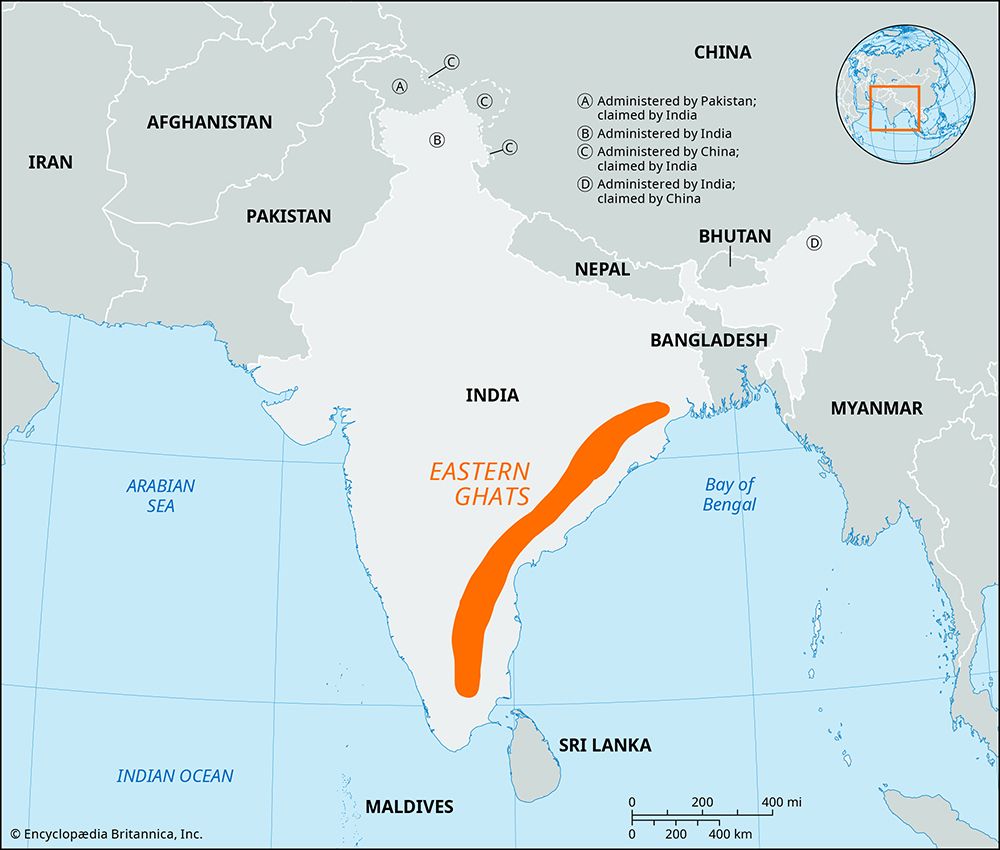
What are the Western Ghats and Eastern Ghats, and where are they located in India?
The Ghats are two mountain ranges that form the eastern and western edges of the Deccan plateau in peninsular India. The term ghat refers to mountain passes or river landings, and it has been extended to describe these significant geological features.2
The Western Ghats
The Western Ghats run parallel to the Arabian Sea coast, extending from the Tapti River in the north to Cape Comorin at India’s southern tip. They pass through the states of Gujarat, Maharashtra, Goa, Karnataka, Tamil Nadu, and Keralam. These mountains act as a primary watershed and play a critical role in the monsoon weather pattern by trapping moisture from the sea.24
The Eastern Ghats
The Eastern Ghats are a series of discontinuous hill masses running along the Bay of Bengal. They extend from the delta of the Mahanadi River in Odisha down to Tamil Nadu, where they eventually merge with the Western Ghats. Unlike the continuous Western range, the Eastern Ghats are broken by major rivers such as the Krishna and Godavari.21
Sources
- Western Ghats — Encyclopædia Britannica
- Ghats — Encyclopædia Britannica
- Keralam - Plant and animal life — Encyclopædia Britannica
- Eastern Ghats — Merriam-Webster
Published on · 3 min read