Horse Fly
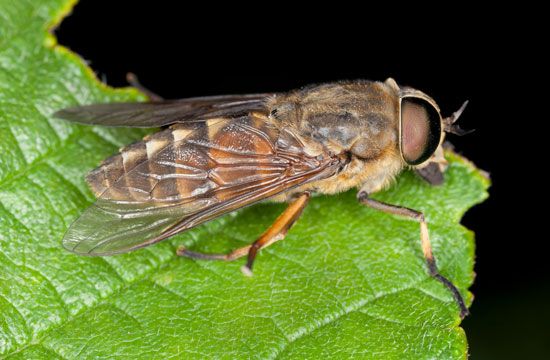
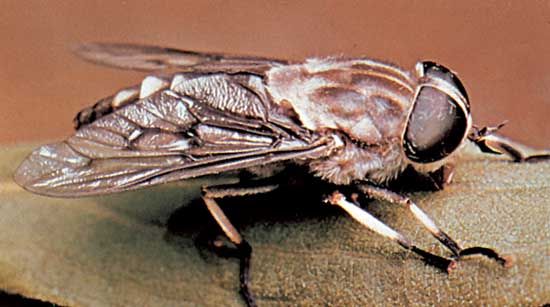
Adult horse flies are fast, strong fliers that are typically found in environments near streams, marshes, and wooded areas.
In which habitats are horse flies commonly found?
Adult horse flies are fast, strong fliers that are typically found in environments near streams, marshes, and wooded areas.1
These insects, belonging to the family Tabanidae, are known for their roving habits. While females are bloodsucking pests that target humans and animals, males primarily feed on nectar, honeydew, and plant sap. Because they often breed in wet environments, control efforts frequently involve the draining or oiling of these specific breeding habitats.1
How do horse flies feed, and why are they considered pests?
Horse flies exhibit distinct feeding behaviors based on their sex. While male horse flies feed on nectar, honeydew, and plant sap, only the females are bloodsuckers.1
These flies are considered significant pests for several reasons:
- Blood Loss: When abundant, female horse flies can consume three ounces or more of blood from a single host in a single day, causing distress to both humans and animals.1
- Disease Transmission: They act as carriers for various animal diseases, including anthrax, tularemia, and trypanosomiasis.1
- Disruption of Activity: In areas where certain species like Haematopota are highly prevalent, their presence can be so disruptive that agricultural work must be restricted to nighttime hours when the flies are inactive.1
Because they are strong fliers and difficult to manage with sprays, protecting livestock often requires physical barriers like blankets or fly nets.1
How do horse flies impact humans and animals?
Horse flies, particularly those in the genus Tabanus, significantly impact both humans and animals through their aggressive feeding habits and role as disease vectors.
The primary impacts include:
- Physical Distress and Blood Loss: Female horse flies are bloodsuckers that can be serious pests. When present in large numbers, they are capable of consuming three ounces or more of blood from a single host in a single day, causing significant irritation and physical strain.1
- Disease Transmission: These insects serve as carriers for various animal diseases, including anthrax, tularemia, and trypanosomiasis.1
- Economic and Lifestyle Disruption: In regions where certain species like Haematopota are highly abundant, their presence can be so severe that agricultural activities must be restricted to nighttime hours to avoid attacks.1
Because these flies are strong, fast fliers, they are difficult to manage with sprays. Protecting livestock often requires physical measures, such as the use of blankets or fly nets.1
What is the life cycle of a horse fly?
The life cycle of a horse fly follows the standard four-stage progression common to many insects: egg, larva, pupa, and adult.2
- Egg: Female horse flies deposit their eggs in clusters, which appear as long, flat, and black, typically laid on grass.1
- Larva: The horse fly spends the winter months in the larval stage.1
- Pupa: In the spring, the larvae undergo pupation. During this stage, the external features of the adult fly—such as its eyes, antennae, wings, and legs—begin to develop and become visible.13
- Adult: By late June, the adult flies emerge. Adult horse flies are strong, fast fliers often found near marshes, streams, and wooded areas. While males feed on plant sap, nectar, and honeydew, the females are known for their bloodsucking behavior.1
Sources
- horse fly — Encyclopædia Britannica
- Diptera - General features — Encyclopædia Britannica
- Diptera - Pupa — Encyclopædia Britannica
Published on · 3 min read