How Do Birds Hear?
Birds possess a keen sense of hearing, often with better resolution than humans, though they lack the external ear structures found in mammals. Instead, they…

How Do Birds Hear?
Birds possess a keen sense of hearing, often with better resolution than humans, though they lack the external ear structures found in mammals. Instead, they have funnel-shaped openings located on each side of the head, typically hidden beneath specialized feathers called auriculars.12
The avian ear consists of a middle and inner ear, with a structure similar to that of reptiles. Vibrations are transmitted via an ossicular chain to the cochlea, a short, slightly curved tube. In songbirds, the tympanic membrane is composed of two layers for protection.12
Birds determine the origin of sounds by detecting differences in frequencies or timing between their two ear openings. For instance, owls utilize an asymmetrical ear arrangement to pinpoint prey with extreme precision. Research on species like the bullfinch and pigeons indicates high auditory sensitivity in the low and middle frequency ranges.13
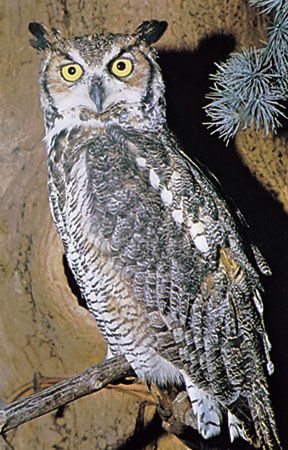
How do owls use their asymmetrical ears to hunt?
Owls utilize their asymmetrical ear openings to achieve exceptional auditory precision, allowing them to hunt in total darkness. Because one ear opening is positioned lower than the other, sounds reach each ear at slightly different times—a delay that can be as brief as 30 millionths of a second.1
This temporal difference, combined with variations in how different frequencies register in each ear, enables the owl to localize sound sources in two planes simultaneously. By processing these subtle discrepancies, an owl can pinpoint the exact location of prey, such as the rustle of a mouse in leaves, and fly directly to that spot.14
To further enhance this ability, owls possess a facial ruff of lacy, sound-permeable feathers that concentrates incoming noise toward the ear openings. Additionally, a movable flap called an operculum may act as a baffle to help the owl distinguish whether a sound is originating from above or below. These adaptations, paired with noiseless flight feathers, allow owls to hunt with remarkable accuracy.41
What are the differences between bird and human ear structures?
While birds and humans both possess middle and inner ear structures, their auditory systems differ significantly in anatomy and complexity.13
Key Structural Differences
- Outer Ear: Humans have a prominent external ear organ (the pinna or auricle) that collects and reflects sound into the auditory meatus. Birds lack this external structure entirely; instead, they have simple, funnel-shaped openings on the sides of their heads, typically concealed by specialized feathers called auriculars.312
- Tympanic Membrane: In humans, the tympanic membrane bulges inward. In birds, it typically bulges outward, similar to that of reptiles. Additionally, some songbirds possess a double-layered membrane for protection.23
- Middle Ear Bones: The human middle ear features an ossicular chain of three distinct bones: the malleus, incus, and stapes. Birds have a simpler system consisting of a columella and a cartilaginous extracolumella.32
- Cochlea: The human cochlea is a complex, coiled tube resembling a snail shell. In birds, the cochlea is a short, slightly curved bony tube.32
Despite these differences, birds often exhibit higher auditory resolution than humans, utilizing frequency variations between their two ear openings to localize sound.1
How do birds use sound to communicate with each other?
Birds communicate using a sophisticated array of vocal and nonvocal sounds, primarily facilitated by a specialized vocal organ called the syrinx. Located at the base of the trachea, the syrinx allows many birds—particularly songbirds—to control the left and right halves of the organ independently, effectively producing two distinct voices simultaneously.78
Vocal Communication
Vocalizations serve various critical social functions:
- Song: Often used during the breeding season, songs help attract mates and establish or defend territories. Because songs vary between individuals, birds can often recognize their neighbors and mates by these unique patterns.9
- Calls: Birds use specific notes for location, alarm, and begging. For instance, some species produce distinct alarm calls depending on whether a predator is in the air or on the ground.9
- Duetting: Some pairs engage in antiphonal singing, where the male and female coordinate their vocalizations with remarkable precision.8
Nonvocal Sounds
Communication is not limited to the voice. Many birds produce mechanical sounds using their bodies, such as bill clapping in storks, bill snapping in owls, or the use of specialized wing and tail feathers to create noise during flight.98
Environmental Adaptation
Birds adapt their signals to their habitat to minimize signal degradation. For example, forest-dwelling birds typically use long, whistle-like notes, while those in open grasslands often utilize rapid trills and buzzes to ensure their messages remain clear despite environmental obstacles.10
Sources
- How Do Birds Hear? — Encyclopædia Britannica
- sound reception - Auditory sensitivity in birds — Encyclopædia Britannica
- sound reception - The avian auditory structure — Encyclopædia Britannica
- Why do birds chirp at night? — Encyclopædia Britannica
- Owl - Form and function — Encyclopædia Britannica
- sound reception - Auditory structure of mammals — Encyclopædia Britannica
- Syrinx — Encyclopædia Britannica
- Bird - Sound — Encyclopædia Britannica
- Animal communication - Signal transmission — Encyclopædia Britannica
- Passeriform - Sound production — Encyclopædia Britannica
Published on · 3 min read