Indian Rhinoceros
Conservation efforts for the Indian rhinoceros have been remarkably successful, demonstrating that populations can recover rapidly when their habitats and…
How successful have conservation efforts been in protecting the Indian rhinoceros?
Conservation efforts for the Indian rhinoceros have been remarkably successful, demonstrating that populations can recover rapidly when their habitats and the animals themselves are protected from poaching.
Once widespread across northern India and Nepal, the species was pushed to the brink of extinction. However, targeted interventions have led to significant rebounds:
- Population Growth: In Kaziranga National Park, the population grew from approximately 12 individuals around 1900 to more than 2,600 by 2024.12
- Habitat Restoration: In Nepal’s Chitwan region, populations climbed from fewer than 400 in the early 2000s to over 600 by 2015 due to intensified anti-poaching measures.1
- Translocation: Successful management has allowed for the reintroduction of rhinoceroses into areas where they had been extirpated, such as Manas National Park, which recovered after armed conflict disrupted conservation efforts.3
These successes rely on rigorous patrolling, infrastructure improvements, and the engagement of local communities in wildlife protection. Despite these gains, the species remains vulnerable to threats like climate-driven flooding and habitat encroachment.34
What are the physical characteristics that distinguish the Indian rhinoceros from other rhino species?
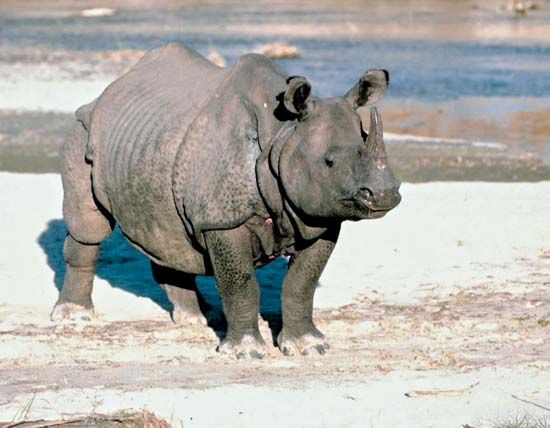
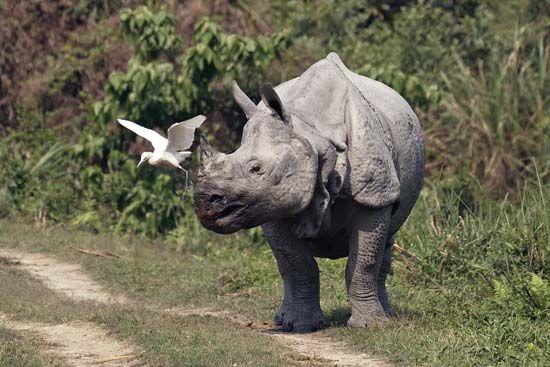
The Indian rhinoceros, also known as the greater one-horned rhinoceros, possesses several distinct physical characteristics that differentiate it from other rhinoceros species:
- Size and Build: It is the largest of the three Asian rhinoceros species, weighing between 1,800 and 2,700 kg (4,000 and 6,000 pounds). Its size is roughly equivalent to that of the African white rhinoceros. to that of the African white rhinoceros.17
- Skin Appearance: The Indian rhinoceros is characterized by its deeply folded, grayish-brown skin. These folds form platelike armor, particularly around the shoulders and thighs, and are arranged differently than those found on the Javan rhinoceros. Additionally, its skin features distinct tubercles.167
- Horns: As its name suggests, it possesses a single large horn on the upper surface of its snout, which helps distinguish it from the smaller Javan rhinoceros.16
- Defensive Teeth: Unlike African rhinoceroses, which use their horns for combat, the Indian rhinoceros fights using its razor-sharp lower outer incisor teeth. In dominant males, these tusks can reach up to 13 cm (5 inches) in length and are used to inflict lethal wounds on rivals.17
What role does the Indian rhinoceros play in Hindu mythology and culture?
The Indian rhinoceros does not hold a specific, formalized role in Hindu mythology as a deity or sacred figure. However, it is historically significant for its connection to the legend of the unicorn.
Ancient accounts, such as those by the Greek historian Ctesias around 400 BCE, described a single-horned animal in India that was fleet of foot and difficult to capture. Scholars believe the Indian rhinoceros was the real-world animal behind these descriptions. In later centuries, the rhinoceros’s horn—often mistaken for that of a mythical unicorn—became a highly valued commodity in various cultures, including those in the Islamic world and China, where it was prized for its supposed protective properties against poison.
While the animal itself is not a central religious icon, its physical presence in the Indian subcontinent has influenced historical perceptions of rare, powerful, and single-horned creatures across ancient literature and trade.
Where is the natural habitat of the Indian rhinoceros, and how has it changed over time?
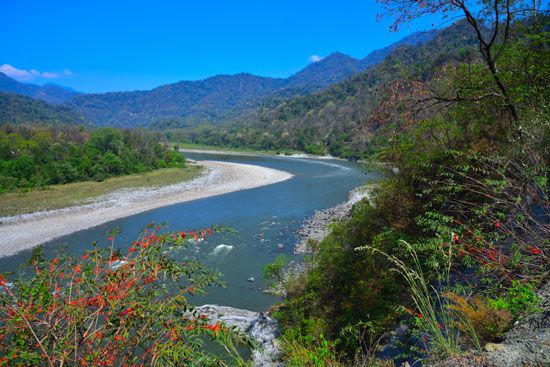
The natural habitat of the Indian rhinoceros consists of the world’s tallest grasslands, savannas, forests, and hilly country, particularly in nutrient-rich floodplains where they can graze on grasses that reach up to 7 meters (23 feet) in height.16
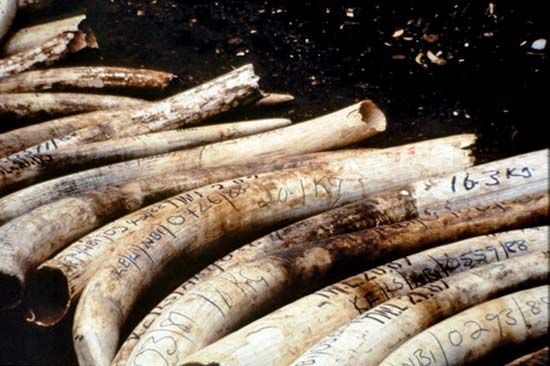
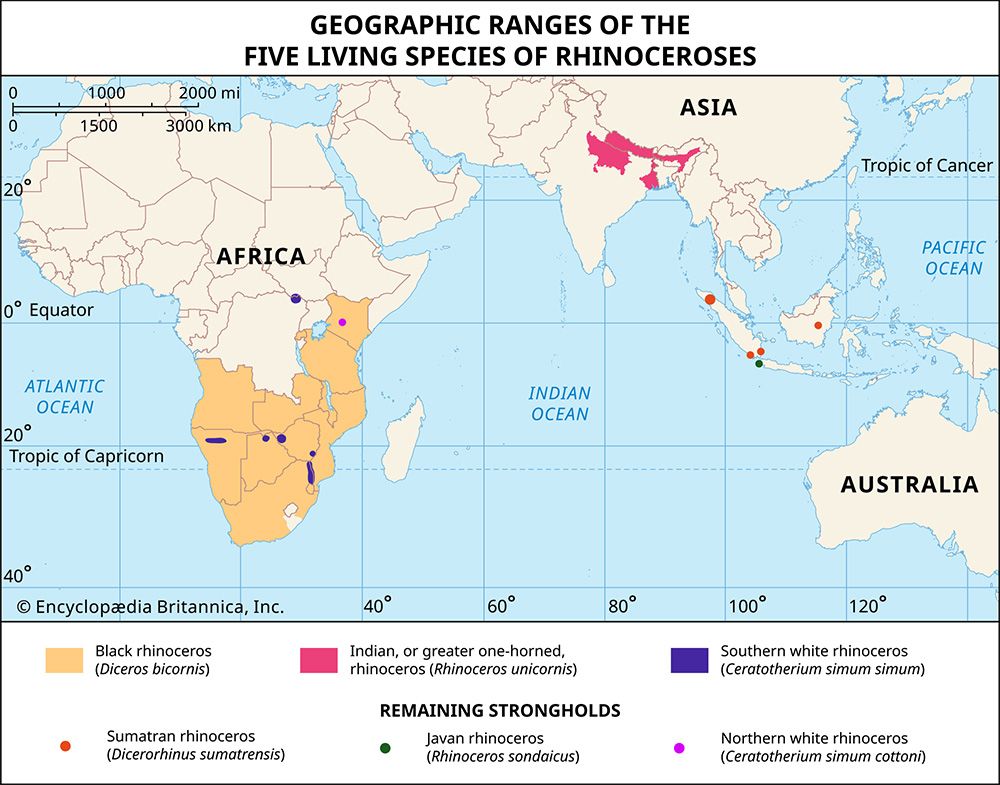
Historically, the species occupied an extensive range across northern India and Nepal, stretching from Assam in the east to the Indus River valley in the west. Over time, this range has been drastically reduced due to the expansion of human settlements, the conversion of natural habitat into agricultural land (such as rice farming), and rampant poaching.16
Today, the Indian rhinoceros is restricted to approximately 11 protected reserves and sanctuaries in India and Nepal, such as Kaziranga National Park and Manas National Park. While populations in these areas faced severe declines in the 20th century, dedicated conservation efforts, anti-poaching initiatives, and population translocations have allowed numbers to recover significantly in several of these protected habitats.162
Sources
- Indian rhinoceros — Encyclopædia Britannica
- Kaziranga National Park — Encyclopædia Britannica
- Manas National Park — Encyclopædia Britannica
- Kaziranga National Park: Top Questions — Encyclopædia Britannica
- conservation - Protecting species — Encyclopædia Britannica
- perissodactyl - Rhinoceroses — Encyclopædia Britannica
- Indian rhinoceros — Merriam-Webster
- rhinoceros — Encyclopædia Britannica
- unicorn — Encyclopædia Britannica
Published on · 3 min read