Why Are Kangaroos Only Found in Australia?
It is a common misconception that kangaroos are found only in Australia; while they are native to the Australian continent, they are also found in Tasmania…
Why Are Kangaroos Only Found in Australia?
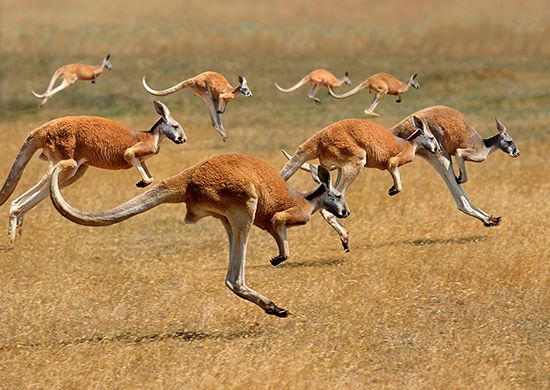
It is a common misconception that kangaroos are found only in Australia; while they are native to the Australian continent, they are also found in Tasmania and have been introduced to various nearby islands through human agency.12
Kangaroos are primarily associated with Australia because their marsupial ancestors colonized the continent millions of years ago via land bridges that connected South America to Australia through Antarctica during the Cretaceous Period1. By approximately 65 million years ago, Australia became geographically isolated from other landmasses, allowing these marsupials to evolve into a wide variety of unique forms without competition from placental mammals found elsewhere.13
While marsupials once populated other regions, including Europe, Asia, and North Africa, their long-term survival and diversification were most successful in the isolated environment of the Australian continent.1
What are the main differences between marsupials and placental mammals?
The primary differences between marsupials and placental mammals (eutherians) center on their reproductive strategies and brain development.56
Reproductive Differences
- Developmental Timeline: Marsupials give birth to young in a highly premature, embryonic state after a short gestation period (ranging from about 8 to 40 days). In contrast, placental mammals undergo a much longer period of intrauterine development, supported by a complex placenta that facilitates the exchange of nutrients and waste between the mother and the fetus.567
- Implantation: In placental mammals, the embryo implants into the uterine wall, which is specialized to support long-term gestation. Marsupials generally lack this specialized uterine lining for embryo implantation; instead, their young must migrate to the mother’s teats—often located within a marsupium, or pouch—to complete their development while attached to milk-giving nipples.765
Brain Structure and Behavior
- Brain Anatomy: Marsupials possess simpler brains compared to placental mammals. A significant structural difference is that the marsupial brain lacks a corpus callosum, the bundle of nerve fibers that connects the two cerebral hemispheres in placental mammals.5
- Cognition and Vocalization: Generally, marsupials are considered less intelligent than placental mammals, which correlates with their smaller brain-to-body size ratio. Additionally, marsupials typically exhibit more limited vocal abilities, whereas placental mammals often display more variable and complex vocalizations for communication.5
How did the isolation of Australia affect the evolution of other unique animals?
The long-term geographic isolation of Australia, following its separation from the supercontinent Gondwana, acted as a primary driver for the evolution of its unique fauna. This isolation allowed ancestral lineages to diversify into specialized forms without the intense competition from placental mammals that dominated other continents.83
Evolutionary Consequences of Isolation
- Marsupial Radiation: While marsupials originated in the New World, they radiated extensively across Australia, filling virtually every mammalian ecological niche. This led to the evolution of marsupial equivalents to animals found elsewhere, such as marsupial moles, koalas, and the extinct marsupial lion.8
- Monotreme Preservation: Australia became a sanctuary for monotremes—the world’s only egg-laying mammals—such as the platypus and echidna, which have ancient roots dating back to the Cretaceous Period.8
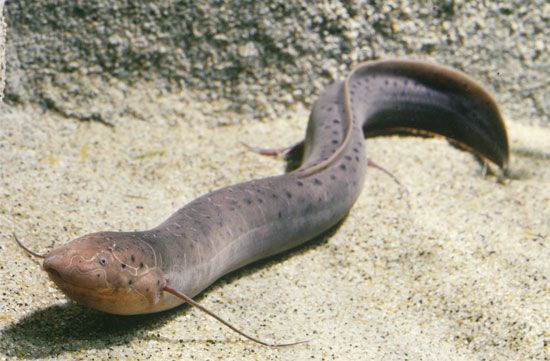
- Gondwanan Relicts: The continent preserved ancient lineages that predate the formation of Gondwana, including the Queensland lungfish, whose closest relatives are found in the fossil records of Europe, North America, and Asia.8
- Adaptive Specialization: Animals in the arid Eremian Zone evolved remarkable survival strategies, such as the water-holding frog, which forms a cocoon to survive drought, and nomadic birds like the budgerigar that track irregular rainfall.8
This evolutionary trajectory was significantly altered by the arrival of humans and, later, European settlement, which introduced non-native species and triggered the decline of many native populations.83
What are some examples of extinct Australian megafauna?
Australia’s prehistoric landscape was once home to a diverse array of large animals known as the Australian megafauna. These species, which largely disappeared between 72,000 and 12,000 years ago, included several remarkable creatures:128
- Diprotodon: Often described as a rhinoceros-sized giant wombat, this was the largest known marsupial. It stood about 1.8 metres tall at the shoulder and could weigh over 2,700 kg.128
- Thylacoleo: Frequently referred to as the “marsupial lion,” this predator possessed a massive skull, large tusks, and specialized crushing molars.83
- Giant Short-faced Kangaroos: Genera such as Sthenurus and Procoptodon represented significantly larger versions of the iconic modern kangaroo.8
- Genyornis: These were large, flightless birds, often referred to as mihirungs, that inhabited the continent alongside the mammalian megafauna.8
The extinction of these animals remains a subject of scientific debate. Researchers investigate whether their demise was driven by human hunting and landscape modification, severe climatic fluctuations during the late Pleistocene Epoch, or a combination of these factors.12813
Sources
- Why Are Kangaroos Only Found in Australia? — Encyclopædia Britannica
- kangaroo - Behaviour — Encyclopædia Britannica
- marsupial - Paleontology and recent history — Encyclopædia Britannica
- kangaroo - Descriptions of selected species — Encyclopædia Britannica
- marsupial — Encyclopædia Britannica
- Animal development - Adaptations in mammals — Encyclopædia Britannica
- mammal - Estrus and other cycles — Encyclopædia Britannica
- Australia - Animal life — Encyclopædia Britannica
- Speciation — Encyclopædia Britannica
- Australia - Chronological summary — Encyclopædia Britannica
- Australia - Tectonic framework — Encyclopædia Britannica
- Diprotodon — Encyclopædia Britannica
- Thylacoleo — Merriam-Webster
Published on · 3 min read