Jujube
The jujube fruit, native to China and cultivated for over 4,000 years, is a versatile ingredient used in various culinary traditions. The fruit can be…
How is jujube fruit used in different cuisines around the world?
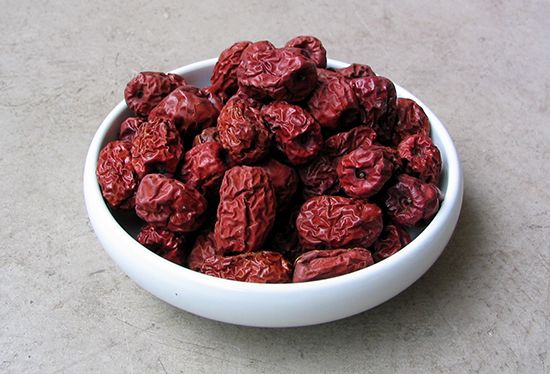
The jujube fruit, native to China and cultivated for over 4,000 years, is a versatile ingredient used in various culinary traditions. The fruit can be consumed fresh, dried, boiled, stewed, or baked.1
In many preparations, jujubes are boiled in honey and sugar syrup to create glacé fruits; because of their resulting texture and flavor, they are often compared to Persian dates and referred to as Chinese dates. Beyond direct consumption, the juice extracted from the fruit is a key ingredient in the production of small, fruit-flavored candies known as jujubes. Additionally, the fruit is frequently used to add flavor to tea.12
The common jujube (Ziziphus jujuba) is prized for its crisp white pulp, while the Indian jujube (Z. mauritiana) is noted for being smaller and less sweet. These fruits are also recognized for their nutritional value, particularly their high vitamin C content particularly their high vitamin C content.1
What are some common varieties of jujube trees and how do they differ?
There are two primary species of jujube trees commonly recognized within the genus Ziziphus:
Common Jujube (Z. jujuba)
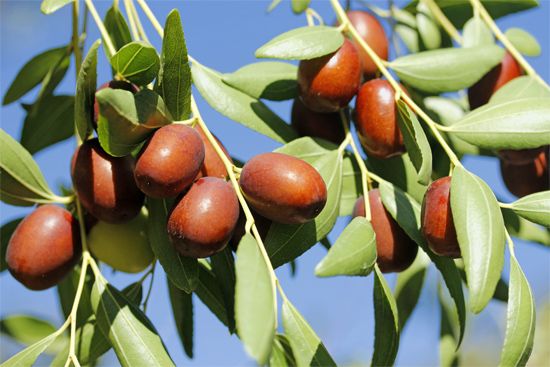
Native to China, this species has been cultivated for over 4,000 years. It typically grows to a height of 7.6 to 9 meters (25 to 30 feet) and features smooth, three-veined, elliptical to ovate leaves. The tree produces small yellow flowers followed by dark brown, plum-sized fruits with a crisp white pulp. Several large-fruited varieties have been developed from this species for cultivation in warm regions.12
Indian Jujube (Z. mauritiana)
Also known as the cottony jujube, this species is distinguished from the common jujube primarily by its foliage; its leaves are woolly beneath rather than smooth. Additionally, the fruits produced by the Indian jujube are generally smaller and less sweet than those of the common variety.1
Other related species, such as the wild jujube (Z. lotus) and Christ’s thorn jujube (Z. spina-christi), exist but are not typically cultivated for commercial use.1
What is the scientific name of the jujube tree and which plant family does it belong to?
The jujube tree belongs to the genus Ziziphus and is a member of the Rhamnaceae family, which is commonly known as the buckthorn family.145
The two most prominent species within this genus are the common jujube (Ziziphus jujuba) and the Indian jujube (Ziziphus mauritiana).15
What are the nutritional benefits and traditional medicinal uses of jujube fruit?
Jujube fruits are a versatile food source, consumed fresh, dried, boiled, stewed, or baked, and are frequently used to flavor tea. When processed into glacé fruits by boiling them in honey and sugar syrup, they are often referred to as Chinese dates due to their resemblance to the fruit. Additionally, the juice extracted from the fruit is a key ingredient in the production of small candies known as jujubes.1
From a nutritional perspective, raw jujube fruits are notable for being high in vitamin C.1
Regarding traditional medicinal uses, the provided information does not contain details on the specific medicinal applications of the fruit. While the plant has been cultivated for over 4,000 years, the available records focus primarily on its botanical characteristics, culinary uses, and cultivation methods.1
Sources
- jujube — Encyclopædia Britannica
- Chinese jujube — Merriam-Webster
- jujube — Merriam-Webster
- ziziphus — Merriam-Webster
- Rhamnaceae — Merriam-Webster
- Rosales - Rhamnaceae — Encyclopædia Britannica
Published on · 2 min read