Jumping Mouse
Jumping mice (subfamily Zapodinae) are omnivorous rodents that consume a diverse diet consisting of fungi, fruit, seeds, invertebrates, and occasionally…
What is the diet of jumping mice, and how does it vary across seasons?
Jumping mice (subfamily Zapodinae) are omnivorous rodents that consume a diverse diet consisting of fungi, fruit, seeds, invertebrates, and occasionally mollusks and small fish.1
Their dietary habits shift significantly with the seasons to prepare for hibernation. During the autumn months, jumping mice increase their food intake to build up significant stores of white and brown body fat. This physiological adaptation provides the necessary energy to sustain them throughout their winter slumber, a period when food sources in their environment become scarce. While some hibernating animals store food within their dens to consume during brief periods of wakefulness, the primary strategy for the jumping mouse involves utilizing these accumulated fat reserves to survive the winter months.2
How do jumping mice differ from other rodent species in terms of their locomotion?
Jumping mice (subfamily Zapodinae) exhibit a versatile range of movement that distinguishes them from many other rodent species. While they are generally terrestrial, they are also capable of agile shrub climbing and are considered excellent swimmers.1
Their primary locomotor patterns include:
- Standard Movement: Under normal conditions, jumping mice run on all four legs or move by bouncing in a series of short, rhythmic hops.1
- Saltatory Leaping: When alarmed, they utilize their disproportionately long hind legs to perform powerful, erratic leaps that can reach up to 4 meters (13 feet). During these jumps, their slender tail serves as a vital balancing organ.1
This saltatory (leaping) ability is a specialized adaptation found in several independent lineages of rodents, as well as in some marsupials and lagomorphs. Unlike the “true” mice of the family Muridae, which typically rely on quadrupedal running, jumping mice share this leaping mode of locomotion with more distantly related groups like jerboas and birch mice within the family Dipodidae.13
What are the different species of jumping mice, and how are they classified?
Jumping mice are classified within the subfamily Zapodinae, which is part of the family Dipodidae. They are distinct from “true” mice, which belong to the family Muridae. Within the family Dipodidae, jumping mice are grouped alongside birch mice and the more distantly related jerboas.16
There are five recognized species of jumping mice, distributed across North America and China:1
North American Species
- Woodland jumping mouse (Napaeozapus insignis): Found in the moist forests of eastern North America.1
- Meadow jumping mouse (Zapus hudsonius): Ranges across much of North America in grasslands and wet meadow habitats.1
- Pacific jumping mouse (Zapus trinotatus): Inhabits cool, moist forest regions of North America.1
- Western jumping mouse (Zapus princeps): Found in similar cool, moist forest and riverine environments across North America.1
Asian Species
- Sichuan jumping mouse (Eozapus setchuanus): The only species located outside of North America, it inhabits the cool, wet mountain forests of southern China. It is sometimes incorrectly categorized within the genus Zapus.1
What are the distinctive physical characteristics of jumping mice?
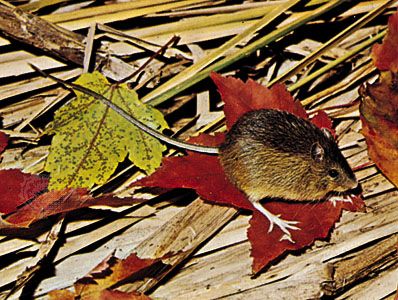
Jumping mice (subfamily Zapodinae) possess several distinctive physical characteristics that facilitate their unique lifestyle and movement:
- Body Size: They are small rodents, typically weighing between 13 and 26 grams (0.5 to 0.9 ounce) and measuring 8 to 11 cm (3.1 to 4.3 inches) in length, excluding the tail.1
- Tail: Their tail is notably long—exceeding the length of their body—and is described as scantily haired. It is colored brown on the top and white on the bottom, serving as a critical balancing organ during their powerful leaps.1
- Hind Limbs: They feature disproportionately long hind legs, which are specialized for saltatory (leaping) locomotion. These limbs allow them to perform erratic jumps of up to 4 meters (13 feet) when threatened.18
- Fur and Coloration: Their coat is soft or slightly coarse and exhibits a tripartite color pattern: brown on the upper body from nose to rump, grayish to rust-colored on the sides, and white on the underparts.1
- Anatomy: Unlike some other rodents, jumping mice lack cheek pouches.4
Sources
- jumping mouse — Encyclopædia Britannica
- Why Do Some Animals Hibernate? — Encyclopædia Britannica
- Locomotion - Saltation — Encyclopædia Britannica
- mammal - Locomotion — Encyclopædia Britannica
- apterygote - Locomotion — Encyclopædia Britannica
- Zapus — Merriam-Webster
- birch mouse — Encyclopædia Britannica
- jumping mouse — Merriam-Webster
Published on · 3 min read