Ladybug
Several species of ladybugs (family Coccinellidae) are found in North America, ranging from native species to those introduced for pest control.
What are some of the most common ladybug species found in North America?
Several species of ladybugs (family Coccinellidae) are found in North America, ranging from native species to those introduced for pest control.
- Convergent ladybug (Hippodamia convergens): A native species known for its migration patterns, particularly in California. Both larvae and adults are significant predators of aphids2.
- Multicolored Asian lady beetle (Harmonia axyridis): Introduced to the United States to control pests like aphids and scale insects, this species is now widely distributed. It is known for its tendency to swarm and enter homes during colder months to hibernate.12
- Nine-spotted ladybird beetle (Coccinella novemnotata): A species characterized by its distinct pattern of four black spots on each reddish-orange wing cover, plus one shared spot.3
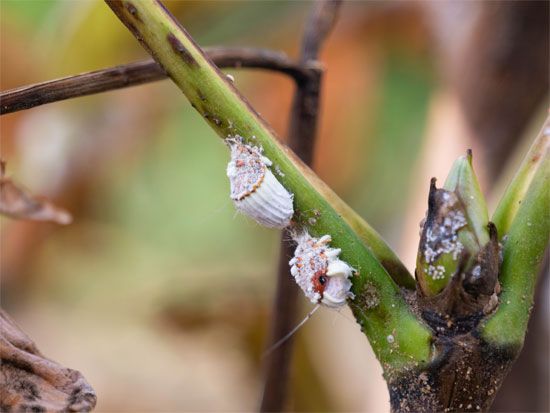
- Vedalia beetle (Rodolia cardinalis): Also known as the Australian ladybird beetle, it was introduced to North America to combat the cottony-cushion scale that threatened citrus crops.3
While most are beneficial predators, some species, such as the squash beetle and the Mexican bean beetle, are herbivorous and can be destructive to plants.3
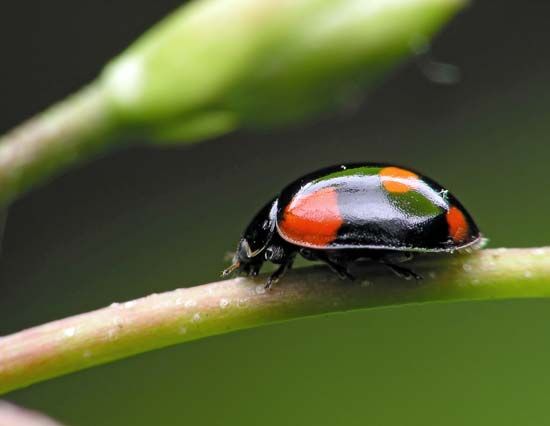
What is the life cycle of a ladybug, from egg to adult?
The life cycle of a ladybug typically spans about four weeks, allowing for multiple generations to be produced throughout the summer. This process involves complete metamorphosis, consisting of four distinct stages:2
- Egg: Female ladybugs deposit their eggs on leaves or twigs, typically in areas where aphids or other prey are abundant.2
- Larva: Upon hatching, the soft-bodied, slender larvae begin feeding voraciously on aphids, scale, or insect eggs using their chewing mandibles. During this stage, the larvae pass through four distinct growth phases.2
- Pupa: After completing their final larval growth stage, the insects attach themselves to an object and pupate within their last larval skin. This is a period of transformation where larval structures break down and adult features, such as wings, develop.24
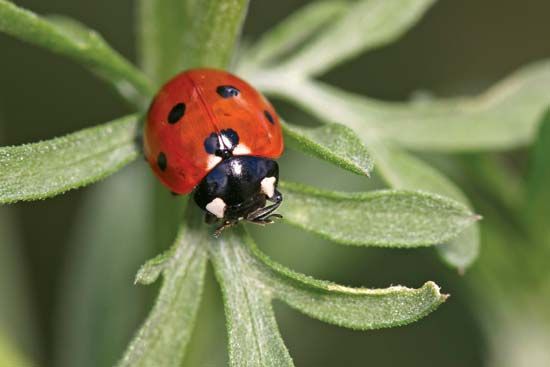
- Adult: The adult ladybug emerges from the pupal stage to complete the cycle. Adults are hemispheric in shape, typically measuring 8 to 10 mm in length, and are known for their bright colors and varied spot patterns.2
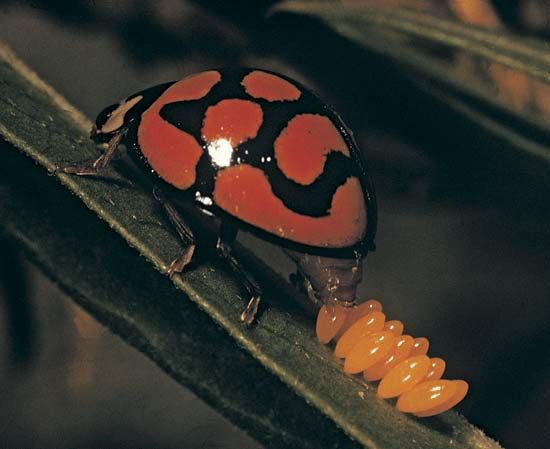
Why are ladybugs considered beneficial insects in agriculture?
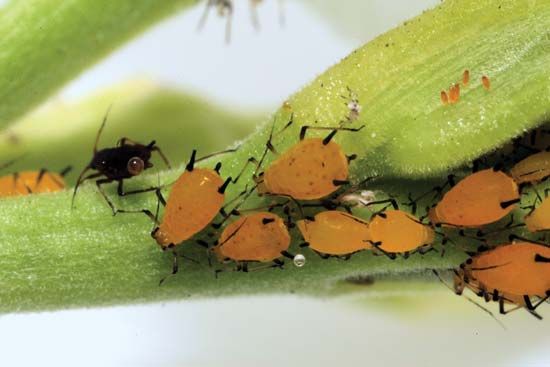
Ladybugs are considered highly beneficial in agriculture primarily because they serve as effective natural predators of common crop-destroying pests. Both the larvae and adults of most ladybug species (family Coccinellidae) feed voraciously on plant-sucking insects, including aphids, scale, and mites.27
Their impact on pest populations can be significant; for instance, a single larva of the convergent ladybug can consume 300 aphids during its two-week developmental period, while an adult female may devour several thousand aphids over her three-month lifespan. Because of this predatory behavior, clusters of ladybugs are frequently collected and sold to farmers and gardeners as a form of biological pest control. A notable historical example is the introduction of the vedalia beetle to North America, which successfully mitigated an outbreak of cottony-cushion scale that threatened to destroy citrus orchards.2
While most species are beneficial, it is important to note that a small number of coccinellids, such as the squash beetle and the Mexican bean beetle, are herbivorous and can be destructive to crops.27
How many species of ladybugs exist, and where are they found?
There are approximately 5,000 species of ladybugs (family Coccinellidae) currently identified. These beetles are widely distributed across the globe, inhabiting a diverse range of environments where their prey, such as aphids, scale, and mites, are found.
Because they are found globally, their specific habitats vary significantly depending on the species and the local climate. For instance, some species, like the convergent ladybug, exhibit distinct migration patterns, moving between valley regions and mountainous areas like the Sierra Nevada to find suitable conditions for feeding and hibernation. During the winter, they often congregate in large clusters in forest litter or other sheltered locations to enter a state of dormancy.
Sources
- multicolored Asian lady beetle — Merriam-Webster
- ladybug — Encyclopædia Britannica
- Asian lady beetle — Merriam-Webster
- pupa — Encyclopædia Britannica
- Hymenoptera - Pupa — Encyclopædia Britannica
- Lepidoptera - Growth, molting, and metamorphosis — Encyclopædia Britannica
- Coleoptera - As predators — Encyclopædia Britannica
Published on · 3 min read