Congo Basin
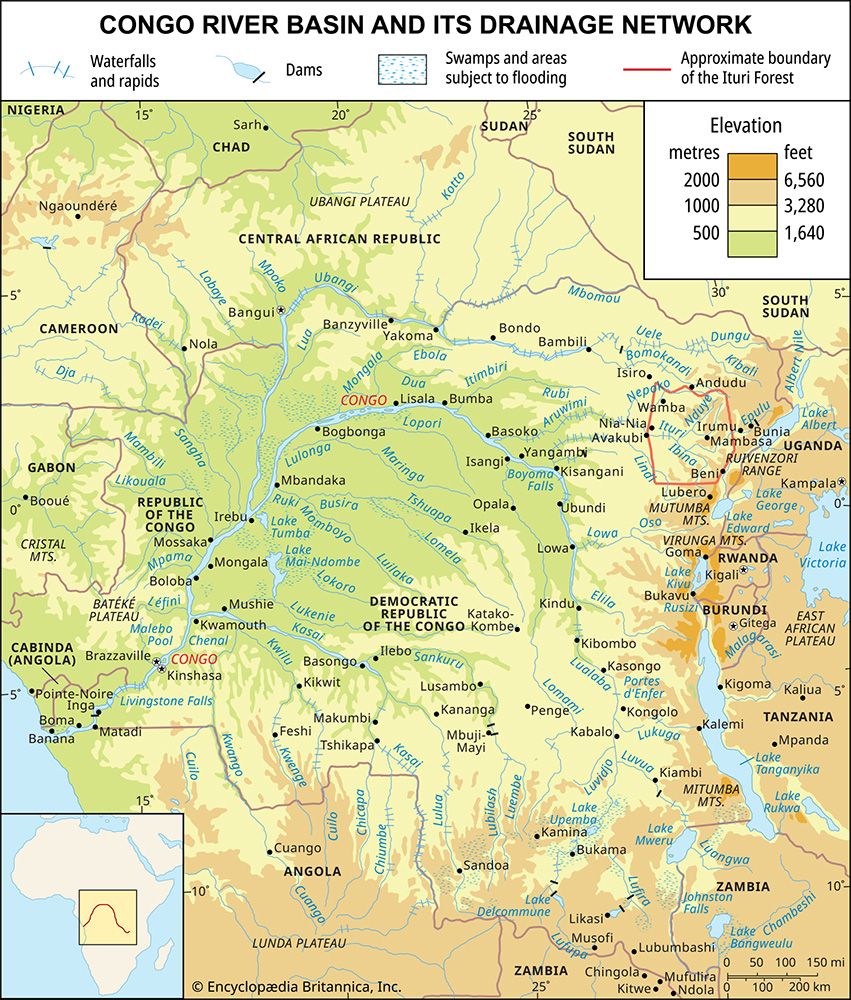
The Congo Basin is the vast hydrographic basin of the Congo River, located in west-central Africa and lying astride the Equator. Covering more than 1.3…
What is the Congo Basin and where is it located in Africa?
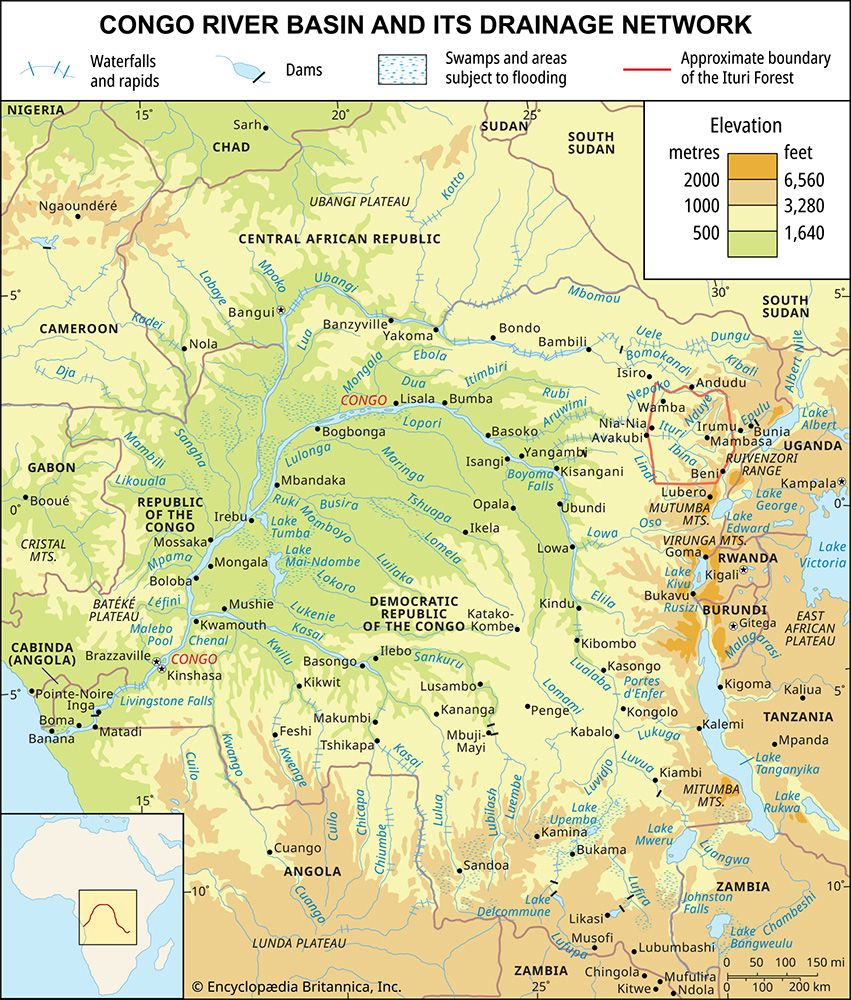
The Congo Basin is the vast hydrographic basin of the Congo River, located in west-central Africa and lying astride the Equator. Covering more than 1.3 million square miles, it is the world’s second-largest river basin.1
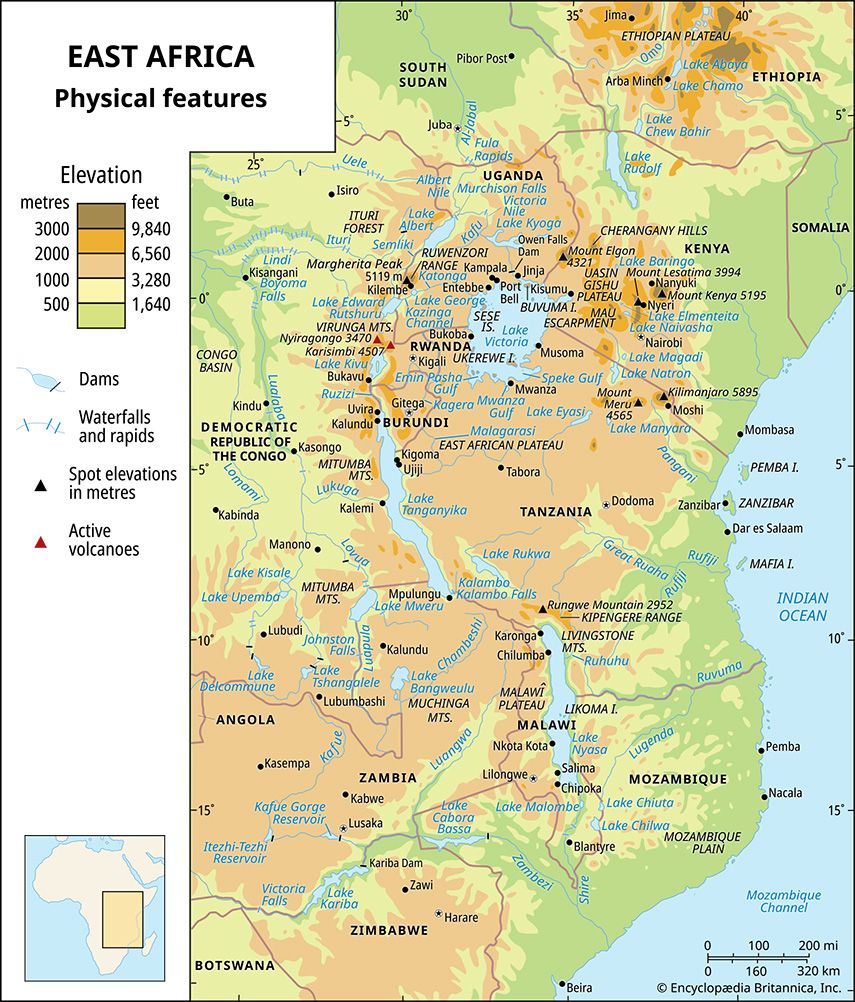
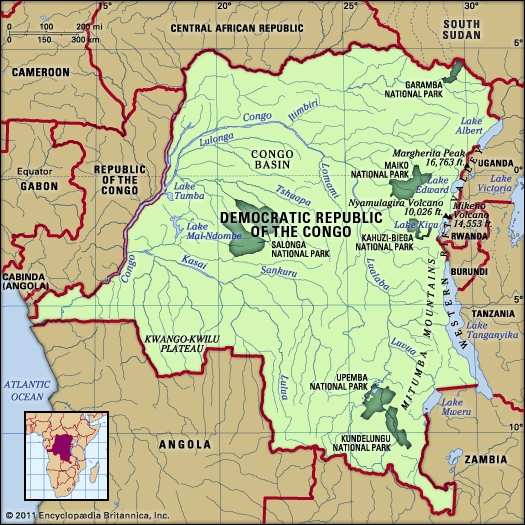
Geographically, the basin is a distinct depression situated between the Sahara to the north, the Atlantic Ocean to the west, and the East African lakes to the east. Its drainage area encompasses nearly the entire Democratic Republic of the Congo and Republic of the Congo, as well as the Central African Republic, northern Angola, western Zambia, and portions of Cameroon and Tanzania1.1
The central region, known as the cuvette, contains the world’s second-largest rainforest, characterized by a dense, evergreen equatorial climate.12
What is the geological history of the Congo Basin’s formation?
The geological formation of the Congo Basin is defined by a persistent, long-term tendency toward subsidence, which has created a vast central depression known as the cuvette.1
This process has been ongoing since at least the late Precambrian era, approximately 542 million years ago. Over these hundreds of millions of years, the basin has accumulated significant layers of sediment derived from the erosion of surrounding peripheral formations. These deposits consist primarily of sands and sandstones, which now form thick continental strata underlying the region’s surface.1
The basin’s structure is characterized by an amphitheater-like arrangement of relief and depositional strata surrounding the main channel of the Congo River. This subsidence is balanced by tectonic uplifting along the edges of the cuvette, particularly on its eastern side, a process influenced by the formation of the Western Rift Valley. In more recent geological time, the central depression has been further shaped by the accumulation of Quaternary alluvial deposits.1
How does the Congo River system influence the basin’s geography and climate?
The Congo River system is the primary architect of the Congo Basin, shaping both its physical geography and its climatic character.
Geographic Influence
The basin is defined by a vast, fan-shaped network of tributaries that flow from concentric slopes toward a central depression known as the cuvette1. This river system has carved the landscape over millions of years, depositing thick layers of alluvial sediment and creating fertile floodplains. As the river enters its middle course, it widens significantly, forming a complex mosaic of islands, channels, and swampy areas that define the central basin’s topography.167
Climatic Influence
The river system’s hydrology is inextricably linked to the equatorial climate. Because the basin spans 20 degrees of latitude across the Equator, the river receives rainfall throughout the year, resulting in a remarkably regular flow. This consistent moisture supports the world’s second-largest rainforest, which thrives in the humid lowlands. Furthermore, the river acts as a massive drainage regulator; while individual tributaries may experience seasonal fluctuations, the sheer scale of the basin ensures that no single meteorological event can disrupt the overall stability of the water system.867
What are the main characteristics of the Congo Basin’s ecosystem and biodiversity?
The Congo Basin is home to the world’s second-largest rainforest, a vast, dense ecosystem that thrives under an equatorial climate. This region is characterized by a complex mosaic of habitats, ranging from lush, evergreen forests to expansive savanna woodlands and coastal mangrove swamps.1102
Flora and Biodiversity
The central basin acts as a massive reservoir for plant life. The forest canopy, reaching heights of 130 to 160 feet, shelters a diverse undergrowth of vines and leafy plants. Key tree species include mahogany, ebony, limba, and sapele, alongside medicinal plants like cinchona.1011
Fauna
The basin supports an incredibly rich variety of animal life:
- Primates: The region is a critical habitat for chimpanzees, bonobos, and gorillas.1011
- Large Mammals: Forest elephants, okapi, buffaloes, and various antelope species inhabit the forests and savanna regions.1011
- Predators: Leopards, lions, cheetahs, and hyenas are found in the savanna and grassland areas.1011
- Aquatic Life: The river systems are populated by crocodiles, hippopotamuses, and a wide array of fish, including lungfishes and cichlids.1011
Conservation efforts are managed through several national parks, many of which are designated UNESCO World Heritage sites, to protect these endangered species and their habitats from the ongoing threats of hunting and habitat loss.10
Sources
- Congo basin — Encyclopædia Britannica
- Congo River - Plant life — Encyclopædia Britannica
- Democratic Republic of the Congo - Land — Encyclopædia Britannica
- Republic of the Congo - Early history — Encyclopædia Britannica
- Congo Canyon — Encyclopædia Britannica
- Congo River - Physiography — Encyclopædia Britannica
- Democratic Republic of the Congo - Drainage and soils — Encyclopædia Britannica
- Congo River - Hydrology of the Congo River — Encyclopædia Britannica
- Congo River: Top Questions — Encyclopædia Britannica
- Democratic Republic of the Congo - Plant and animal life — Encyclopædia Britannica
- Republic of the Congo - Plant and animal life — Encyclopædia Britannica
Published on · 3 min read