Lake Nipissing
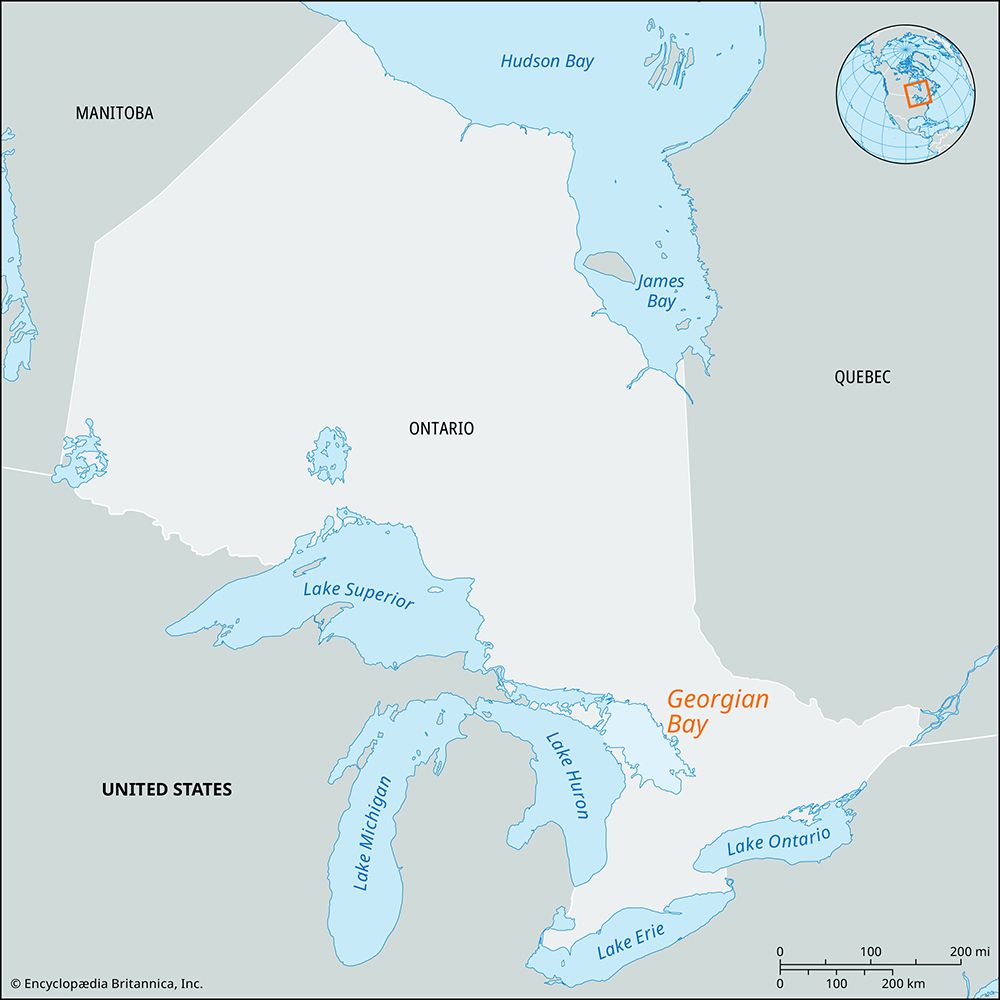
Lake Nipissing is a lake located in southeastern Ontario, Canada, situated between the Ottawa River and Georgian Bay. Covering 321 square miles (832 square…
What is Lake Nipissing?
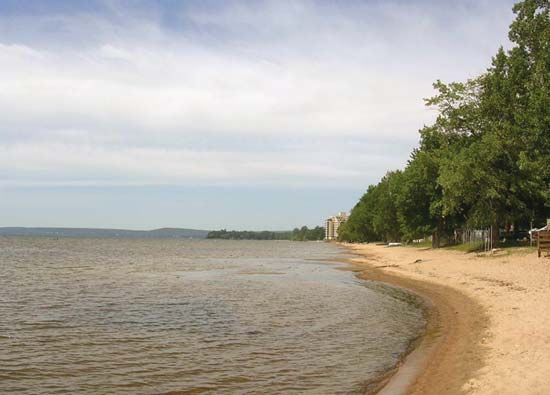
Lake Nipissing is a lake located in southeastern Ontario, Canada, situated between the Ottawa River and Georgian Bay. Covering 321 square miles (832 square km), it is a remnant of the glacial Lake Algonquin.1
The name Nipissing translates to “little water,” and the lake is currently drained by the French River into Georgian Bay. Historically, the lake was discovered by French explorer Étienne Brûlé around 1610 and subsequently became a vital fur-trading route that connected the Ottawa River to the upper Great Lakes.1
What was the significance of the fur trade in Ontario?
The fur trade was the primary commercial enterprise of New France and a defining force in the early history of Ontario. Driven by the high demand for beaver hats in Europe, the trade shaped colonial settlement, international alliances, and the lives of First Nations peoples.2
Economic and Strategic Impact
The fur trade dictated the geography of French expansion. Explorers like Samuel de Champlain secured vital inland routes, such as the Ottawa River and Lake Nipissing, to connect the St. Lawrence to the Great Lakes. Because the trade required few settlers beyond its own employees, the population of New France grew slowly, and the economy remained heavily dependent on this single industry.32
Consequences for First Nations
The trade fundamentally transformed Indigenous societies:
- Alliances and Conflict: The French aligned with the Huron (Wendat) to control trade, while the Iroquois (Haudenosaunee) eventually allied with the British. This competition exacerbated traditional rivalries and escalated warfare through the introduction of European firearms.1324
- Devastation: The introduction of European diseases, such as smallpox, decimated Indigenous populations3.4
- Economic Crisis: Overhunting of beavers and the disruption of trade routes led to the collapse of the Huron confederacy by 1649, leaving the region depopulated and open to new groups like the Ojibwe.24
How do glacial lakes form?
Glacial lakes are primarily formed through the mechanical action of ice sheets and glaciers, which create basins that subsequently fill with water. This process occurs through several distinct mechanisms:
- Glacial Scouring: As large ice sheets move over relatively level surfaces, they scour the bedrock, creating numerous small, shallow basins known as ice-scour lakes. In mountainous regions, valley glaciers deepen existing valleys into large, narrow basins, sometimes forming a series of lakes that resemble a staircase. This process also creates circular basins called cirques at the heads of glaciated valleys.67
- Damming: Lakes often form when water is trapped by physical barriers. Glacial moraine—sedimentary deposits left at glacier margins—can act as a dam, as seen in the Finger Lakes of New York. Additionally, the ice masses themselves can temporarily dam water, or create basins through the thawing of permafrost.68
- Kettle Formation: Kettle lakes are formed when blocks of ice are left behind by retreating glaciers, become buried in sediment, and eventually melt to leave a depression that fills with water.6
The Great Lakes were formed as glaciers deepened existing synclinal depressions and valleys; as the ice retreated, these basins filled with water.69
Who was Étienne Brûlé and what were his explorations?
Étienne Brûlé (c. 1592–1633) was a French-born explorer who arrived in New France in 1608. He holds the distinction of being the first recorded European to enter the territory that is now the province of Ontario.11
Brûlé’s explorations and contributions included:
- Cultural Integration: Between 1610 and 1611, he lived among the Algonquin people to master their language, subsequently serving as a vital interpreter between the French and various Indigenous groups, including the Hurons.11
- Geographic Discoveries: In 1615, he accompanied Samuel de Champlain to explore Lake Ontario. He is also credited with likely reaching Lake Superior by 1622.11
Brûlé’s life ended in 1633 under mysterious circumstances; historical accounts suggest he was killed by the Hurons, the tribe that had adopted him, an event that reportedly left a lasting mark on their oral traditions.11
Sources
- Lake Nipissing — Encyclopædia Britannica
- Canada - The character of French settlement — Encyclopædia Britannica
- Toronto - Early settlement — Encyclopædia Britannica
- Canada - Samuel de Champlain — Encyclopædia Britannica
- Native American - The Iroquoians of Huronia — Encyclopædia Britannica
- lake - Basins formed by glaciation — Encyclopædia Britannica
- North America - Lakes of North America — Encyclopædia Britannica
- glacial landform - Glaciolacustrine deposits — Encyclopædia Britannica
- glacial landform - Glacial deposition — Encyclopædia Britannica
- Pleistocene Epoch - Glaciation — Encyclopædia Britannica
- Étienne Brûlé — Encyclopædia Britannica
Published on · 3 min read