Leatherback Sea Turtle
The leatherback sea turtle (Dermochelys coriacea) is a unique species of sea turtle and the only member of the family Dermochelyidae. Unlike other sea…
What is a leatherback sea turtle?
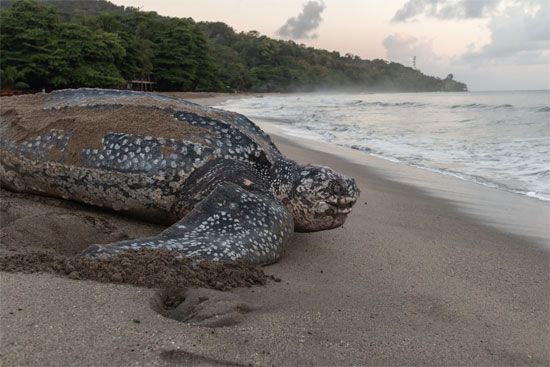
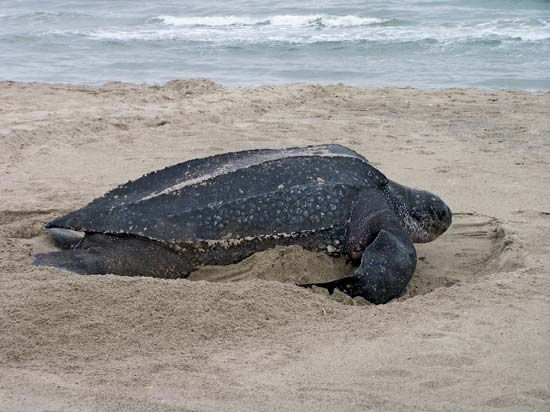
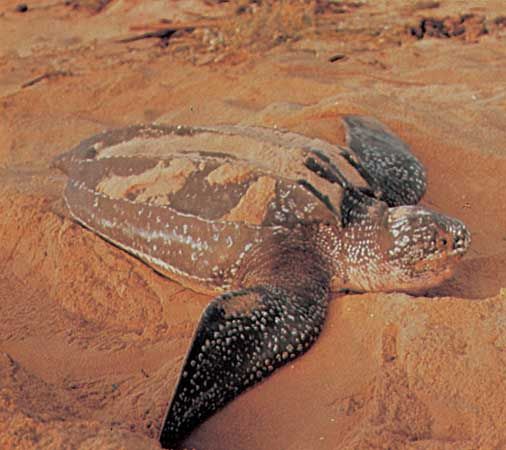
The leatherback sea turtle (Dermochelys coriacea) is a unique species of sea turtle and the only member of the family Dermochelyidae. Unlike other sea turtles, it lacks a hard, bony shell covered in scales; instead, it possesses a bony carapace covered by a thick, leathery skin1.12
As the world’s largest turtle, adults can reach lengths of 2.4 meters (8 feet) and weigh up to 900 kg (2,000 pounds). These highly migratory reptiles inhabit temperate and tropical oceans worldwide, often traveling thousands of miles between feeding and nesting sites. They are specialized predators that feed primarily on jellyfish, using sharp-edged jaws and backward-pointing throat spines to capture their prey.13
Currently classified as a vulnerable species by the IUCN, leatherbacks face significant threats from plastic pollution, entanglement in fishing gear, and habitat loss.12
Where do leatherback sea turtles live?
Leatherback sea turtles are highly migratory reptiles that inhabit temperate and tropical oceans across the globe. Unlike many other sea turtle species that prefer coastal environments, leatherbacks are primarily pelagic, meaning they live in open-ocean habitats.13
Their distribution is remarkably wide, ranging from the high seas to intertidal zones. While they spend the vast majority of their lives at sea, females must come ashore to nest, typically selecting tropical or subtropical beaches to bury their eggs in the sand.13
Leatherbacks are well-adapted to travel through diverse marine environments, including colder waters, thanks to their large body size, a layer of insulating fat, and a specialized network of blood vessels that helps them maintain body heat. They are known to migrate thousands of miles annually between their feeding grounds and nesting sites.1
What makes leatherback sea turtles different from other sea turtles?
The leatherback sea turtle (Dermochelys coriacea) is distinct from other sea turtles in several key ways:
- Shell Structure: Unlike other sea turtles, which have hard, bony shells covered in epidermal scales (scutes), the leatherback lacks these features. Its shell consists of a reduced bony architecture covered by thick, leathery skin, which provides flexibility at the expense of armored protection.41
- Taxonomy: It is the only member of the family Dermochelyidae, whereas all other sea turtle species belong to the family Cheloniidae.31
- Size: The leatherback is the largest turtle species in the world, with adults reaching lengths of up to 2.4 meters (8 feet) and weighing as much as 900 kg (2,000 pounds).31
- Habitat and Range: While most sea turtles prefer coastal environments, leatherbacks are primarily pelagic, living in open-ocean habitats. They are the most wide-ranging of all reptiles and are capable of swimming in colder waters due to specialized adaptations, including a layer of insulating fat and a network of blood vessels that helps maintain body heat.31
- Diet: They are specialized predators that feed primarily on soft-bodied prey like jellyfish, utilizing backward-pointing spines in their throats to capture them.31
What do leatherback sea turtles eat?
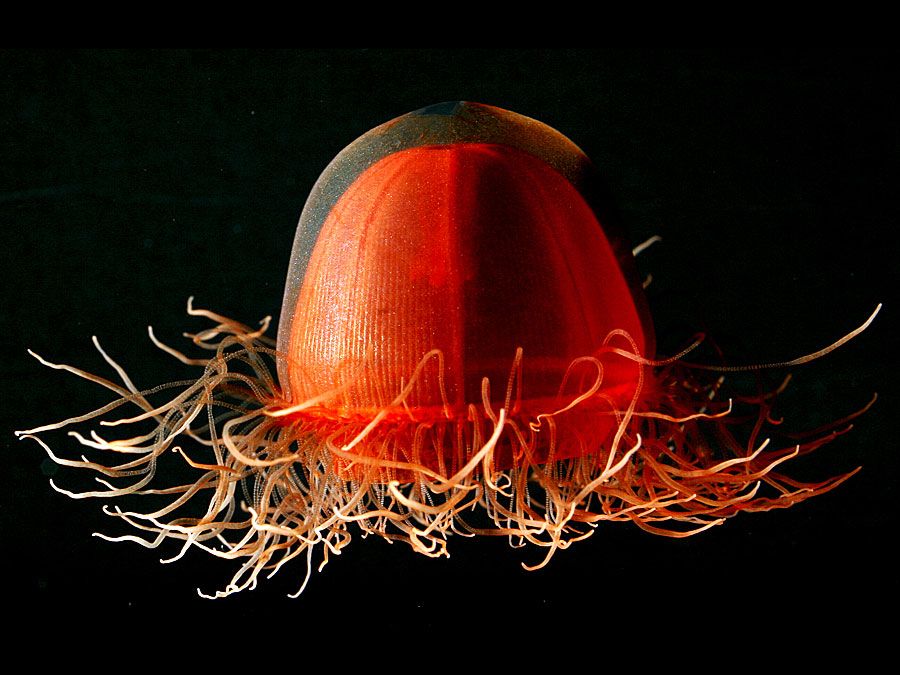
Leatherback sea turtles are specialized predators that feed primarily on soft-bodied, open-ocean prey, most notably jellyfish. To assist in capturing and holding onto this slippery prey, they possess sharp-edged jaws, toothlike cusps, and throats lined with backward-pointing spines.1
In addition to jellyfish, their diet may include:
- Squid
- Salps
- Crustaceans
- Fish
- Seaweed
Because their diet consists largely of jellyfish, leatherbacks are particularly vulnerable to plastic pollution. They often mistake floating plastic bags for their natural prey, which can lead to ingestion that causes serious harm or death.1
Sources
- leatherback sea turtle — Encyclopædia Britannica
- turtle - Nesting and egg laying — Encyclopædia Britannica
- sea turtle — Encyclopædia Britannica
- sea turtle: Top Questions — Encyclopædia Britannica
Published on · 3 min read