Tropical Dry Forest
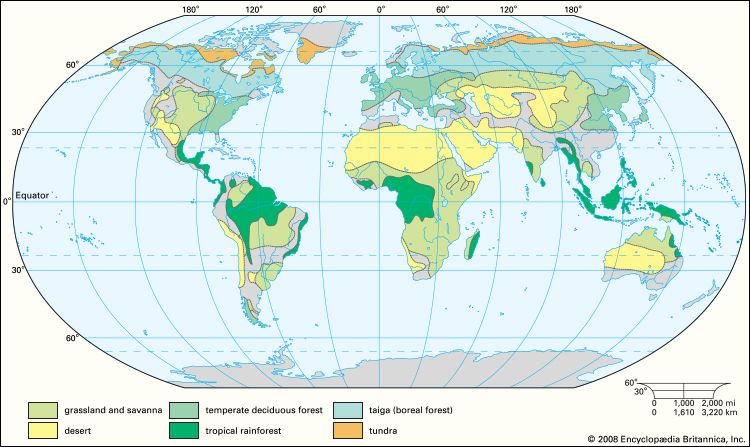
A tropical dry forest is a biome characterized by an open woodland structure located in tropical regions between 10° and 25° latitude. These forests…
What is Tropical dry forest?
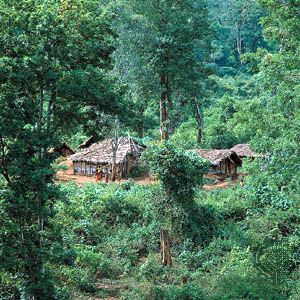
A tropical dry forest is a biome characterized by an open woodland structure located in tropical regions between 10° and 25° latitude. These forests experience a highly seasonal climate, defined by a long dry season—lasting six months or more—followed by a period of heavy rainfall.1
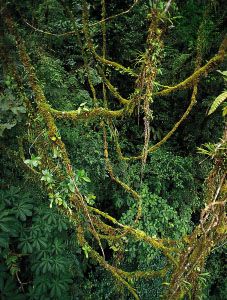
During the dry season, many trees shed their leaves to conserve moisture, only to sprout new foliage when the rains return. The forest’s density and composition vary based on precipitation; wetter areas support taller, more evergreen vegetation, while drier regions feature lower canopies and species that enter dormancy during droughts. These ecosystems are home to diverse life, including lianas, epiphytes, and animals such as monkeys and parrots, many of which migrate to wetter habitats during the dry season.1
Unfortunately, these forests have been severely impacted by deforestation for human development and agriculture. Protecting these environments is essential, as prioritizing short-term economic gain over long-term ecological health is fundamentally unsustainable.12
Why do trees in tropical dry forests shed their leaves?
Trees in tropical dry forests shed their leaves primarily as a survival strategy to cope with the prolonged dry season, which typically lasts six months or more.4
Because leaves are the primary sites of transpiration—the process by which plants lose water to the atmosphere—shedding them allows trees to significantly reduce water loss during periods when moisture is scarce. By entering a state of dormancy and dropping their foliage, these trees avoid the stress of trying to maintain leaves when water uptake from the soil is limited.54
This process is a hallmark of tropical deciduous forests, where up to three-quarters of the trees may lose their leaves to survive the drought. Once the rainy season begins, the trees sprout new leaves to take advantage of the renewed water supply. This adaptation is essential for maintaining the tree’s physical integrity and survival in a highly seasonal climate where rainfall is not available year-round.645
How do animals survive the long dry season in these forests?
Animals in tropical dry forests have developed several behavioral and physiological strategies to survive the challenges of the long dry season, which is characterized by water shortages and reduced food availability.
- Migration: Many mobile animals, such as various monkeys, parrots, and other mammals and birds, engage in seasonal migrations. They occupy these forests during or immediately after the wet season when resources are abundant and move to wetter habitats as the dry season progresses.101
- Estivation: Some animals respond to the combination of high temperatures and water scarcity by entering estivation. This state of dormancy helps them conserve energy and moisture when environmental conditions become adverse.11
- Behavioral Adjustments: Many animals employ behavioral mechanisms to avoid extreme heat and dehydration. This includes seeking shelter, moving to shaded areas, or adjusting their activity patterns to minimize exposure to the sun and heat.11
- Subterranean Living: Many invertebrates, such as termites, arthropods, and earthworms, spend the majority of their lives underground. This allows them to escape the harsh conditions of the surface and access a more stable environment.1
What is the difference between a tropical dry forest and a savanna?
While tropical dry forests and savannas both experience alternating wet and dry seasons, they are distinguished primarily by their vegetation structure and environmental dynamics.
- Vegetation Structure: A tropical dry forest is characterized as an open woodland. In contrast, a savanna is defined by a continuous layer of tall grasses with an open canopy of scattered trees and shrubs. The distinction between these types is often arbitrary, as they exist along a vegetation continuum.12113
- Environmental Drivers: Savanna landscapes are heavily shaped by bushfires and grazing, which prevent the development of a closed forest canopy. In tropical dry forests, the density and height of the canopy are more directly influenced by the total amount of annual rainfall.113
- Geography: Tropical dry forests are typically found between 10° and 25° latitude, while savannas generally occur in tropical regions 8° to 20° from the Equator.121
Sources
- Tropical dry forest — Encyclopædia Britannica
- Tropical rainforest - Flora — Encyclopædia Britannica
- Status of the world’s tropical forests - Short-term interests versus long-term gains — Encyclopædia Britannica
- Temperate forest - Environment — Encyclopædia Britannica
- Tropical rainforest - Environment — Encyclopædia Britannica
- Evergreen — Encyclopædia Britannica
- Biosphere - Humidity — Encyclopædia Britannica
- Deciduous forest: Top Questions — Encyclopædia Britannica
- Why Do Leaves Fall in Autumn? — Encyclopædia Britannica
- Biosphere - Temperature — Encyclopædia Britannica
- Savanna - Population and community development and structure — Encyclopædia Britannica
- Savanna: Top Questions — Encyclopædia Britannica
- Savanna - Environment — Encyclopædia Britannica
Published on · 3 min read