Smilax
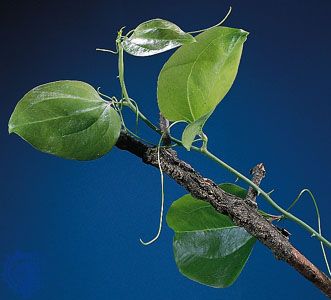
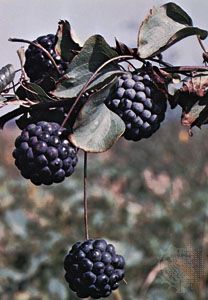
Smilax is a genus of approximately 300 species of woody or herbaceous vines belonging to the family Smilacaceae. These plants, often referred to as catbriers…
What is Smilax?
Smilax is a genus of approximately 300 species of woody or herbaceous vines belonging to the family Smilacaceae. These plants, often referred to as catbriers or greenbriers, are native to tropical and temperate regions worldwide.12
Key characteristics of the genus include:
- Physical Structure: Many species feature stems covered in prickles and are supported by tendrils. Their leaves are typically leathery with three to nine large veins.13
- Reproduction: They produce small, white or yellow-green flowers on separate male and female plants, followed by red or bluish-black berries.1
- Growth Habit: As members of the order Liliales, they are often found as climbing or trailing vines that can form dense, impenetrable thickets.132
Beyond their role in natural ecosystems, certain Smilax species are economically significant. The roots of several tropical varieties are used to produce sarsaparilla, an aromatic flavoring agent historically used in tonics and now commonly found in root beer.3
What are some other plants in the Liliales order?
The order Liliales encompasses a diverse range of perennial herbs and climbers. Beyond the genus Smilax, the order includes several notable families and genera:
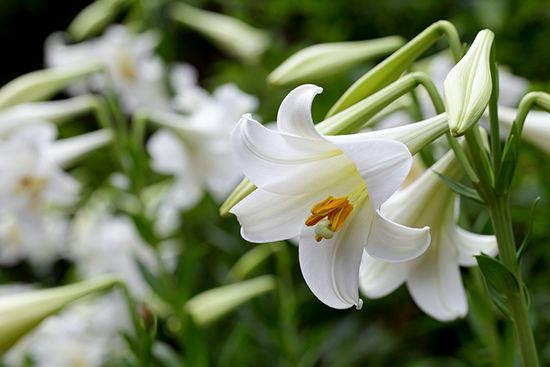
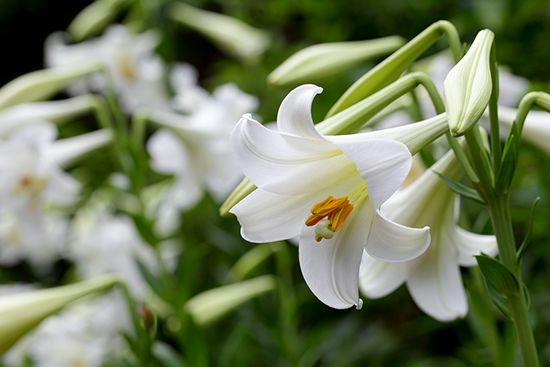
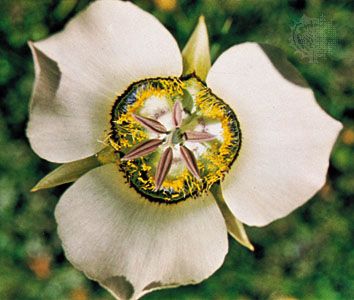
- Liliaceae: This is the largest family in the order, featuring iconic ornamental plants such as the lily (Lilium), the tulip, the mariposa lily (Calochortus), and Fritillaria.3
- Colchicaceae: This family includes the autumn crocus (Colchicum autumnale), the flame lily (Gloriosa superba), and the genus Uvularia. These plants are often noted for containing medicinal alkaloids like colchicine. noted for containing medicinal alkaloids like colchicine.3
- Alstroemeriaceae: This family is known for the lily of the Incas (Alstroemeria) and the genus Bomarea, which are characterized by their twisted, resupinate leaves and umbel-clustered flowers.3
- Melanthiaceae: This family includes woodland herbs such as Veratrum, Amianthium, and Trillium.3
- Philesiaceae: This family includes the genus Lapageria, known for its showy blooms.3
These plants are widely distributed, particularly in temperate and subtropical regions, and are valued for their ornamental beauty, food production, and chemical properties.3
How do tendrils help climbing plants like Smilax grow?
In climbing plants like Smilax (catbrier), tendrils serve as specialized organs that provide essential support, allowing the plant to grow vertically and reach sunlight. While many plants use modified leaves or stem branches as tendrils, in Smilax, it is the stipules that function as these climbing structures.
Tendrils are highly sensitive to mechanical stimulation, a response known as thigmotropism. When a tendril brushes against a solid object, it curves toward the contact point and wraps around it, effectively anchoring the vine. This process is further supported by the development of sclerenchyma, a type of strong mechanical tissue that matures within the tendril to provide the structural integrity necessary to support the weight of the plant. By utilizing these prehensile strands, Smilax can securely attach to fences, other plants, or structures, enabling it to climb and thrive in its environment.678
What is the difference between woody and herbaceous vines?
The primary difference between woody and herbaceous vines lies in their vascular structure and their capacity for secondary growth.
Woody Vines
Woody vines, often referred to as lianas, develop true wood through a process called secondary growth. This occurs via the vascular cambium, a lateral meristem that produces secondary xylem and phloem cells. As these plants grow, the cambium adds layers of tissue that increase the stem’s diameter and provide structural rigidity, allowing them to persist and grow over many years. Common examples include wisteria, clematis, and various ivies.121113
Herbaceous Vines
Herbaceous vines lack true woody tissues and typically undergo little to no secondary growth. Their stems are generally flexible and green, relying on sclerenchyma cells for support rather than secondary xylem. Many herbaceous vines are annuals or biennials that die back during winter, often persisting through underground storage organs like bulbs or rhizomes. Examples include morning glory and ornamental gourds.1113
While the distinction is usually clear, some plants are considered “semiwoody” because they undergo limited secondary growth, making their classification somewhat ambiguous.11
Sources
- Smilax — Encyclopædia Britannica
- sarsaparilla — Encyclopædia Britannica
- Liliales — Encyclopædia Britannica
- smilax — Merriam-Webster
- Asparagales - Organization and taxonomy — Encyclopædia Britannica
- Tendril — Encyclopædia Britannica
- Angiosperm - Leaf modifications — Encyclopædia Britannica
- Did you know? — Merriam-Webster
- Tropism — Encyclopædia Britannica
- houseplant - Climbers and trailers — Encyclopædia Britannica
- gardening - Shrubs and vines (climbers) — Encyclopædia Britannica
- vine — Encyclopædia Britannica
- Angiosperm - Secondary vascular system — Encyclopædia Britannica
- Herbaceous plant — Encyclopædia Britannica
- Plant development - Later growth — Encyclopædia Britannica
Published on · 3 min read