Lophospira
Lophospira is a genus of extinct gastropods, or snails, that lived during the Ordovician to Devonian periods, approximately 488 million to 359 million years…
What is Lophospira?
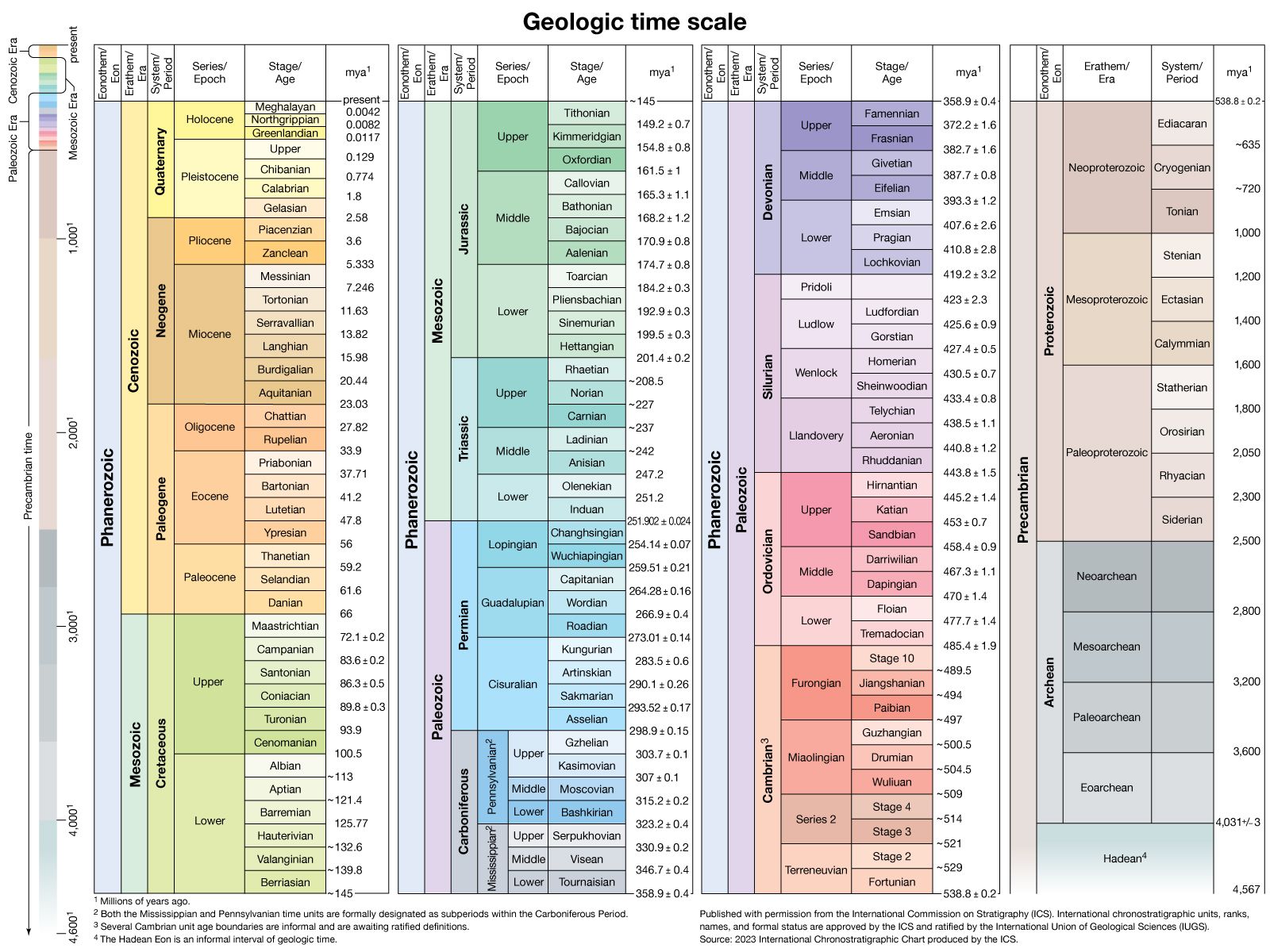
Lophospira is a genus of extinct gastropods, or snails, that lived during the Ordovician to Devonian periods, approximately 488 million to 359 million years ago. These organisms are identified through their fossilized remains found in marine rock formations.1
The shell of a Lophospira is characterized by a distinctive, step-like arrangement of whorls, where each successive whorl is smaller than the one beneath it. The apex of the shell is capped by a small, cone-shaped whorl.1
What are gastropods?
A gastropod is any member of the class Gastropoda, which is the largest group within the phylum Mollusca. This diverse class includes more than 65,000 animal species, primarily categorized as snails—which typically possess a shell for protection—and slugs, which have evolved to lose or reduce their shells to an internal fragment.3
Gastropods are remarkably successful, having adapted to nearly every major habitat, including oceans, freshwater environments, and land. Their ecological roles are varied: some are scavengers that decompose organic matter, while others are predators, herbivores, or parasites.345
While some species are valued by humans as food (such as those used for escargot) or for their decorative shells, others can be agricultural pests or serve as intermediate hosts for parasites that cause human diseases like schistosomiasis. Fossil records indicate that gastropods have existed since the Cambrian period, showing significant adaptive radiation early in their evolutionary history.356
What defines the Ordovician period?
The Ordovician Period is the second period of the Paleozoic Era, spanning from 485.4 million to 443.8 million years ago. It was a time of profound transformation in Earth’s plate tectonics, climate, and biological systems.78
Geological and Climatic Features
Rapid seafloor spreading led to some of the highest global sea levels in the Phanerozoic Eon, causing extensive flooding of the continents. Atmospheric carbon dioxide levels were significantly higher than today, generally fostering warm climates. However, the period concluded with a brief but intense interval of glaciation in the Southern Hemisphere.879
Biological Evolution and Extinction
The period is defined by the “Ordovician radiation,” an intense diversification of marine life that saw the emergence of almost every modern phylum of marine invertebrate. Dominant life forms included brachiopods, bryozoans, trilobites, mollusks, echinoderms, and graptolites. The period ended with the second-largest mass extinction in Earth’s history, which claimed roughly 85 percent of species.8710
How do scientists study fossils?
Scientists study fossils through the field of paleontology, which involves rigorous scientific methods to analyze the history of life on Earth.
Excavation and Documentation
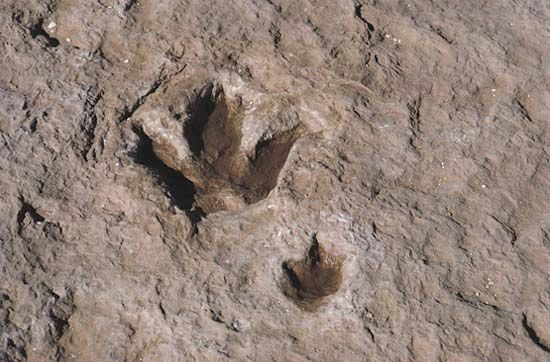
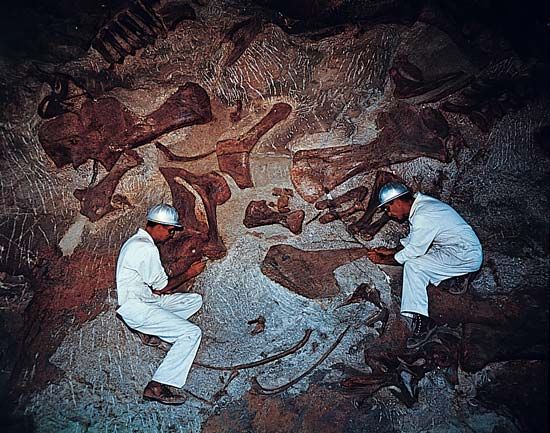
Professional fossil collection requires careful, painstaking excavation to prevent damage to specimens. Scientists label each part and catalog its exact location within the rock strata. This documentation is crucial, as it preserves the context of the find, which is often lost when fossils are collected by hobbyists or commercial entities.12
Analytical Techniques
- Biometry: Researchers apply statistical analysis to biological data to quantitatively describe the forms of organisms and their taxonomic relationships.13
- Comparative Studies: Scientists compare the structures of fossil remains with those of living animals to understand evolutionary patterns and biological functions.13
- Dating Methods: To determine the age of a specimen, scientists use radiometric dating, which measures the disintegration of radioactive elements in rocks or fossils. Additionally, the study of DNA, RNA, and proteins has become an essential tool for dating.14
- Stratigraphy: By comparing overlapping sequences of sedimentary rock, geologists build a continuous record of life forms and assign relative ages to specific layers.1215
Sources
- Lophospira — Encyclopædia Britannica
- Lophiostomataceae — Merriam-Webster
- gastropod — Encyclopædia Britannica
- gastropod - Evolution and paleontology — Encyclopædia Britannica
- mollusk - Habitats, feeding habits, and associations — Encyclopædia Britannica
- gastropod - Importance to humans — Encyclopædia Britannica
- A Journey Through Time Since the Precambrian - Ordovician Period: 485.4 million to 443.4 million years ago — Encyclopædia Britannica
- Ordovician Period — Encyclopædia Britannica
- Ordovician Period - Invertebrates — Encyclopædia Britannica
- Ordovician Period - Paleoclimate — Encyclopædia Britannica
- Silurian Period - Late Ordovician mass extinction — Encyclopædia Britannica
- fossil — Encyclopædia Britannica
- paleontology — Encyclopædia Britannica
- Did you know? — Merriam-Webster
- fossil record — Encyclopædia Britannica
Published on · 3 min read