Scrubland
Scrublands are ecosystems defined by the dominance of shrubs—woody plants typically under 5 to 8 meters tall—rather than the trees that characterize forests…
How do scrublands differ from other types of ecosystems, such as forests or grasslands?
Scrublands are ecosystems defined by the dominance of shrubs—woody plants typically under 5 to 8 meters tall—rather than the trees that characterize forests or the grasses that dominate grasslands.1
The primary differences lie in environmental suitability and vegetation structure:
- Environmental Constraints: Scrublands often occur in regions where conditions are suboptimal for tree growth, such as areas with low or erratic rainfall, nutrient-poor soils, or extreme temperatures. While forests thrive in more favorable climates, scrublands persist in harsh environments where trees struggle to regenerate.2
- Human Influence: Unlike many natural forests, some scrublands are anthropogenic, created when human activities like burning, grazing, or tree clearance degrade an environment to the point where trees can no longer return. Conversely, fire suppression can sometimes shift a scrubland toward a woodland structure, while overgrazing can convert it into a grassland.234
- Adaptations: Scrubland plants often exhibit specific adaptations to drought and fire, such as sclerophyllous leaves to conserve water or thick bark and essential oils that aid in post-fire recovery.4
How do scrublands contribute to the water cycle in their regions?
Scrublands play a vital role in the water cycle of their regions primarily by maintaining ground cover that regulates local climate and moisture dynamics. While these ecosystems are often characterized by moisture shortages and high rates of potential evapotranspiration, the presence of vegetation is essential for preventing further aridification.16
The contribution of scrublands to the water cycle includes:
- Atmospheric Regulation: Vegetation cover is critical for maintaining local precipitation patterns. When scrubland vegetation is removed, the bare ground reflects more solar energy and fails to heat the air near the surface as effectively as vegetated ground. This reduction in surface heating decreases the vertical movement of air, which in turn limits the atmospheric cooling necessary for condensation and the formation of rain.6
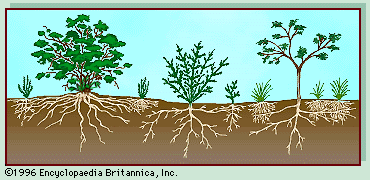
- Moisture Retention: Scrubland plants, which often possess extensive root systems, help stabilize the soil and manage water availability. In many arid regions, these plants are adapted to survive long periods of drought, becoming physiologically inactive during dry spells to conserve water.46
- Mitigating Desertification: By maintaining a layer of vegetation, scrublands act as a buffer against desertification. The loss of this cover can lead to irreversible soil degradation and a shift toward desert conditions, which further disrupts the local water cycle by reducing the land’s ability to support moisture-retaining plant life.6
What is scrubland and what are its defining characteristics in terms of vegetation?
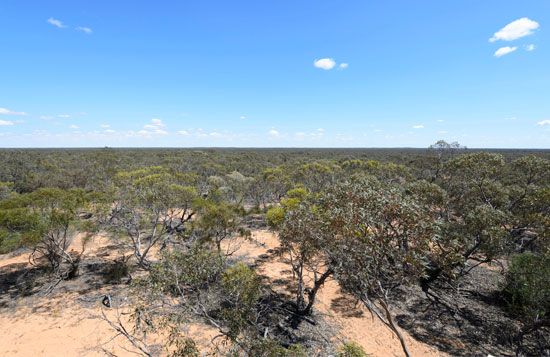
Scrubland is a diverse category of vegetation defined primarily by the dominance of shrubs—woody plants that typically do not exceed 5 meters in height if they have a single stem, or 8 meters if they are multistemmed.2
Defining Characteristics
- Vegetation Structure: The defining feature of scrubland is the prevalence of a shrubby growth habit. While some species found in scrublands are capable of growing into trees under more favorable conditions, they remain in shrub form within these ecosystems due to environmental constraints.1
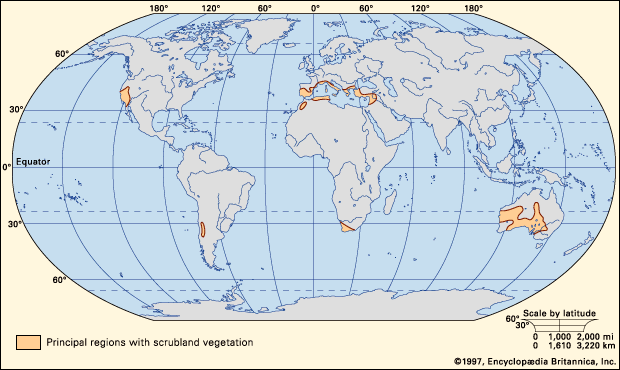
- Environmental Drivers: Scrublands typically occur in regions where conditions are suboptimal for tree growth, such as areas with low or erratic rainfall, nutrient-poor soils, or extreme temperatures. Many of the world’s most extensive scrublands are found in Mediterranean climates, characterized by mild, wet winters and hot, dry summers.312
- Origins: Scrublands can be natural or anthropogenic. Natural scrublands often evolve in response to harsh climates or specific soil conditions, while anthropogenic scrublands arise when human activities—such as burning, grazing, or tree clearance—degrade an environment to the point where trees can no longer regenerate.38
What are some of the unique plant species found in scrubland ecosystems?
Scrubland ecosystems are home to a remarkable variety of specialized plant species, many of which have evolved unique adaptations to survive in nutrient-poor soils or regions with significant moisture stress. Because these ecosystems are often geographically isolated, they frequently exhibit high levels of endemism, meaning many species are found nowhere else on Earth.5
Notable Plant Species and Genera
The composition of scrubland flora varies significantly by region:
- Fynbos (South Africa): This region is famous for its extraordinary diversity, featuring over 8,500 plant species. Key genera include:510
- Australian Scrublands: These areas are dominated by distinct sclerophyllous (hard-leaved) vegetation.11
- Mallee: Characterized by multistemmed Eucalyptus species that utilize an underground woody structure called a lignotuber to resprout after wildfires.1112
- Other prominent genera: Acacia (wattles), Banksia, Hakea, and Melaleuca.511
- North American Chaparral: Dominated by broad-leaved evergreen shrubs adapted to hot, dry summers.1
- Common species include manzanita (Arctostaphylos), chamise (Adenostoma fasciculatum), mountain mahogany (Cercocarpus betuloides), and various evergreen oaks.1
- Chenopod Scrublands: Found in drier, saline environments, these are dominated by saltbushes (family Chenopodiaceae), which are adapted to store salt in their leaves.512
Sources
- Scrubland - Environment — Encyclopædia Britannica
- Scrubland — Encyclopædia Britannica
- Mediterranean vegetation — Encyclopædia Britannica
- Scrubland - Origin — Encyclopædia Britannica
- Scrubland - Biota — Encyclopædia Britannica
- Scrubland - Biological productivity — Encyclopædia Britannica
- Desert - Population and community development and structure — Encyclopædia Britannica
- Scrubland - Population and community development and structure — Encyclopædia Britannica
- shrub — Encyclopædia Britannica
- mallee — Encyclopædia Britannica
- Fynbos — Encyclopædia Britannica
- Chaparral — Encyclopædia Britannica
- Sahara: Top Questions — Encyclopædia Britannica
Published on · 4 min read