Mackerel Shark
A mackerel shark is a term used to describe several groups of large, active, and swift-swimming sharks found in tropical to temperate oceans. The name is…
What is mackerel shark?
A mackerel shark is a term used to describe several groups of large, active, and swift-swimming sharks found in tropical to temperate oceans. The name is applied in three distinct ways:12
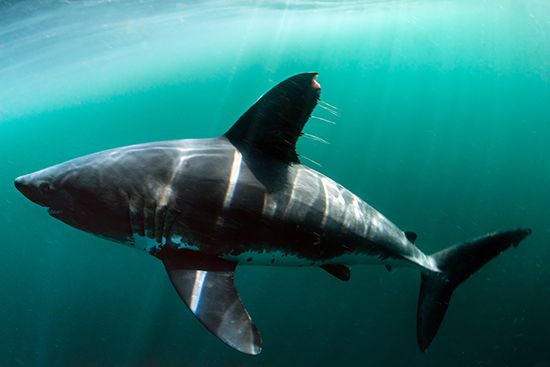
- Genus Lamna: Specifically, it refers to two species: the porbeagle (L. nasus) and the salmon shark (L. ditropis).2
- Family Lamnidae: The name is commonly used for this entire family, which includes the great white shark and mako sharks.12
- Order Lamniformes: The term is sometimes used to refer to the broader order that contains the family Lamnidae.2
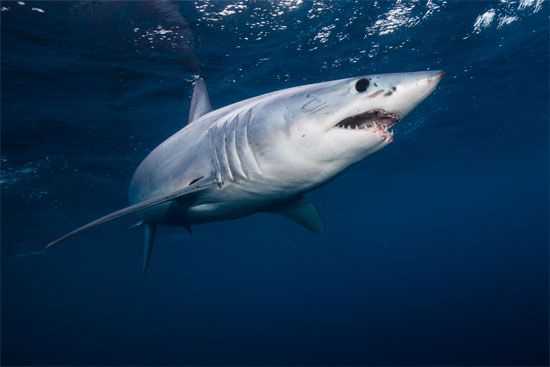
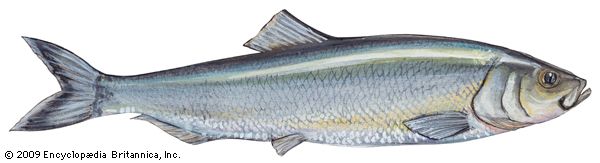
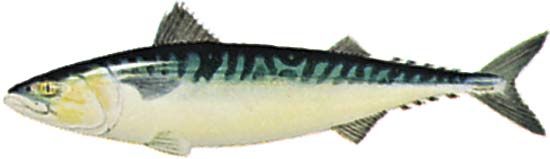
These sharks are characterized by their pointed snouts, crescent-shaped tails, and relatively few, large teeth. They are known for being active predators that feed on various fishes, such as herring, mackerel, and salmon. While some species are prized as game fish, others face conservation challenges; for instance, the porbeagle is considered vulnerable due to population declines.123
What makes the great white shark a member of the mackerel shark family?
The great white shark (Carcharodon carcharias) is classified as a member of the mackerel shark family, Lamnidae, due to its shared evolutionary lineage and specific morphological characteristics.125
The term “mackerel shark” is used to describe members of the order Lamniformes, specifically the family Lamnidae, which includes large, active, and swift-swimming sharks found in tropical to temperate oceans. The great white shark is categorized within this family because it possesses the defining physical traits of the group, including:1
- Body Morphology: A streamlined, powerful body shape adapted for high-speed swimming.6
- Anatomy: A pointed snout and a crescent-shaped tail.1
- Dentition: Relatively few, large, and serrated teeth, which are highly diagnostic of the species.165
While some historical classifications linked the great white shark to other extinct species based on tooth structure, modern studies confirm its placement within the Lamnidae family, distinguishing it from other shark lineages through its unique evolutionary history and biological adaptations.5
How do mako sharks use their speed to hunt prey?
Mako sharks (genus Isurus) are highly specialized, swift-swimming predators that utilize their streamlined bodies and immense speed to hunt prey such as herring, mackerel, swordfish, and small cetaceans.3
Their hunting strategy relies on a combination of acute sensory perception and explosive physical power. Mako sharks locate prey using a well-integrated system of senses, including a highly developed sense of smell, a lateral line system to detect vibrations, and the ability to sense the weak electrical signals emitted by other animals.8
Once prey is identified, the mako shark’s speed allows it to execute powerful, decisive attacks. Their biting mechanics are particularly effective; for instance, when encountering a swordfish too large to be consumed whole, a mako shark can use its rapid, forceful bite to remove the prey’s tail in a single strike. This efficiency is supported by their ability to protrude their jaws and lock their long, slender teeth into position during an attack.38
What are the physical differences between mackerel sharks and other shark families?
Mackerel sharks, which belong to the family Lamnidae and the order Lamniformes, are distinguished from other shark families by several key physical and behavioral adaptations optimized for their active, open-ocean lifestyle.342
Physical Characteristics of Mackerel Sharks
- Body Shape: Mackerel sharks are characterized by a beautifully streamlined, slender, and powerful body shape, which makes them highly efficient swimmers capable of high speeds.32
- Tail Structure: A defining feature of this group is the crescent-shaped tail, which provides the propulsion necessary for their active, predatory behavior.34
- Dentition: They possess long, slender teeth, often flanked by small, sharp cusps, which are highly diagnostic of the species.34
- Coloration: These sharks typically exhibit a color gradient, ranging from blue-gray or deep blue on their dorsal side to a paler or white underside.34
Comparison to Other Shark Families
In contrast to the streamlined, surface-dwelling mackerel sharks, other shark families exhibit diverse morphologies suited to different ecological niches:
- Bottom-Feeders: Many bottom-dwelling species are stout and blunt-headed with more sluggish habits. Unlike the sharp, piercing teeth of mackerel sharks, these species often possess coarse, pavement-like teeth designed for crushing shellfish.2
- Specialized Forms: Some families, such as the hammerheads (Sphyrna), have evolved highly distinct head shapes that resemble double-headed hammers, while others, like the wobbegongs (family Orectolobidae), have skin flaps and protective coloration that allow them to blend into the seafloor.2
- Filter Feeders: While mackerel sharks are active predators, other large sharks like the whale shark and basking shark are filter feeders that use modified gill rakers to strain plankton from the water.2
Sources
- mackerel shark — Merriam-Webster
- atheriniform - Annotated classification — Encyclopædia Britannica
- mako shark — Encyclopædia Britannica
- mackerel shark — Encyclopædia Britannica
- great white shark — Merriam-Webster
- shark - Description and habits — Encyclopædia Britannica
- megalodon - Paleontology — Encyclopædia Britannica
- chondrichthyan - Sharks — Encyclopædia Britannica
Published on · 4 min read