Maclurites
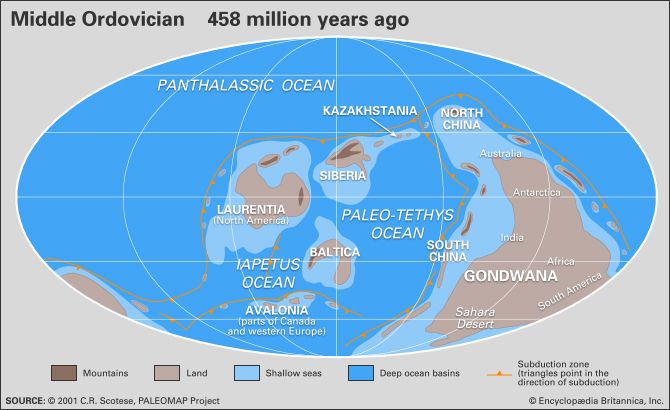
Maclurites is an extinct genus of gastropods (snails) that lived during the Ordovician Period, approximately 488 to 444 million years ago. These mollusks are…
What is Maclurites?
Maclurites is an extinct genus of gastropods (snails) that lived during the Ordovician Period, approximately 488 to 444 million years ago. These mollusks are well-known for their distinctively coiled, often large, and flat spiral shells.12
A notable feature of Maclurites was its operculum, a secondary shell structure that functioned as a lid to cover the aperture of the main body shell. Because of their unique appearance and widespread presence, these fossils are highly useful for stratigraphic correlation. The genus belongs to a group of early gastropods that emerged in the Late Cambrian and went extinct by the end of the Ordovician. The name is derived from the surname of the geologist William Maclure.12
What defines the Ordovician Period?
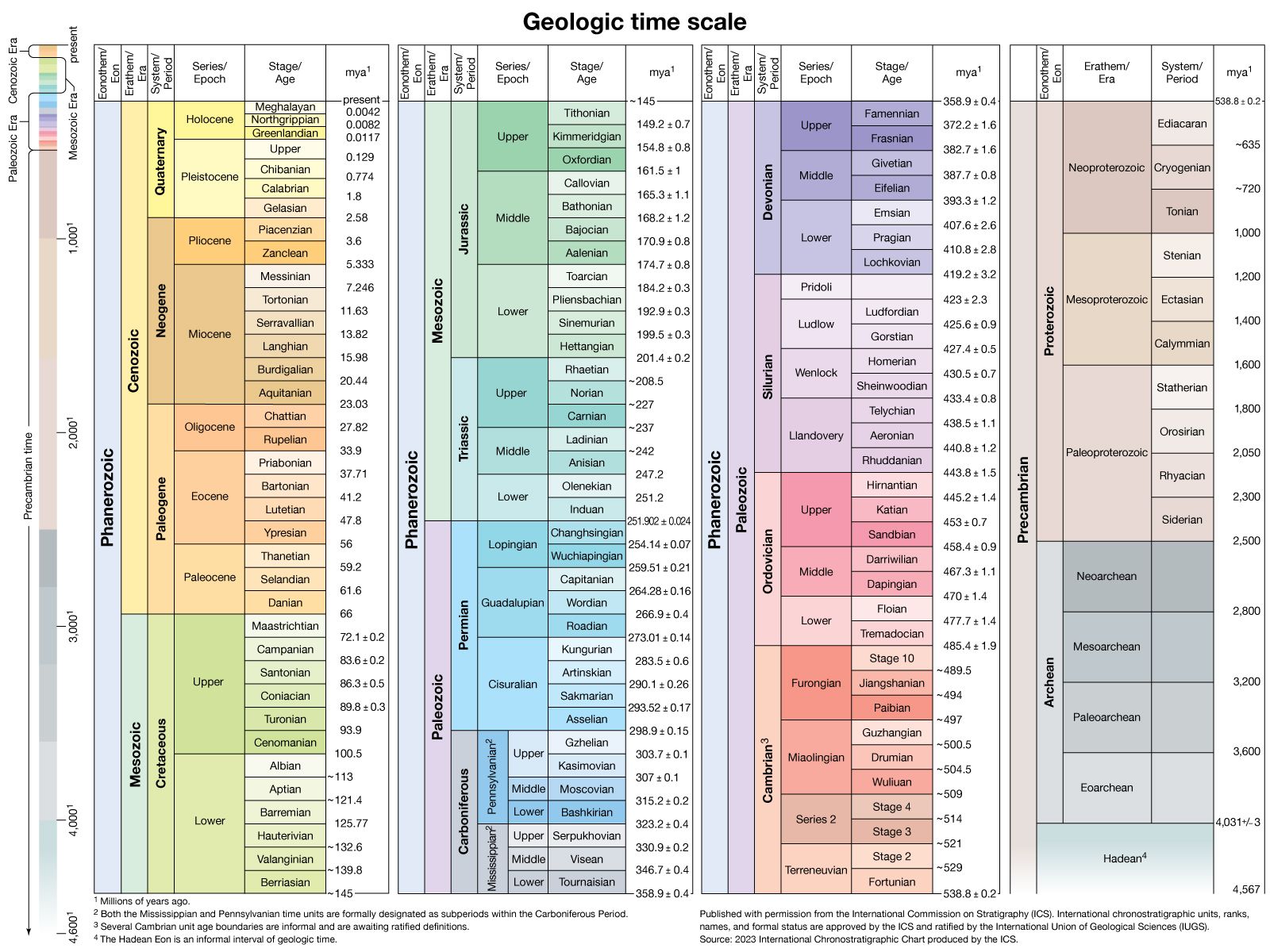
The Ordovician Period was the second period of the Paleozoic Era, spanning from approximately 485.4 to 443.8 million years ago. It is defined by several major geological and biological milestones:3
Geological and Climatic Context
- Tectonics and Sea Levels: Rapid seafloor spreading led to some of the highest global sea levels in the Phanerozoic Eon, causing extensive flooding of the continents.43
- Climate: Atmospheric carbon dioxide levels were significantly higher than today, generally fostering warm climates. However, the period ended with a brief, intense interval of glaciation over the Southern Hemisphere of glaciation over the Southern Hemisphere.453
Biological Developments
- Ordovician Radiation: This interval saw an intense diversification of marine life, resulting in the evolution of almost every modern invertebrate phylum and the rise of fish.43
- Ecosystems: Marine communities became more complex, with life occupying distinct vertical tiers above the seafloor and burrowing deeper into the sediment.6
- Land Life: The period marked the appearance of the first plants and potentially the first terrestrial arthropods.43
Mass Extinction
The period concluded with the second-largest mass extinction in Earth’s history, which claimed approximately 85 percent of all species, largely driven by cooling and falling sea levels.47
How do fossils help scientists date rock layers?
Fossils are essential tools for determining the relative age of sedimentary rock layers through a process known as biostratigraphy.12 This method relies on the law of faunal succession, which observes that fossilized plants and animals appear in the rock record in a predictable, orderly sequence over time.8
Scientists use specific fossils, called index fossils, to correlate rock layers across different geographic locations. To be effective, an index fossil must meet several criteria:910
- Short temporal range: The species existed for a relatively brief period of geologic time.910
- Wide distribution: It was geographically widespread (cosmopolitan).910
- Distinctiveness: It is easily recognizable, preventing misidentification.910
- Abundance: It is common enough to be discovered easily.910
By identifying these fossils within strata, geologists can establish that rocks in separated areas were formed during the same time interval. While fossils provide the relative order of events, they are often calibrated using absolute dating techniques, such as measuring radioactive isotopes, to provide precise numerical ages for the rock record.1011
What are the main differences between gastropods and other mollusks?
Gastropods, the largest class within the phylum Mollusca, are distinguished from other mollusks by several unique anatomical and developmental features.
Key Distinctions
- Torsion: A defining characteristic of gastropods is that their mantle cavity undergoes a developmental process known as torsion, where the visceral mass rotates, often followed by a secondary process called “detorsion” in some groups.13
- Shell Structure: While many mollusks have shells, gastropods typically possess a single, coiled shell that often includes an operculum (a lid-like structure). In contrast, bivalves have two hinged valves, and chitons feature eight dorsal plates.13
- Body Plan: The gastropod body is organized into a visceral hump, mantle, head, and foot. Unlike the laterally compressed bodies of bivalves or the dorsoventrally elongated bodies of cephalopods, gastropods exhibit immense structural variability, ranging from shelled snails to slugs that have lost their shells entirely.141513
- Reproductive Anatomy: Gastropods generally possess a single gonad located in the visceral hump, which connects to the exterior via a remnant of the right kidney. This differs from many other mollusks, such as bivalves, which often have paired gonads.16
Gastropods are uniquely successful across marine, freshwater, and terrestrial environments, displaying a greater ecological diversity than any other molluscan class.1517
Sources
- Maclurites — Encyclopædia Britannica
- Maclurite — Merriam-Webster
- A Journey Through Time Since the Precambrian - Ordovician Period: 485.4 million to 443.4 million years ago — Encyclopædia Britannica
- Ordovician radiation — Encyclopædia Britannica
- Ordovician Period — Encyclopædia Britannica
- Ordovician Period - Mass extinction at the end of the Ordovician — Encyclopædia Britannica
- Ordovician Period - Paleoclimate — Encyclopædia Britannica
- index fossil — Encyclopædia Britannica
- law of faunal succession — Encyclopædia Britannica
- dating - Principles and techniques — Encyclopædia Britannica
- dating - Distinctions between relative-age and absolute-age measurements — Encyclopædia Britannica
- biostratigraphy — Merriam-Webster
- gastropod — Encyclopædia Britannica
- mollusk - Annotated classification — Encyclopædia Britannica
- mollusk - Habitats, feeding habits, and associations — Encyclopædia Britannica
- Animal reproductive system - Annelids and mollusks — Encyclopædia Britannica
- gastropod - The body — Encyclopædia Britannica
Published on · 3 min read