Whale
Whales have evolved remarkable adaptations to thrive in an aquatic environment while maintaining their fundamental mammalian characteristics.
How have whales adapted to life in the ocean despite being mammals?
Whales have evolved remarkable adaptations to thrive in an aquatic environment while maintaining their fundamental mammalian characteristics.1
Locomotion and Anatomy
Whales transitioned from four-legged terrestrial ancestors to streamlined, largely limbless creatures. Their forelimbs evolved into flippers for steering, while hind limbs were lost entirely. Propulsion is driven by powerful back muscles moving horizontal tail flukes. To reduce heat loss and drag, external appendages like ears were lost, and genitalia moved internally.2
Thermoregulation
Because water conducts heat rapidly, whales utilize a thick layer of blubber for insulation. They also employ countercurrent blood exchange, a sophisticated system that allows them to conserve heat or dissipate excess warmth by routing blood flow between the skin and the heart.31
Respiration and Diving
As air-breathing mammals, whales must surface to breathe, often using an explosive “blow”. To survive deep, prolonged dives, they possess specialized reservoirs of oxygenated blood called the rete mirabile, which allows them to prioritize oxygen delivery to the heart and brain.13
What are the different types of whales, and how are they classified?
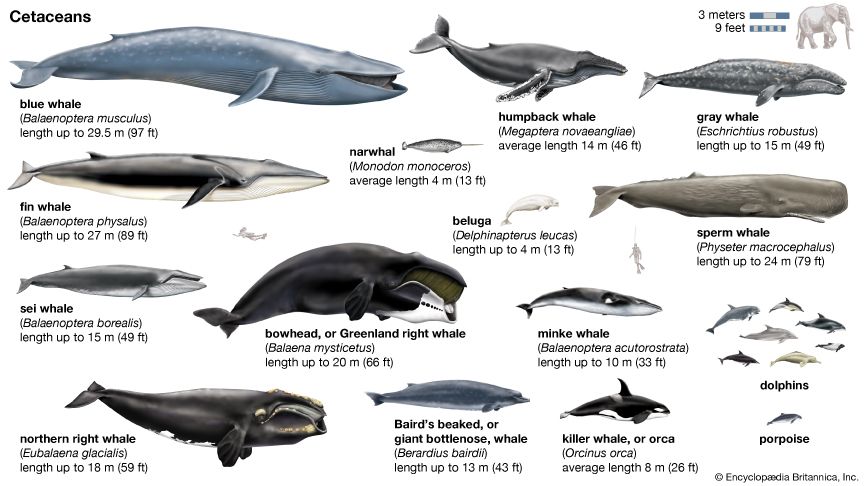
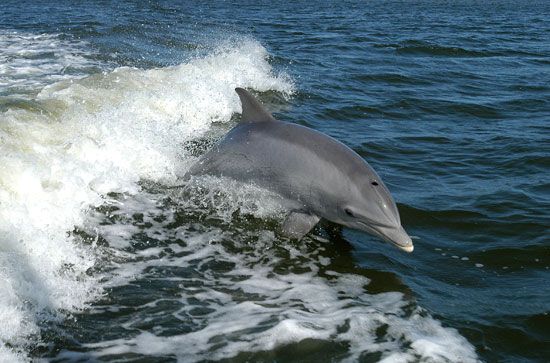
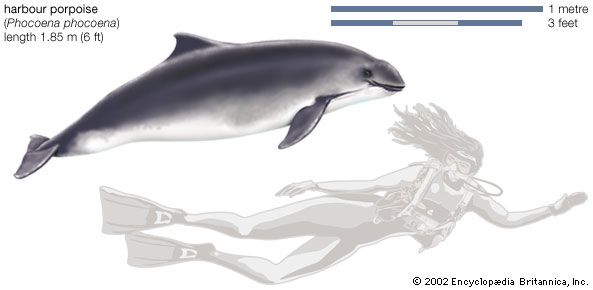
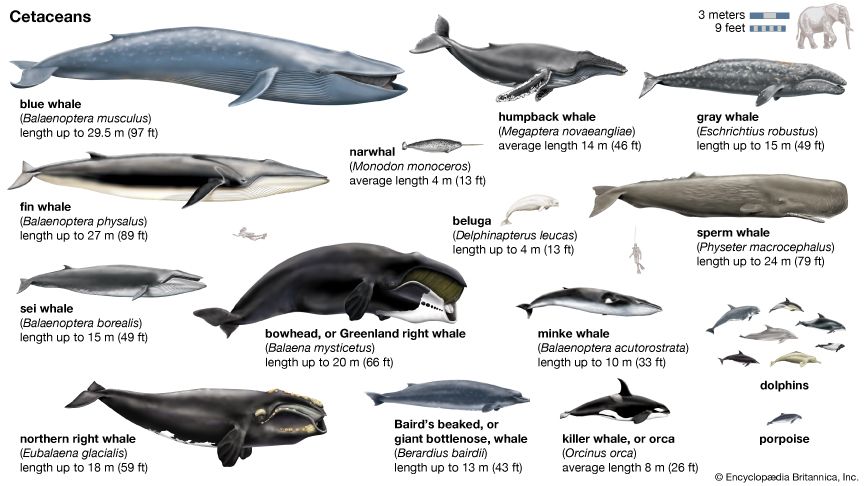
Whales belong to the order Cetacea, which also includes dolphins and porpoises. While classification can be complex due to ongoing research into evolutionary history, modern cetaceans are primarily divided into two living suborders based on their anatomical characteristics, specifically their feeding structures.89
The Two Living Suborders
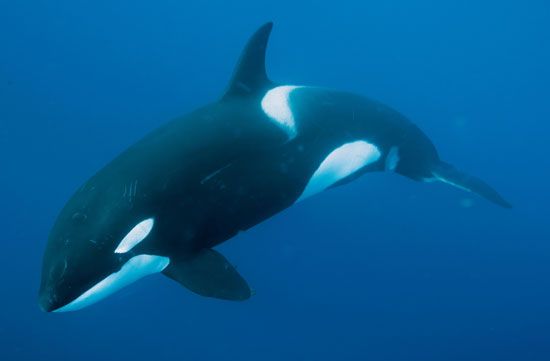
- Toothed Whales (Suborder Odontoceti): This group includes 69 species characterized by the presence of teeth, which are used for grasping prey rather than chewing. They possess a single blowhole and an asymmetrical skull. Notable families include Delphinidae (dolphins and killer whales), Phocoenidae (porpoises), Physeteridae (sperm whales), and Monodontidae (narwhals and belugas).109
- Baleen Whales (Suborder Mysticeti): These 12 species lack teeth as adults, possessing instead baleen plates made of keratin to filter small prey like krill and plankton from the water. They have paired blowholes and a symmetrical skull. This group includes the blue whale, humpback whale, and right whales.10911
Extinct Cetaceans
A third, extinct suborder known as Archaeoceti represents early “pre-whales.” These ancient forms provide critical insight into the evolutionary transition of cetaceans from land-dwelling mammals to fully aquatic animals.89
How do different whale species vary in size, and which is the largest?
Whale species exhibit a vast range of sizes, from small cetaceans measuring just a few meters to the massive giants of the ocean. While the term “whale” is often applied to any cetacean longer than 3 meters (10 feet), there are notable exceptions, such as the dwarf sperm whale, which measures approximately 2.7 meters.12
The Largest Whale
The blue whale (Balaenoptera musculus) is the largest animal known to have ever lived on Earth. These massive creatures can reach lengths of more than 30 meters (98 feet) and weigh up to 200 metric tons (220 short tons). Females are generally larger than males, and the largest individuals are typically found in the Southern Ocean.1312
Size Variation Among Species
Size differences are significant across the order Cetacea:
- Toothed Whales (Odontocetes): The sperm whale is the largest of the toothed whales. Males can grow to about 24 meters (79 feet) and weigh up to 50 metric tons, while females are significantly smaller, typically measuring under 14 meters.147
- Baleen Whales (Mysticetes): This suborder includes the largest species, such as the blue whale and the fin whale. Their size is supported by their ability to consume vast quantities of small prey like krill using their baleen plates.1281514
How do whales breathe, and how long can they stay underwater?
Whales are mammals that must surface periodically to breathe air. Unlike terrestrial mammals, breathing in cetaceans is not an automatic reflex; they must consciously surface to exchange air, which means they do not breathe if they lose consciousness.61
How Whales Breathe
When surfacing, whales perform an explosive ventilation known as a blow. This process is highly efficient, allowing them to exchange up to 80 percent of their lung volume in a single breath, compared to only about 20 percent in humans. The visible “spout” or blow is created when the whale’s warm, pressurized breath hits the cooler air, causing water vapor and mucous particles to condense. Different species exhibit distinct blow patterns, such as the bushy, angled blow of a sperm whale or the paired blows of right whales.167
Diving and Breath-Holding
The duration a whale can remain submerged varies significantly by species and activity:
- Typical Divers: Many large whales, such as humpback whales and blue whales, typically dive for 10 to 20 minutes.57
- Deep Divers: Species like the sperm whale can remain underwater for about an hour while hunting at depths exceeding 1,000 meters.57
- Record Holders: The Cuvier’s beaked whale holds the record for the longest dive, with one individual reported to have stayed submerged for 222 minutes (3 hours and 42 minutes).5
To support these long dives, whales utilize specialized adaptations, including a rete mirabile—a network of blood vessels that helps prioritize oxygen delivery to the brain and heart while isolating circulation to skeletal muscles.17
Sources
- cetacean - Circulation and thermoregulation — Encyclopædia Britannica
- cetacean - Locomotor adaptations — Encyclopædia Britannica
- cetacean - Reproduction — Encyclopædia Britannica
- sound reception - Marine mammals — Encyclopædia Britannica
- cetacean - Breathing and diving — Encyclopædia Britannica
- How long can whales hold their breath? — Encyclopædia Britannica
- whale — Encyclopædia Britannica
- Do whales have teeth? — Encyclopædia Britannica
- cetacean - Classification — Encyclopædia Britannica
- cetacean - Annotated taxonomy — Encyclopædia Britannica
- list of dolphins, whales, and porpoises — Encyclopædia Britannica
- 14 Questions About Aquatic Animals Answered - Which animal is both the biggest mammal and the largest living creature on Earth? — Encyclopædia Britannica
- blue whale — Encyclopædia Britannica
- cetacean - Age and growth — Encyclopædia Britannica
- baleen whale — Encyclopædia Britannica
- Which is bigger: Sperm whale or colossal squid? — Encyclopædia Britannica
- cetacean - Respiration — Encyclopædia Britannica
Published on · 4 min read