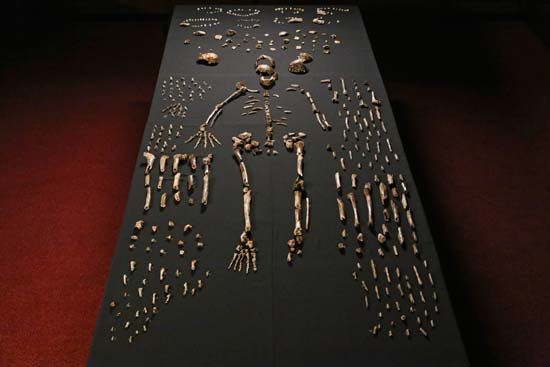
Measuring the Reign of Homo Naledi
There is no scientific concept or publication titled "Measuring the Reign of Homo naledi." It is likely you are referring to the scientific efforts to…
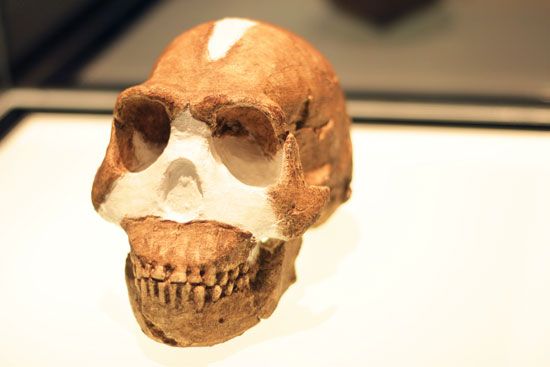
What is Measuring the Reign of Homo naledi?
There is no scientific concept or publication titled “Measuring the Reign of Homo naledi.” It is likely you are referring to the scientific efforts to determine the chronological age of the Homo naledi species, which was initially hypothesized to be much older based on its primitive anatomical features.
Initial assessments suggested H. naledi might have lived 2.8 to 2.5 million years ago. However, comprehensive dating techniques—specifically uranium-thorium dating of the surrounding rock matrix and electron spin resonance analysis of fossilized teeth—revealed that the remains are significantly younger. These findings place the existence of H. naledi between approximately 335,000 and 236,000 years ago, during the Pleistocene epoch.1
This discovery was significant because it demonstrated that a species with Australopithecus-like brain sizes and skeletal features persisted much later in human evolution than previously assumed.1
How do scientists use uranium-thorium dating to determine the age of fossils?
Scientists use uranium-series disequilibrium dating to determine the age of geologically young materials by measuring the decay of intermediate isotopes within the uranium and thorium decay chains.2
In natural, closed-system environments, these isotopes exist in a state of equilibrium, where they form and decay at the same rate. However, when a mineral or material—such as coral or carbonate—forms, this equilibrium is often disrupted due to the distinct chemical properties of the elements involved. For example, uranium may be present in a sample while its daughter isotope, thorium, is initially absent.2
Over time, the parent isotope decays into the daughter isotope, causing the latter to accumulate within the material. By measuring the buildup of these daughter products, such as thorium-230, scientists can calculate the time elapsed since the material was isolated. While early methods relied on radioactive counting, modern researchers use highly sensitive mass spectrometers to count the total number of atoms, providing precise age determinations. This approach is particularly useful for dating materials that are too young for traditional long-lived isotope methods.2
What physical traits make Homo naledi a mix of human and Australopithecus features?
Homo naledi is characterized by a unique mosaic of physical traits that bridge the gap between the genus Homo and the more primitive Australopithecus.17
Features Shared with Homo
Homo naledi exhibits several anatomical characteristics consistent with other members of the human genus, including:
- Dentition: Reduced cheek teeth.17
- Jaw Structure: Similar jaw morphology to other Homo species.17
- Feet: Foot structure that aligns with the genus Homo.17
Features Shared with Australopithecus
Conversely, the species retains several features more reminiscent of Australopithecus, a lineage generally considered ancestral to Homo:
- Brain Size: The brain cavity is relatively small, measuring approximately 560 cc, which is consistent with Australopithecus and other early hominin species.17
- Skeletal Anatomy: The pelvis, shoulder girdle, and femur display primitive traits characteristic of Australopithecus.17
This combination of features made it difficult for researchers to initially place the species within the timeline of human evolution based on morphology alone, as the species appeared to possess a mix of modern and ancient characteristics.7
Why is the discovery of Homo naledi in the Rising Star cave considered significant?
The discovery of Homo naledi in the Rising Star cave complex is significant for several reasons that have reshaped our understanding of human evolution:
- Mosaic Anatomy: The species possesses a unique combination of primitive traits—such as a small brain size (560 cc) and an Australopithecus-like pelvis and shoulder—alongside more modern Homo features like reduced cheek teeth and human-like feet.17
- Unexpected Chronology: While initially thought to be millions of years old, uranium-thorium dating and electron spin resonance revealed the remains are only 236,000 to 335,000 years old. This indicates that H. naledi lived during the Pleistocene, potentially overlapping with the emergence of Homo sapiens.17
- Behavioral Implications: The recovery of over 1,500 specimens from a remote, deep-cave chamber led researchers to speculate that the species may have been capable of ritualistic thought, a complex behavior previously assumed to be a much later development in human history.1
Sources
- Homo naledi — Encyclopædia Britannica
- uranium-234–uranium-238 dating — Encyclopædia Britannica
- dating - Origin of radioactive elements used — Encyclopædia Britannica
- dating - Uranium-series disequilibrium dating — Encyclopædia Britannica
- dating - Lead-210 dating — Encyclopædia Britannica
- ionium-thorium dating — Encyclopædia Britannica
- Measuring the Reign of Homo naledi — Encyclopædia Britannica
Published on · 3 min read