Homo Naledi
Homo naledi is an extinct species of human identified from over 1,500 fossil specimens discovered in the Rising Star cave complex in South Africa. First…
What is Homo naledi?
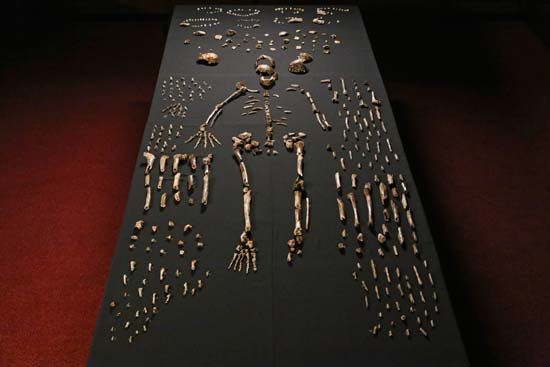
Homo naledi is an extinct species of human identified from over 1,500 fossil specimens discovered in the Rising Star cave complex in South Africa. First described in 2015, the species exhibits a unique mosaic of anatomical features: it shares reduced cheek teeth and jaw structures with the genus Homo, while its pelvis, shoulder girdle, and small brain size (560 cc) are more reminiscent of Australopithecus cc) are more reminiscent of Australopithecus.12
While early morphological assessments suggested the species might be millions of years old, radiometric dating—including uranium-thorium dating—revealed the remains are between 236,000 and 335,000 years old. This indicates that H. naledi lived during the Pleistocene Epoch, potentially overlapping with the emergence of early Homo sapiens. The discovery of such a large collection of remains in a remote cave chamber has led some researchers to speculate that the species may have been capable of ritualistic thought.12
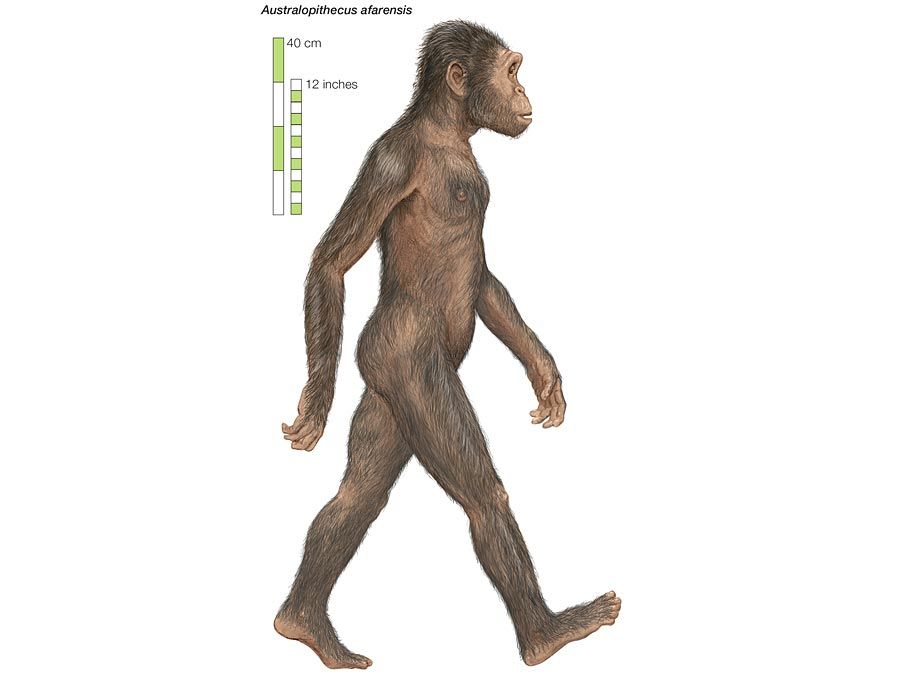
What are the main differences between Homo naledi and Australopithecus?
Homo naledi and Australopithecus share certain primitive traits, but they are distinguished by significant anatomical differences that reflect their respective evolutionary positions.
Key Anatomical Differences
- Dentition and Jaws: H. naledi exhibits a reduction in the size of its cheek teeth and possesses jaw structures that are more characteristic of the genus Homo. In contrast, Australopithecus typically displays more robust dental and jaw features.13
- Postcranial Skeleton: While H. naledi shares some postcranial features with Homo, its pelvis and shoulder girdle are more similar to those found in Australopithecus.13
- Skull and Brain Size: The skull shape of H. naledi is distinct from that of Australopithecus and is more reminiscent of H. erectus. However, its brain size—averaging approximately 560 cc—is small and aligns closely with the range seen in Australopithecus and other early hominins.13
Evolutionary Context
While H. naledi was initially thought to be an early ancestor, recent dating places it between 236,000 and 335,000 years ago, meaning it lived long after the Australopithecus genus had disappeared from the fossil record. Consequently, H. naledi is now viewed as an isolated species that likely existed alongside early Homo sapiens rather than as a direct ancestor.13
How do scientists use radiometric dating to determine the age of fossils?
Radiometric dating is a scientific method used to determine the age of rocks, minerals, and fossils by measuring the decay of radioactive isotopes into stable daughter products. This process relies on the fact that radioactive isotopes decay at a constant, known rate, characterized by a specific half-life—the time required for half of the parent atoms in a sample to transform into daughter atoms.56
To calculate the age of a specimen, scientists measure the ratio of parent isotopes to daughter isotopes within the material. Because the decay rate is immutable and unaffected by external conditions like heat, pressure, or chemical state, this ratio serves as a reliable “clock” for dating geologic materials.56
Different isotopes are selected based on the age and composition of the sample:
- Carbon-14 dating: Used for organic materials up to approximately 60,000 years old.57
- Uranium-lead dating: Highly precise and used for much older rocks and minerals.58
- Other methods: Techniques involving isotopes like potassium-argon or rubidium-strontium are used for various geologic contexts.58
What evidence suggests that Homo naledi might have practiced ritualistic behavior?
The primary evidence suggesting that Homo naledi may have practiced ritualistic thought stems from the discovery of a large, concentrated collection of fossil remains deep within the Rising Star cave complex in South Africa.1
Paleontologists found more than 1,500 fossil specimens representing at least 15 individuals of various ages within the Dinaledi Chamber, a remote and difficult-to-access alcove. The presence of such a significant number of remains in this isolated, deep-cave location led researchers to speculate that the species intentionally deposited their dead there, a behavior previously associated only with much later stages of human evolution.12
While this interpretation remains a subject of scientific discussion, it challenges earlier assumptions about when complex cognitive behaviors emerged. Because the remains have been dated to between 236,000 and 335,000 years ago, H. naledi existed during a period when early Homo sapiens were also emerging in Africa, raising questions about the cognitive capabilities of hominins during the Pleistocene Epoch.12
Sources
- Homo naledi — Encyclopædia Britannica
- Measuring the Reign of Homo naledi — Encyclopædia Britannica
- Australopithecus - Transition to Homo — Encyclopædia Britannica
- Homo habilis - Body structure — Encyclopædia Britannica
- dating: Top Questions — Encyclopædia Britannica
- dating - Principles of isotopic dating — Encyclopædia Britannica
- dating - Origin of radioactive elements used — Encyclopædia Britannica
- dating - Carbon-14 dating and other cosmogenic methods — Encyclopædia Britannica
- geochronology - Accumulational processes — Encyclopædia Britannica
Published on · 3 min read