Mexican Jumping Bean
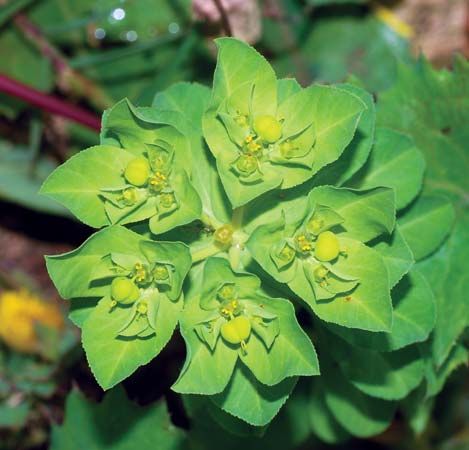
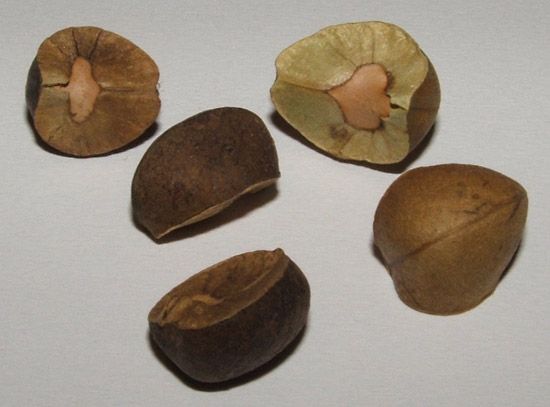
A Mexican jumping bean is not actually a bean, but rather the seed of specific Mexican shrubs, primarily from the genus Sebastiania in the spurge family.
What is Mexican jumping bean?
A Mexican jumping bean is not actually a bean, but rather the seed of specific Mexican shrubs, primarily from the genus Sebastiania in the spurge family.1
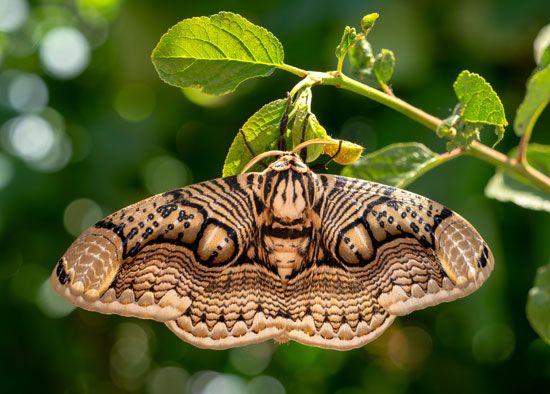
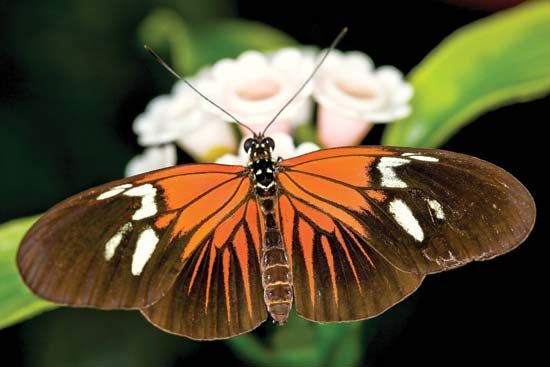
The “jumping” behavior is caused by the larva of a small moth (Laspeyresia salitans) living inside the seed. As the larva feeds on the interior pulp, its movements cause the seed to twitch or jump, a reaction that becomes more pronounced when the seed is exposed to warmth.1
What is the life cycle of the moth that lives inside the bean?
The moth responsible for the movement of the Mexican jumping bean, identified as Laspeyresia salitans (also known as Cydia saltitans or C. deshaisiana), follows a life cycle typical of Lepidoptera, though it is uniquely adapted to life within a seed.13
The cycle begins when an adult moth lays its eggs on the flower of the host shrub (Sebastiania). Upon hatching, the larva bores into the developing seed. Inside this protective environment, the larva serves as the primary feeding stage, consuming the interior pulp of the seed. As it grows, the larva undergoes several molts, or ecdysis, shedding its exoskeleton to accommodate its increasing size.14
The characteristic “jumping” occurs because the larva moves within the seed, a behavior intensified by warmth. Eventually, the larva prepares for pupation. It may construct a silken lining within the seed to protect itself before transforming into a pupa. Once the transformation is complete, the adult moth emerges from the seed, leaving behind an empty shell.14
How does the larva survive inside the seed?
The larva of the Laspeyresia salitans moth survives inside the seed by utilizing it as both a food source and a protective enclosure. As it feeds on the interior pulp of the seed, the larva hollows out the space, creating a cavity that serves as its primary habitat.13
To ensure its safety during the vulnerable stage of pupation, the larva often constructs a specialized cell or chamber within the seed. This process may involve lining the interior with silk or using frass—the waste material produced by the larva—to create a protective barrier against predators, such as ants. By sealing off its environment, the larva remains shielded until it is ready to emerge as an adult moth, at which point it breaks through the seed’s exterior.5
What other types of insects have unique ways of moving?
Insects have evolved a remarkable variety of locomotory adaptations to navigate their environments, ranging from specialized limb modifications to unique behavioral gaits.
- Jumping Mechanisms: Fleas are perhaps the most famous jumpers, utilizing a specialized protein called resilin that acts as a hinge. By storing energy in this protein and releasing it through a muscle-controlled catch mechanism, they can leap distances up to 200 times their body length.6
- Surface Locomotion: Water striders possess long, thin legs that allow them to “walk” on the surface film of ponds and streams, taking advantage of surface tension.7
- Inching/Looping: Inchworms (the larvae of certain moths) move by extending the front of their bodies and bringing the rear up to meet it, creating a characteristic looping gait.8
- Burrowing: Insects such as mole crickets and ants have evolved specific adaptations for burrowing, allowing them to navigate and create habitats beneath the soil surface.9
- Aquatic Swimming: Many aquatic insects have modified their legs into oarlike structures. Some use flattened leg segments, while others utilize rows of movable hairs that extend during a power stroke to maximize propulsion.7
These diverse strategies demonstrate how insects have successfully adapted their exoskeleton and musculature to thrive in nearly every terrestrial and aquatic niche.9
Sources
- Mexican jumping bean — Encyclopædia Britannica
- Mexican jumping bean — Merriam-Webster
- jumping bean — Merriam-Webster
- Lepidoptera - Larva, or caterpillar — Encyclopædia Britannica
- Coleoptera - Pupae — Encyclopædia Britannica
- Did you know? — Merriam-Webster
- arthropod - Muscles , appendages , and locomotion — Encyclopædia Britannica
- flea - Form and function — Encyclopædia Britannica
- insect - Aquatic insects — Encyclopædia Britannica
Published on · 3 min read