Milkweed
Milkweed refers to any of approximately 140 species of herbaceous perennial plants in the genus Asclepias, belonging to the dogbane family Apocynaceae. These…
What is Milkweed?
Milkweed refers to any of approximately 140 species of herbaceous perennial plants in the genus Asclepias, belonging to the dogbane family Apocynaceae1. These plants are named for the acrid, milky latex they secrete, which contains toxic compounds known as cardenolides.1234
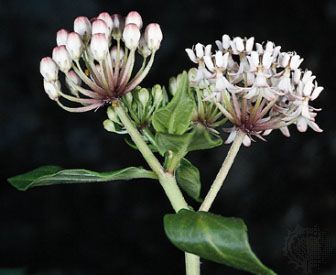
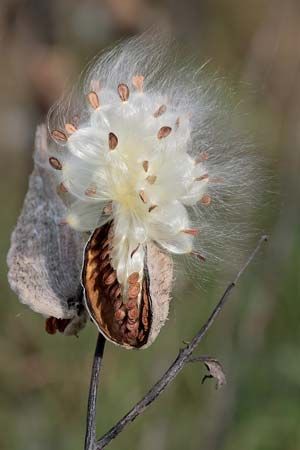
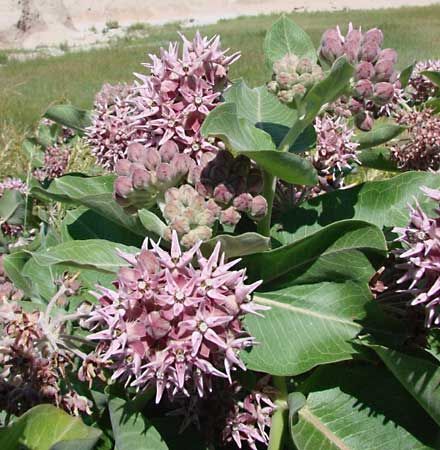
Physically, milkweeds typically feature clusters of flowers with five united petals and podlike fruits that release tufted, silky-haired seeds carried by the wind. Their pollination is highly specialized; pollen is bundled into structures called pollinia that attach to visiting insects.254
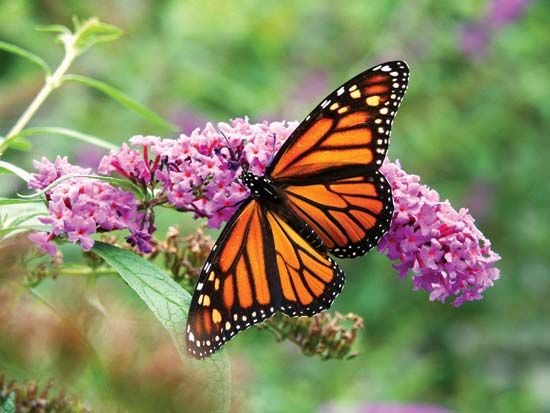
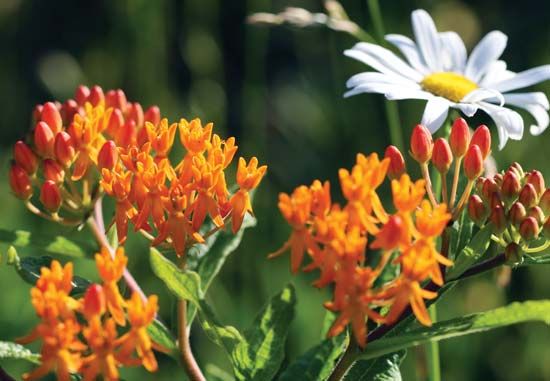
Milkweed is ecologically vital, serving as the exclusive food source for the larvae of monarch butterflies. The toxins stored by the caterpillars make them and the adult butterflies distasteful to predators, a key evolutionary defense. Due to habitat loss, conservationists encourage planting native milkweed species to support these butterfly populations. Several species, such as butterfly weed, are also popular in gardens as ornamentals.2345
How do monarch butterflies use milkweed toxins to protect themselves?
Monarch butterflies utilize the toxic compounds found in milkweed, known as cardenolides (or cardiac glycosides), as a sophisticated chemical defense mechanism against predators.36
The process functions as follows:
- Ingestion: Monarch caterpillars feed exclusively on milkweed plants, which contain acrid, milky latex rich in cardenolides. These substances are highly toxic to most vertebrates, as they interfere with heart function and trigger the brain’s vomiting center.7436
- Storage: The caterpillars consume these poisons without suffering ill effects. They retain the toxins throughout their metamorphosis, storing them in their tissues during the pupal stage and into adulthood.36
- Defense: In the adult butterfly, these cardenolides are concentrated in the wings and abdomen. Because these compounds make the insects taste nauseating, many birds learn to avoid them.67
This chemical protection is not absolute; some predators, such as certain birds, have evolved behavioral adaptations—like removing the butterfly’s internal organs or wings—to bypass the toxins.36
What is the life cycle of a monarch butterfly?
The life cycle of the monarch butterfly consists of four distinct stages: egg, larva (caterpillar), pupa (chrysalis), and adult.6
- Egg: Females lay eggs singly on milkweed plants, which serve as the exclusive food source for the emerging caterpillars.6
- Larva: The caterpillar feeds voraciously on milkweed, storing toxic cardenolides that make it distasteful to predators. After several molts, it grows to approximately 45 mm in length.6
- Pupa: The fully grown caterpillar leaves the plant to form a pale green, golden-spotted chrysalis. Over 10 to 14 days, the chrysalis becomes transparent, revealing the developing butterfly inside.6
- Adult: The butterfly emerges, dries its wings, and begins feeding on nectar. While most adults live only a few weeks, the migratory “super generation” can live for seven to nine months to complete their journey to overwintering sites in Mexico or along the California coast.68
Annually, about four generations occur, though nonmigratory populations in warmer climates may produce up to six.6
Why is it important to plant native milkweed species?
Planting native milkweed species is essential for the survival of the monarch butterfly, as these plants serve as the exclusive food source for monarch caterpillars.3910
The importance of native species is rooted in several critical factors:
- Habitat Restoration: Monarch populations have faced a dramatic decline due to habitat loss and fragmentation, often driven by land development and the widespread use of herbicides in agriculture. Conservation efforts to expand milkweed in summer breeding grounds are vital for stabilizing the population.193
- Ecological Alignment: Native milkweeds are adapted to the specific environmental conditions of their regions. In contrast, climate change and drought have already stressed many natural habitats; planting species native to a given area ensures that the plants are well-suited to local temperature and moisture regimes, providing a reliable resource for monarchs.110
- Conservation Support: Because monarchs rely on these plants not only for nutrition but also to acquire the toxins that protect them from predators, the availability of native milkweed is a primary factor in the species’ long-term survival.3910
Sources
- Milkweed — Encyclopædia Britannica
- milkweed — Merriam-Webster
- Monarch butterfly: Top Questions — Encyclopædia Britannica
- Asclepiadoideae — Encyclopædia Britannica
- Gentianales - Apocynaceae — Encyclopædia Britannica
- Monarch butterfly - Life cycle — Encyclopædia Britannica
- mimicry - The chemical basis for repulsion — Encyclopædia Britannica
- Monarch butterfly - Migration — Encyclopædia Britannica
- Monarch butterfly - Threats — Encyclopædia Britannica
- Monarch butterfly — Encyclopædia Britannica
Published on · 3 min read