Mosasaur
Mosasaurs were a diverse group of Cretaceous Period marine lizards that exhibited a wide range of sizes.
What were some of the largest and smallest known species of mosasaurs?
Mosasaurs were a diverse group of Cretaceous Period marine lizards that exhibited a wide range of sizes.
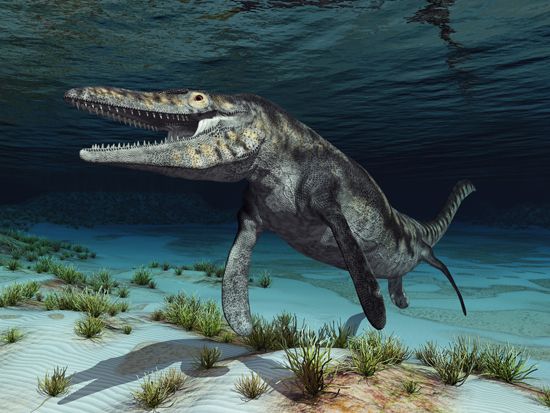
- Largest Species: The largest known mosasaurs belong to the species Mosasaurus hoffmanni. Specimens of this apex predator are estimated to have reached lengths of approximately 17 meters (about 56 feet).12
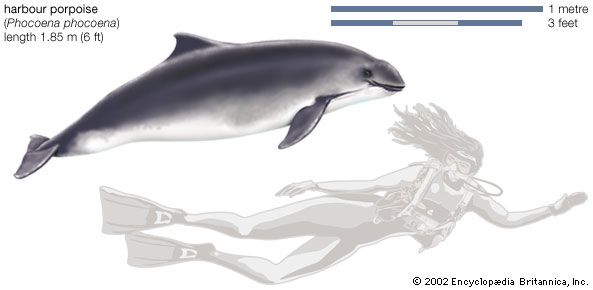
- Smallest Forms: While many Late Cretaceous mosasaurs were quite large, the most common forms within the family Mosasauridae were significantly smaller, typically measuring no larger than modern porpoises2.
These aquatic reptiles were highly adapted to marine life, featuring snakelike bodies, paddle-like limbs, and specialized jaws that allowed them to consume a variety of prey, including fish, ammonoids, and cuttlefish.2
When and where did mosasaurs live during Earth’s history?
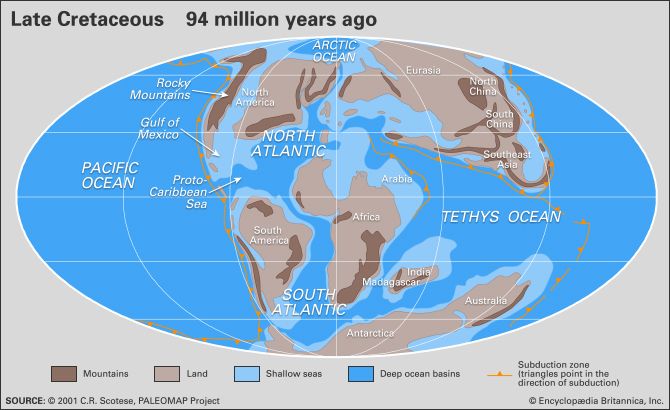
Mosasaurs were a group of aquatic lizards that lived during the Cretaceous Period, which spanned from approximately 145.5 million to 66 million years ago.2
Regarding their geographic distribution, these marine reptiles were distributed worldwide throughout the oceans of the Cretaceous. The first known species was discovered near the Meuse River in Europe, which is reflected in the etymology of their name—derived from the Latin Mosa (the Meuse River) and the Greek sauros (lizard).234
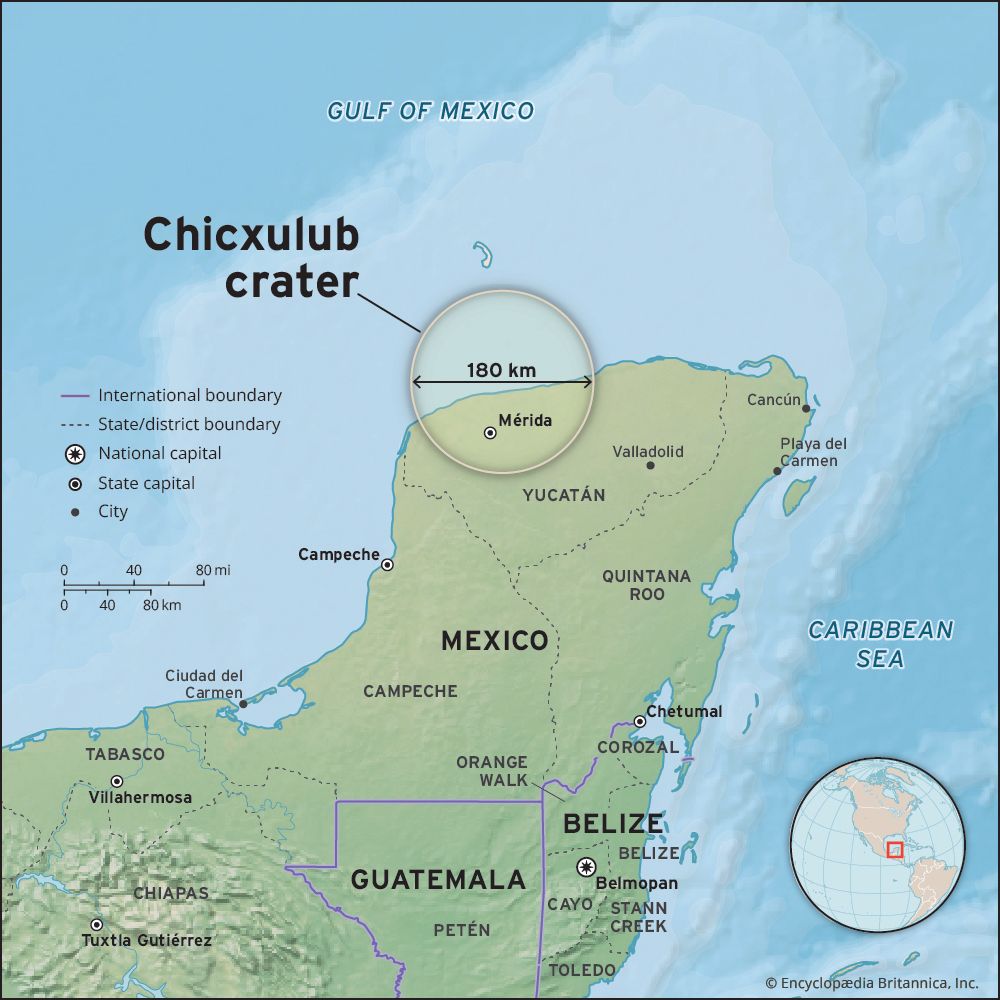
Mosasaurs thrived until the end of the Cretaceous, when they went extinct during the mass extinction event triggered by the extraterrestrial impact that created the Chicxulub crater about 66 million years ago.2
What adaptations did mosasaurs develop for aquatic life?
To thrive in the marine environments of the Cretaceous Period, mosasaurs developed several specialized physical adaptations:
- Locomotion: Their bodies were snakelike and supported by a backbone consisting of more than 100 vertebrae. Their limbs were modified into swimming paddles, characterized by shorter limb bones and an increased number of finger and toe bones compared to their terrestrial ancestors. Additionally, they possessed a long tail that was slightly downcurved at the end, aiding in movement through the water.24
- Feeding Mechanics: Mosasaurs featured a large skull with a long snout and conical, slightly recurved teeth set in individual sockets. A unique adaptation of their jawbones—which were jointed near mid-length and connected in the front by ligaments only—allowed them to lower the mandible and extend their lower jaws sideways. This enabled them to consume large prey effectively.2
These features allowed them to compete successfully with other marine reptiles for food sources such as fish, ammonoids, and cuttlefish.2
What were the main physical characteristics of mosasaurs?
Mosasaurs were a diverse family of extinct marine lizards characterized by several distinct physical traits:
- Body Shape and Size: They possessed elongated, snakelike bodies supported by a backbone of more than 100 vertebrae. While many were no larger than modern porpoises, some reached impressive sizes; the largest, Mosasaurus hoffmanni, is estimated to have been approximately 17 meters (56 feet) long.21
- Skull and Jaws: Their skulls were large with long snouts. A defining feature was their specialized jaw structure, which was jointed near mid-length and connected by ligaments at the front. This allowed them to lower the mandible and extend their lower jaws sideways to consume large prey. Their jaws were lined with conical, slightly recurved teeth set in individual sockets.2
- Limbs and Tail: Their limbs were adapted into swimming paddles, featuring shortened limb bones and an increased number of finger and toe bones. They also had a long tail that ended in a slight downward curve.2
Sources
- mosasaur: Top Questions — Encyclopædia Britannica
- mosasaur — Encyclopædia Britannica
- mosasaur — Merriam-Webster
- Mosasaurus — Merriam-Webster
Published on · 3 min read