Goral
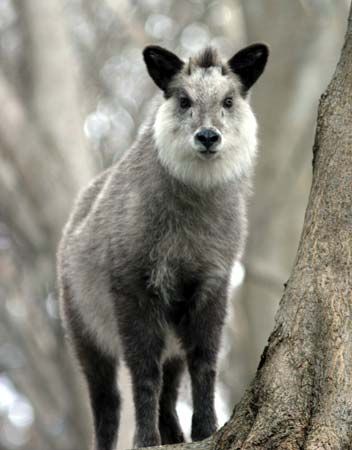
Gorals (Naemorhedus) are small, goatlike mammals belonging to the tribe Rupicaprini, a group often referred to as goat antelopes. While they share a lineage…
How do gorals compare to other similar species in their habitat, such as serows or mountain goats?
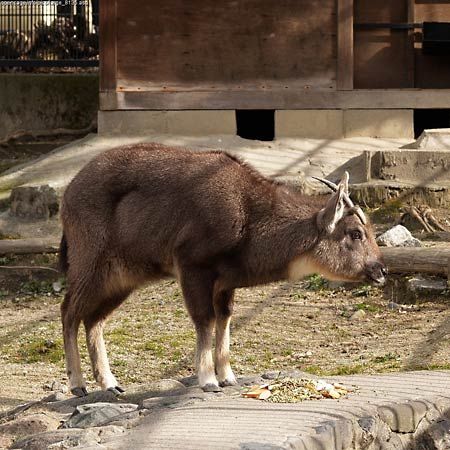
Gorals (Naemorhedus) are small, goatlike mammals belonging to the tribe Rupicaprini, a group often referred to as goat antelopes. While they share a lineage with other members of this tribe, they are most closely related to the serow.12
Compared to the serow, the goral is distinguished by its smaller size, shorter horns, and the absence of conspicuous preorbital glands. While serows possess large preorbital glands used for scent-marking territories, gorals have only very small, rudimentary glands.12
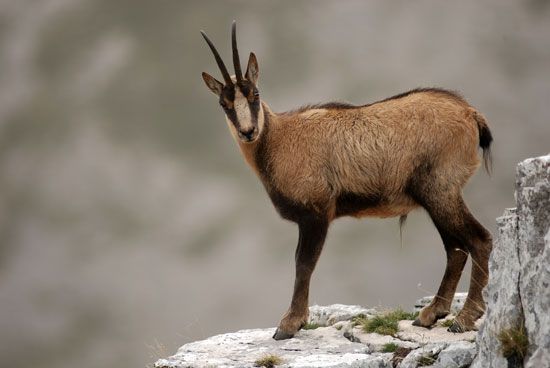
When compared to other members of the tribe, such as the mountain goat and chamois, gorals are part of a distinct evolutionary branch that remained in Asia, whereas the ancestors of mountain goats and chamois migrated to North America and Europe, respectively. Unlike the mountain goat, which possesses large supraoccipital glands that enlarge during the rut, the goral’s scent-marking behavior is less pronounced. Additionally, while mountain goats and chamois are currently abundant, many goral and serow species face significant threats from poaching and habitat loss/poaching-law) and habitat loss.2
Where are gorals typically found in the wild?
Gorals are native to the highlands of Asia, ranging from India and Myanmar to the Russian Far East. They typically inhabit mountain woods with glades or forest edges, living at elevations up to the timberline.1
Their specific distribution varies by species:
- Red goral (Naemorhedus baileyi): Found in a narrow area between Tibet, Myanmar, and India.1
- Long-tailed goral (N. caudatus): Ranges from Southeast Asia up to the Sikhote-Alin mountains of eastern Siberia.1
- Himalayan goral (N. goral): Occurs across the entire Himalayan region.1
These animals are well-adapted to life in steep, rocky terrain and are generally found in forested mountain habitats, which are currently threatened by poaching and environmental destruction.13
What is a goral and which family of mammals does it belong to?
A goral is a small, goatlike mammal belonging to the genus Naemorhedus. These animals are members of the family Bovidae and the order Artiodactyla.2
Within the family Bovidae, gorals are classified under the tribe Rupicaprini, a group commonly known as goat antelopes. They are closely related to the serow, with whom they share a common evolutionary history in Asia. Gorals are distinguished from other goat antelopes by their smaller size, shorter horns, and the lack of conspicuous preorbital glands. They are well-adapted to life in steep, rocky terrain and are native to the highlands of Asia, ranging from the Himalayas to the Russian Far East.42
What threats do gorals face in the wild and what is their conservation status?
Gorals face significant challenges to their survival in the wild, primarily driven by human activity. The major threats to these goat antelopes include:
- Habitat Loss: The destruction, fragmentation, and degradation of their forested mountain habitats significantly reduce the space available for them to live and reproduce.15
- Poaching: Gorals are frequently hunted illegally for their meat and for use in traditional medicine.15
Regarding their conservation status, the three recognized species of goral face varying levels of risk:
- Red goral (Naemorhedus baileyi) and long-tailed goral (N. caudatus): Both species are currently considered vulnerable to extinction.1
- Himalayan goral (N. goral): This species remains relatively abundant compared to its relatives.1
Because these animals are sensitive to environmental disruption, ongoing conservation efforts are essential to mitigate the impact of human encroachment and illegal hunting on their populations.56
Sources
- goral — Encyclopædia Britannica
- goat antelope — Encyclopædia Britannica
- gorilla — Encyclopædia Britannica
- goral — Merriam-Webster
- habitat loss — Encyclopædia Britannica
- mountain goat — Encyclopædia Britannica
- poaching — Encyclopædia Britannica
Published on · 3 min read