Mud Turtle
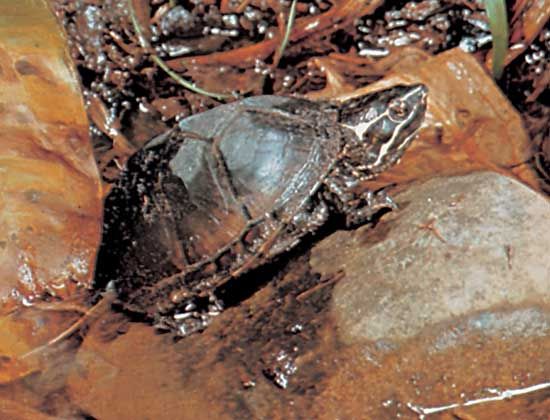
Mud turtles, belonging to the genus Kinosternon within the family Kinosternidae, are distinguished by several key physical and behavioral traits:
What are the main characteristics that distinguish mud turtles from other turtle species?
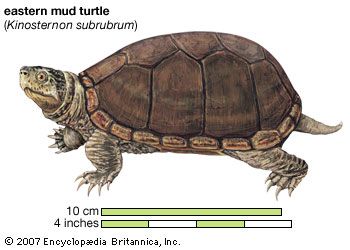
Mud turtles, belonging to the genus Kinosternon within the family Kinosternidae, are distinguished by several key physical and behavioral traits:
- Shell Structure: Unlike the related musk turtles, mud turtles possess a broad lower shell (plastron) featuring two transverse hinges. These hinged sections allow the turtle to close its shell, effectively protecting its head, legs, and tail from predators.12
- Size: They are generally small, typically measuring 15 cm (6 inches) or less in shell length.1
- Physical Features: They are characterized by the presence of fleshy barbels on the chin and the ability to release a strong, musky odor when threatened.1
- Locomotion: Although they are freshwater turtles, they are considered poor swimmers. They typically move by walking along the bottoms of ponds and streams rather than swimming through the water column.1
- Adaptability: Some species are capable of surviving periods of drought by undergoing estivation, a form of dormancy, buried beneath a layer of mud.1
Where are mud turtles typically found, and what type of habitats do they prefer?
Mud turtles (genus Kinosternon) are widely distributed across the Americas, ranging from New England in the north to northern Argentina in the south.1
They are highly adaptable and occupy a diverse array of environments, including clear forest brooks, ponds, and even intermittent desert streams. While they are considered aquatic—spending most of their time feeding in water—they are generally poor swimmers. Instead, they prefer to walk along the bottoms of their aquatic habitats.1
Their habitat usage can be seasonal; for example, the eastern mud turtle is primarily aquatic but may spend summer months in dormancy, estivating beneath vegetation in woodlands adjacent to its water source. Similarly, other species survive periods of drought by burying themselves in a shallow layer of mud to wait out the dry conditions.31
How do mud turtles differ from other members of the Kinosternidae family?
Within the family Kinosternidae, mud turtles (genus Kinosternon) are most closely related to musk turtles (genus Sternotherus). While both groups share characteristics such as small size (typically 15 cm or less), the presence of fleshy chin barbels, and the ability to exude a strong, musky odor when threatened, they are distinguished by their shell structure.1
The primary difference lies in the plastron, or lower shell. Mud turtles possess a broad plastron featuring two transverse hinges. These hinges allow the turtle to pull the front and back sections of its shell upward, effectively sealing the shell to protect its head, legs, and tail from predators. In contrast, musk turtles lack this specific hinged mechanism.14
What role do mud turtles play in their ecosystem?
Mud turtles play a significant role in their aquatic ecosystems as omnivores that help regulate populations of various small organisms. By primarily feeding on insects, mollusks, and carrion, they contribute to the nutrient cycling and cleanliness of their habitats, such as ponds, brooks, and streams.14
Their ecological impact is balanced by their position in the food web, where they serve as a source of food for other animals. Like many other turtles, mud turtles are most vulnerable to predation during their early life stages, specifically as eggs and hatchlings. While their hinged shells provide protection for adults, they remain susceptible to larger predators, including mammals that may hunt them on land and crocodilians capable of crushing their shells in freshwater environments.4
Sources
- mud turtle — Encyclopædia Britannica
- mud turtle — Merriam-Webster
- turtle - Habitats — Encyclopædia Britannica
- turtle - Feeding behaviour — Encyclopædia Britannica
- Kinosternidae — Encyclopædia Britannica
- Kinosternidae — Merriam-Webster
Published on · 3 min read