Musk Turtle
Musk turtles (genus Sternotherus) are small, highly aquatic freshwater turtles belonging to the family Kinosternidae. They are distinguished from other…
What are the physical characteristics that distinguish musk turtles from other turtle species?
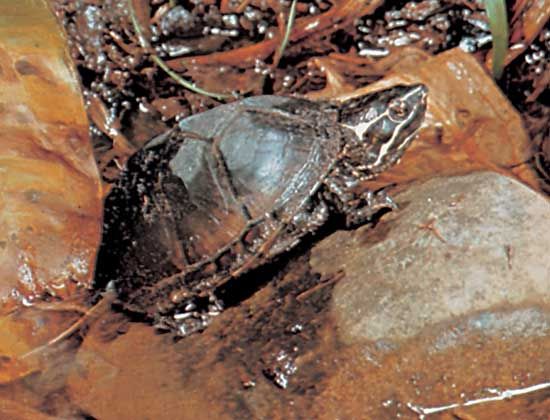
Musk turtles (genus Sternotherus) are small, highly aquatic freshwater turtles belonging to the family Kinosternidae. They are distinguished from other turtle species by several specific physical characteristics:
- Musk Glands: They are named for their ability to emit a strong, musky odor from specialized glands when they are disturbed.12
- Shell Structure: They possess a small lower shell (plastron) and an oval-shaped upper shell (carapace) that is typically dull in color and measures approximately 8–13 cm (3–5 inches) in length.1
- Facial Features: A notable identifying feature is the presence of small, fleshy barbels located on their chin.1
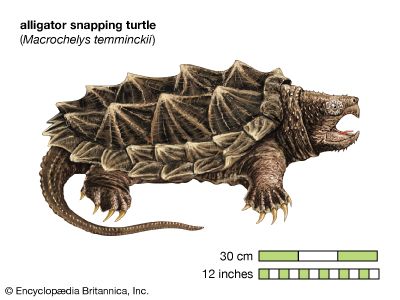
- General Appearance: They are often compared to small snapping turtles in their overall appearance and are known for having a pugnacious temperament.1
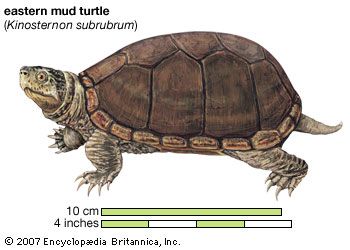
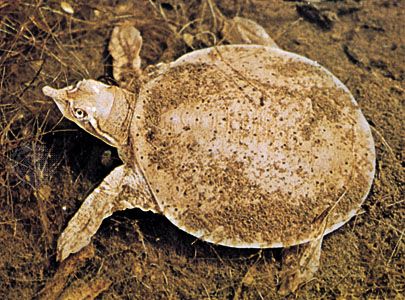
While they share aquatic habitats with various other species, their unique combination of size, chin barbels, and defensive scent production helps differentiate them from other freshwater turtles like mud turtles or softshell turtles.13
Are there different species of musk turtles, and how do they differ?
The genus Sternotherus, commonly known as musk turtles, consists of four distinct species of small, highly aquatic freshwater turtles belonging to the family Kinosternidae1.
While all four species share the defining characteristics of the genus—including a small lower shell (plastron), fleshy chin barbels, and the ability to emit a strong, musky odor when disturbed—they are categorized as separate species within the Sternotherus group. The most well-known member is the stinkpot, or common musk turtle (S. odoratus), which is the only species in the genus found across both the northeastern and southern United States.1
Beyond the common musk turtle, the genus includes three other species that share similar physical traits, such as their oval, dull-colored shells and a preference for slow-moving waters in eastern North America. Because these turtles are highly aquatic and rarely leave the water, they are often difficult to observe, and their specific differences are primarily defined by their taxonomic classification within the genus.1
What is the typical diet of a musk turtle in both wild and captive environments?
Musk turtles (genus Sternotherus) are primarily carnivorous, though their diet is somewhat varied. In their natural wild habitats, these highly aquatic turtles consume a range of items including mollusks, small fish, and insects, as well as various plants.71
While the provided information confirms that their wild diet consists of these diverse food sources, the Britannica knowledge base does not contain specific details regarding the dietary requirements or feeding protocols for musk turtles in captive environments.
Where are musk turtles typically found in the wild, and what is their preferred habitat?
Musk turtles (genus Sternotherus) are native to eastern North America, where they inhabit a variety of freshwater environments. They are highly aquatic animals that prefer slow-moving waters, such as streams, ponds, and lakes.1
Because they are so well-adapted to an aquatic lifestyle, these turtles seldom emerge onto land. While they are generally found in the water, females must eventually leave their aquatic habitat to lay eggs. Unlike many other turtle species that rely solely on their hind limbs to excavate nesting sites, the common musk turtle, or stinkpot (S. odoratus), is known to dig its shallow nests using both its forefeet and hind feet.18
Sources
- musk turtle — Encyclopædia Britannica
- turtle - Feeding behaviour — Encyclopædia Britannica
- musk turtle — Merriam-Webster
- What are turtle shells made of? — Encyclopædia Britannica
- sea turtle — Encyclopædia Britannica
- turtle - Habitats — Encyclopædia Britannica
- What do turtles eat? — Encyclopædia Britannica
- turtle - Nesting and egg laying — Encyclopædia Britannica
Published on · 2 min read