Naryn River
The Naryn River is a vital waterway in Central Asia, flowing through Kyrgyzstan and Uzbekistan. Fed by the snows and glaciers of the Tien Shan mountains, the…
What is Naryn River?
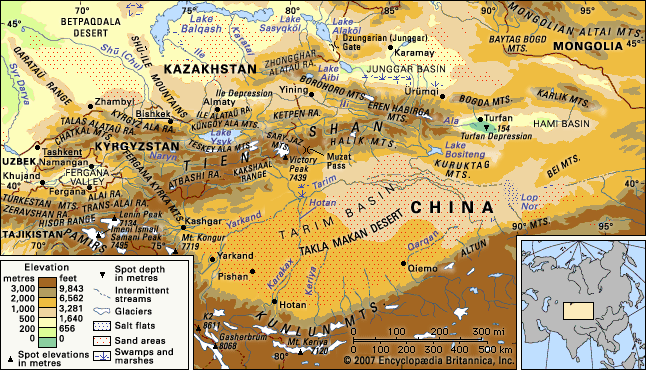
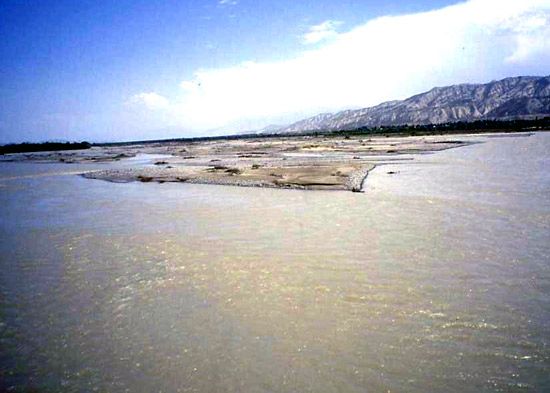
The Naryn River is a vital waterway in Central Asia, flowing through Kyrgyzstan and Uzbekistan. Fed by the snows and glaciers of the Tien Shan mountains, the river travels westward for 430 miles (700 km).1
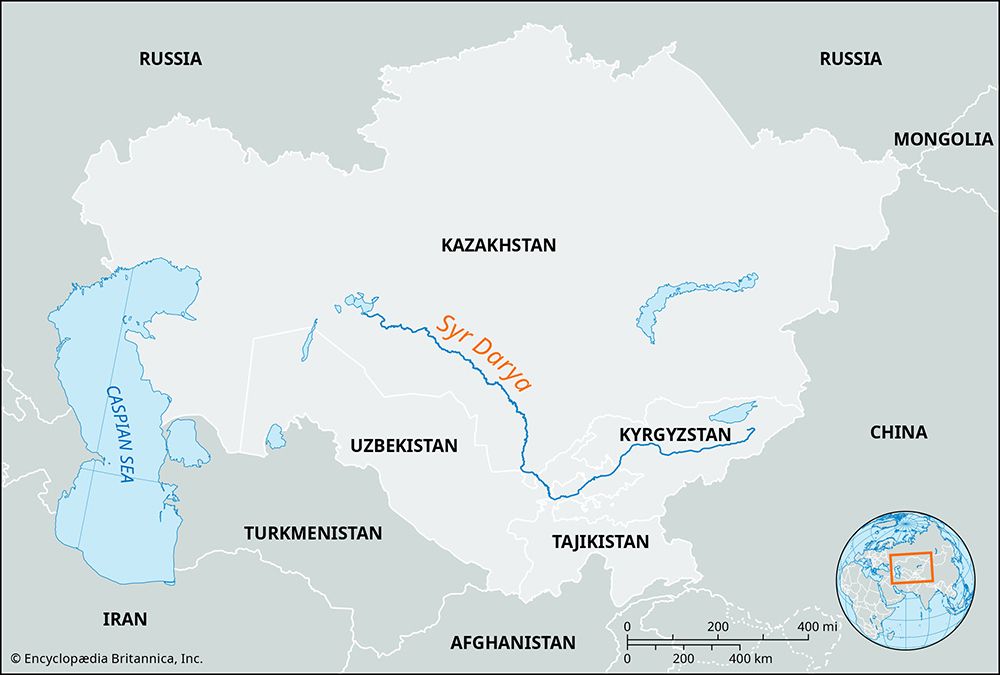
Upon reaching the Fergana Valley, the Naryn merges with the Karadarya River to form the Syr Darya, which is the longest river in Central Asia. The Naryn’s flow is significantly regulated by hydroelectric infrastructure, most notably the Toktogul hydroelectric station and the Uchqūrghon station, which help manage water levels and support extensive irrigation in the region.12
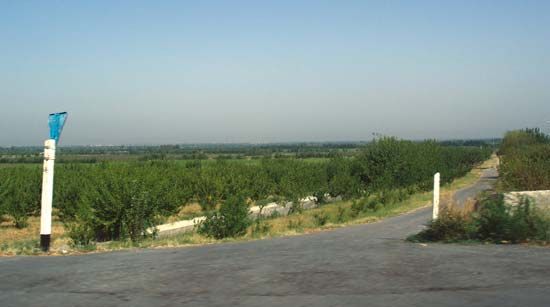
The river plays a critical role in the agricultural economy, though the broader diversion of water from the Syr Darya system for irrigation has historically contributed to the environmental crisis of the Aral Sea.2
What is the significance of the Tien Shan mountains for Central Asian rivers?
The Tien Shan mountains are of critical significance to Central Asian rivers, serving as the primary water tower for the region. The range contains approximately 3,900 square miles of glaciers, which act as essential reservoirs that feed major waterways, including the Naryn, Ili, Sarydzhaz, Aksu, and Zeravshan rivers.3
The significance of these rivers is multifaceted:
- Hydrological Source: Glacial melt and snowpack from the high-altitude peaks provide a consistent water supply to the surrounding arid basins and valleys.34
- Economic Foundation: The rivers support extensive irrigation schemes in foothill valleys, enabling agriculture—such as cotton and wheat production—that sustains human habitation in the region.56
- Energy Generation: The steep topography and deep gorges allow for significant hydroelectric development, with the Toktogul hydroelectric station on the Naryn River serving as a prominent example of harnessing this water power.5
- Geological Shaping: Over millions of years, the erosive action of these rivers has filled the intervening basins with thick layers of sediment, creating the fertile plains where many Central Asian population centers are located.47
How does the Syr Darya river system impact the Aral Sea?
The Syr Darya river system has historically served as one of the two primary sources of inflowing water for the Aral Sea. However, beginning in the 1960s, the systematic diversion of its waters for large-scale agricultural irrigation—primarily to support cotton production—drastically reduced the volume of water reaching the sea.2910
This diversion led to a catastrophic environmental decline:
- Shrinkage: With its primary water source depleted, the Aral Sea lost the vast majority of its surface area and volume, eventually receding into separate, smaller lakes.911
- Salinization and Pollution: As the water level dropped, the sea became intensely saline and heavily polluted by agricultural runoff, including pesticides and chemical fertilizers, which destroyed the local fishing industry.911
- Public Health and Climate: The exposed seabed became a source of toxic, salt-laden dust storms that have caused severe health issues for local populations, including respiratory and kidney diseases. Furthermore, the loss of this massive body of water has resulted in more extreme regional temperature fluctuations.91011
While projects like the Kok-Aral Dam have helped stabilize the northern portion of the sea, the overall ecosystem remains severely impacted.9
What is the role of hydroelectric power stations in managing water resources?
Hydroelectric power stations play a vital role in the management of water resources by serving as key components of multiple-purpose reservoirs. These facilities are designed to balance competing water needs, including flood control, irrigation, navigation, and water supply, alongside the generation of hydroelectric power.1213
The management functions of these stations include:
- Flow Regulation: Reservoirs impound water during periods of excess flow to prevent flood disasters and release it gradually during low-flow periods to ensure consistent availability for irrigation and drinking water.12
- Load Balancing: Pumped-storage hydroelectric stations manage energy demand by pumping water to an elevated reservoir during off-peak hours and releasing it through turbines to generate electricity during periods of high demand.1415
- Economic Optimization: By prorating construction costs across multiple utilities—such as flood mitigation and water storage—hydroelectric projects can provide electricity at a lower cost while supporting regional agricultural and municipal needs.13
However, these benefits are balanced against significant environmental and social challenges, including the displacement of human communities, the disruption of fish migration, and the loss of natural landscapes. Consequently, the role of these stations remains a subject of ongoing debate regarding their environmental impact versus their utility in modern infrastructure.1516
Sources
- Naryn River — Encyclopædia Britannica
- Syr Darya — Encyclopædia Britannica
- Tien Shan - Glaciation — Encyclopædia Britannica
- Tien Shan - Drainage — Encyclopædia Britannica
- Tien Shan - Physiography — Encyclopædia Britannica
- Tien Shan - Geology of Tien Shan — Encyclopædia Britannica
- Tien Shan - Resource development — Encyclopædia Britannica
- Asia - The influence of topography — Encyclopædia Britannica
- Aral Sea — Encyclopædia Britannica
- land reclamation - Reclamation of arid land — Encyclopædia Britannica
- Uzbekistan - Drainage — Encyclopædia Britannica
- reservoir — Encyclopædia Britannica
- Asia - Water resources — Encyclopædia Britannica
- turbine - Pumped storage — Encyclopædia Britannica
- hydroelectric power — Encyclopædia Britannica
- dam - Rise of environmental and economic concerns — Encyclopædia Britannica
- Did you know? — Merriam-Webster
- turbine - Cost of hydroelectric power — Encyclopædia Britannica
Published on · 3 min read