National Seashore
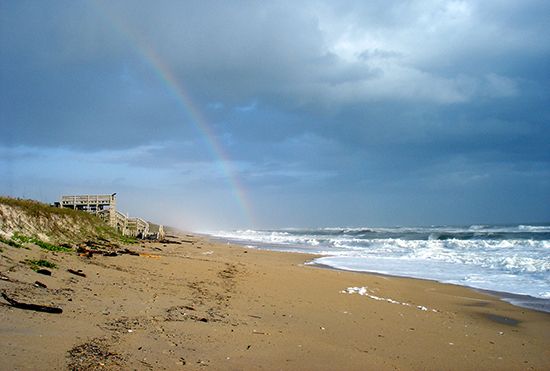
A national seashore is a coastal area in the United States that is preserved by the federal government for public recreational use. These protected regions…
What is national seashore?
A national seashore is a coastal area in the United States that is preserved by the federal government for public recreational use. These protected regions are managed to provide access to natural coastal environments, offering visitors opportunities for activities such as fishing, wildlife viewing, and enjoying beaches.12
The system began in 1953 with the establishment of Cape Hatteras in North Carolina. Since then, several other notable locations have been designated as national seashores, including:1
- Cape Cod (Massachusetts)
- Padre Island (Texas)
- Fire Island (New York)
- Assateague Island (Maryland and Virginia)
These areas serve as vital habitats for waterfowl and other wildlife while ensuring that significant stretches of the coastline remain accessible for public enjoyment.1
How does the National Park Service protect coastal ecosystems?
The National Park Service (NPS) protects coastal ecosystems by adhering to its foundational mandate established by the U.S. Congress in 1916. This mandate requires the agency to conserve the scenery, natural objects, and wildlife within its managed properties, ensuring they remain unimpaired for the enjoyment of future generations.3
By managing diverse federal lands—including national seashores and other coastal sites—the NPS implements conservation strategies designed to maintain the ecological integrity of these environments. This involves balancing public access and recreation with the preservation of sensitive habitats, such as dunes, wetlands, and marine life, against human impact and environmental degradation.3
What are the main differences between a national seashore and a national park?
While both national parks and national seashores are administered by the National Park Service as part of the same federal system, they differ primarily in their designation and primary focus.24
- National Parks: These are areas set aside by the government to preserve the natural environment, including landscapes, plants, and wildlife, in their natural state. They are often established for their significant scenic, scientific, or historical value. Because of the inherent paradox between promoting tourism and protecting wildlife, national parks typically restrict human activity to limited areas to minimize ecological disturbance.2
- National Seashores: These are specific coastal areas reserved by the federal government primarily for public recreational use. While they also protect natural resources like beaches and waterfowl, their designation is explicitly tied to their coastal location and their role in providing recreational access to the seacoast.41
Essentially, while a national park is a broad category focused on the preservation of diverse natural environments, a national seashore is a specialized designation within that system focused on coastal recreation and conservation.24
What kinds of wildlife are commonly found at national seashores?
National seashores serve as vital habitats for a diverse array of wildlife, particularly those adapted to coastal environments like barrier islands, dunes, and salt marshes.
Common wildlife found in these areas include:
- Birds: A wide variety of shorebirds frequent these regions, including plovers, terns, sanderlings, and pelicans. Other seabirds such as noddies and boobies are also commonly observed in coastal habitats.567
- Marine and Aquatic Life: Coastal waters and marshes support abundant populations of fish and shellfish, including flounder, red snappers, mullet, oysters, and crabs.75
- Reptiles: National seashores often provide essential environments for sea turtles and alligators.5
While these areas are rich in biodiversity, some species, such as the Caribbean manatee, have seen their populations diminish in certain coastal regions. The presence of these animals is supported by the varied ecosystems found within national seashores, ranging from maritime forests of live oaks and pines to expansive salt marshes and sandy dunes.75
Sources
- national seashore — Encyclopædia Britannica
- national seashore — Merriam-Webster
- National Park Service — Encyclopædia Britannica
- national park — Encyclopædia Britannica
- Gulf of Mexico / Gulf of America - Plants and animals — Encyclopædia Britannica
- Gulf Islands National Seashore — Encyclopædia Britannica
- Shorebird — Encyclopædia Britannica
Published on · 3 min read