Silurian Period
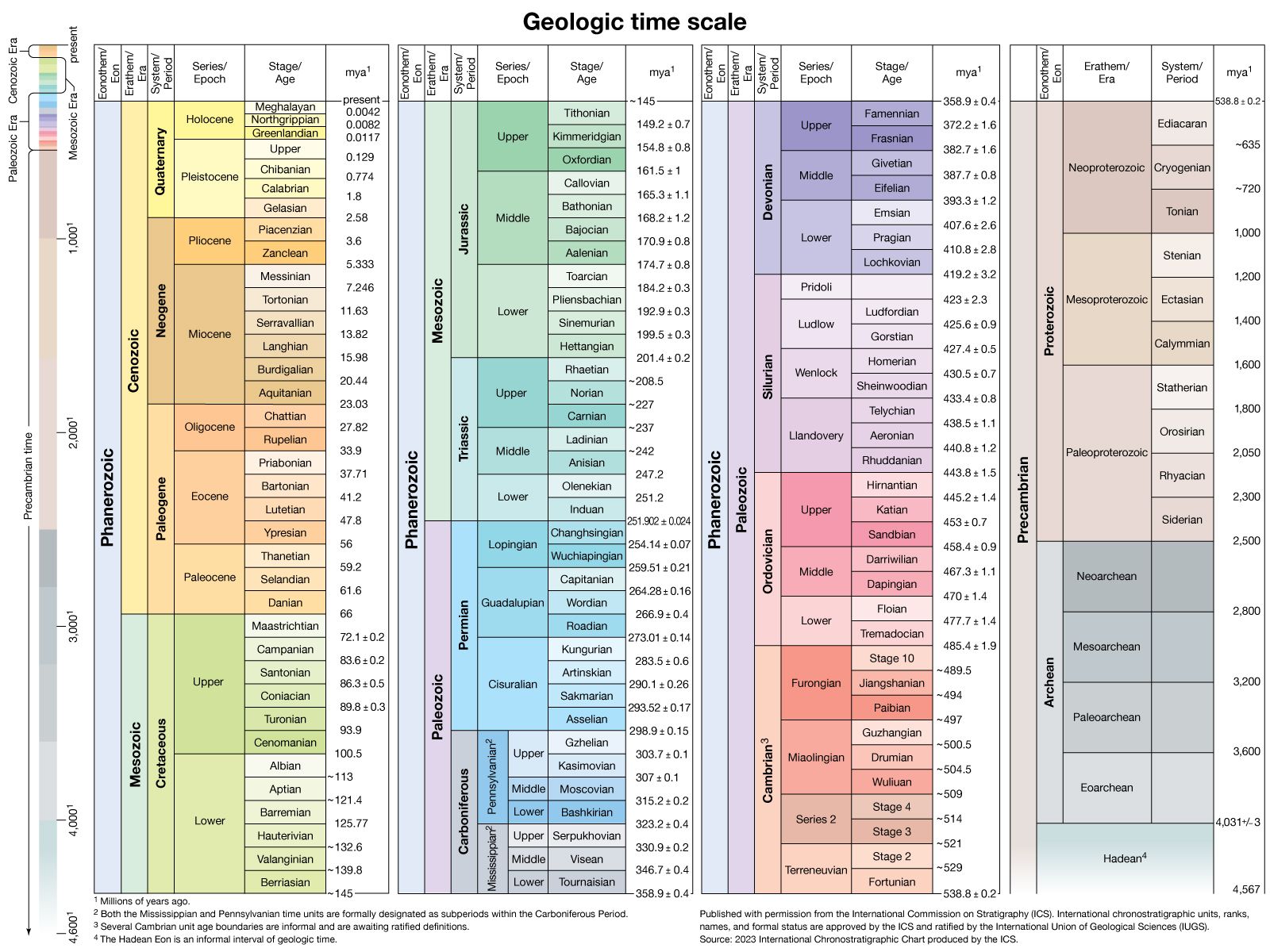
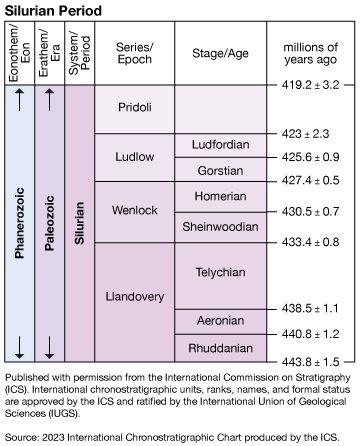
During the Silurian Period (443.4 million to 419.2 million years ago), the Earth experienced a significant rise in global sea levels as glaciers from the…
How did the climate and sea levels change during the Silurian Period?
During the Silurian Period (443.4 million to 419.2 million years ago), the Earth experienced a significant rise in global sea levels as glaciers from the Late Ordovician ice age melted. This event reflooded vast continental platforms that had previously been exposed, creating shallow seas across large expanses of the continents.12
Throughout the period, global sea levels remained much higher than they are today, though they were subject to smaller fluctuations of 30 to 50 metres. These cycles of rising and falling sea levels were likely influenced by minor changes in the size of the surviving Gondwanan ice cap and, in some cases, local tectonic or volcanic activity.134
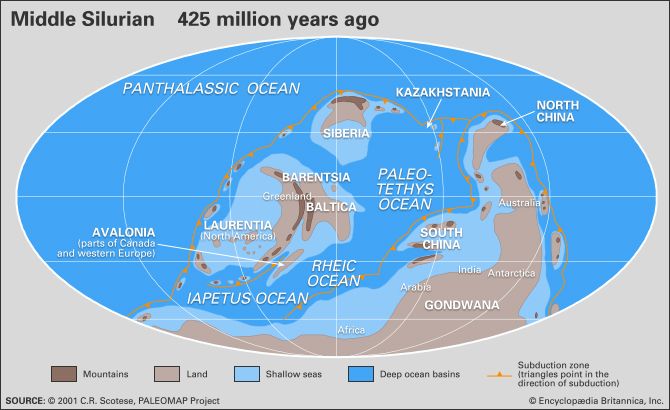
The climate was shaped by the distribution of land and water, with the supercontinent Gondwana centered over the South Pole and a ring of continents spanning the Equator. Atmospheric circulation patterns, similar to those of today, drove distinct climatic zones, including tropical regions where coral mound reefs flourished. In the Southern Hemisphere, the interaction of air masses over Gondwana created significant seasonal variations, while intense surface upwelling along the supercontinent’s margins boosted biological productivity and led to the formation of black shales in oxygen-depleted waters.546
What types of life forms emerged or became dominant during the Silurian Period?
During the Silurian Period, life flourished as many faunal groups recovered from the mass extinctions that occurred at the end of the Ordovician Period. The period was characterized by the following developments:17
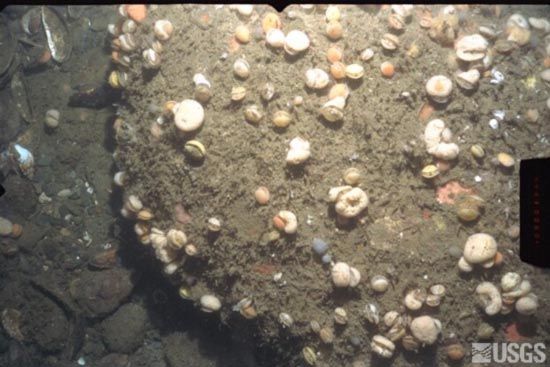
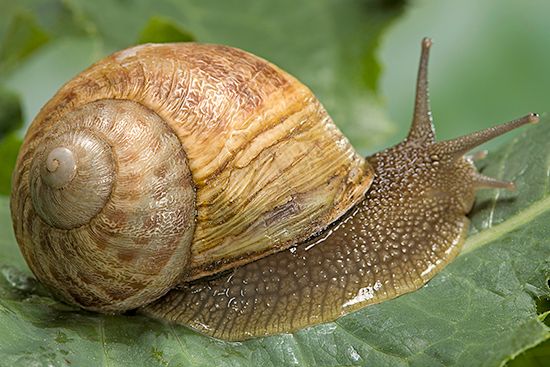
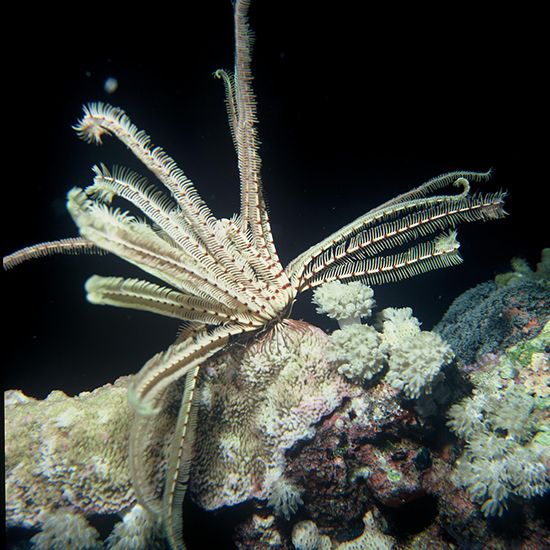
- Marine Life and Reefs: Shallow seas became widespread, supporting the growth of extensive mound-type coral reefs (bioherms). These reefs were populated by diverse organisms, including brachiopods, gastropods, crinoids, and trilobites.178
- Fishes: The Silurian saw a significant diversification of fishes. A wide variety of jawless fishes (Agnatha) appeared, and by the end of the period, jawed vertebrates—including the early Acanthodii—became common Acanthodii—became common.1910
- Land Plants: This period marked a pivotal moment in the history of life as vascular plants began to colonize coastal lowlands. These early plants, such as the genus Cooksonia, were small, leafless, and branched, with photosynthesis occurring in their stems. While these plants established themselves along the coasts, the interiors of the continents remained largely barren.1117
What extinction events, if any, occurred during the Silurian Period?
While the Silurian Period began with the recovery of marine life from the massive extinction event at the end of the Ordovician Period, the Silurian itself was characterized by several smaller, distinct extinction and radiation events.1213
These Silurian-specific extinctions primarily affected nektonic (free-swimming) and pelagic (free-floating) organisms and are closely linked to global sea-level fluctuations. Key observations include:13
- Graptolite Declines: The fossil record shows ten individual extinction events for graptolites, during which 52 to 79 percent of these planktonic animals disappeared.13
- Conodont Turnover: A significant change in conodont succession occurred during the early Sheinwoodian time, involving the extinction of key species followed by the emergence of new ones.13
- Acritarch Turnovers: Four major turnovers occurred among acritarchs, with the most extensive events coinciding with sea-level highstands during the mid-Aeronian and early Gorstian ages.13
Unlike the Late Ordovician mass extinction, these fluctuations did not drastically reduce the habitat for bottom-dwelling invertebrates, which were able to adapt by shifting their range along the continental shelves. These biological changes were likely driven by temperature shifts and minor glacial episodes.213
How do geologists use index fossils from the Silurian Period for stratigraphic correlation?
Geologists use index fossils to correlate Silurian strata by identifying organisms that were geographically widespread, abundant, and evolved rapidly, allowing for the precise dating of rock layers. Because Silurian environments varied, geologists rely on different fossil groups depending on the depositional setting.1415
Primary Index Fossil Groups
- Graptolites: These colonial, planktonic animals are ideal for correlating deep-water shaley facies. Because they were free-floating, they achieved a broad, cosmopolitan distribution. With 42 defined biozones, graptolites allow for high-precision correlation, often within intervals of one million years or less.16
- Brachiopods: In shallow-water “shelly facies,” brachiopods serve as the primary index fossils. Geologists use specific lineages, such as Stricklandia or Pentamerus, to date strata. While single-taxon zones are useful, correlation is most effective when using overlapping taxon zones to confirm specific ages.17
- Conodonts: These phosphatic microfossils are found in a wide range of marine environments. Global correlation is supported by 12.5 conodont biozones, with each zone defined by the first appearance of a specific taxon.18
While these fossils are essential, correlation between different facies (e.g., deep-water shales versus shallow-water carbonates) remains challenging and is often only approximate.1716
Sources
- A Journey Through Time Since the Precambrian - Silurian Period: 443.4 million to 419.2 million years ago — Encyclopædia Britannica
- Silurian Period - Silurian sea level — Encyclopædia Britannica
- Silurian Period - Atmospheric circulation — Encyclopædia Britannica
- Silurian Period - Paleogeography — Encyclopædia Britannica
- Silurian Period - Oceanic anoxia — Encyclopædia Britannica
- Silurian Period - Effects of Late Ordovician glaciation — Encyclopædia Britannica
- Silurian Period - Vascular land plants — Encyclopædia Britannica
- Silurian Period - Reef mounds and coral biostromes — Encyclopædia Britannica
- Silurian Period — Encyclopædia Britannica
- fish - Acanthodii: early jawed fishes — Encyclopædia Britannica
- Cambrian explosion — Encyclopædia Britannica
- Silurian Period - Late Ordovician mass extinction — Encyclopædia Britannica
- Silurian Period - Silurian extinctions — Encyclopædia Britannica
- Silurian Period - Conodonts — Encyclopædia Britannica
- index fossil — Encyclopædia Britannica
- Silurian Period - Brachiopods — Encyclopædia Britannica
- Silurian Period - Isotope stratigraphy — Encyclopædia Britannica
- Silurian Period - Correlation of Silurian strata — Encyclopædia Britannica
- Silurian Period - Graptolites — Encyclopædia Britannica
Published on · 4 min read