Labrador Sea
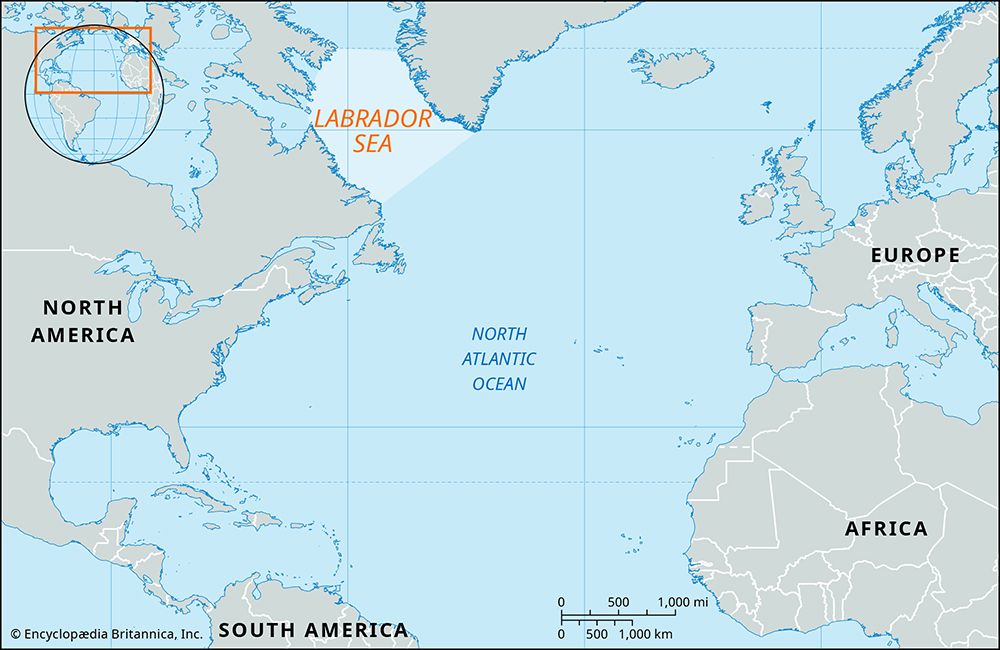
The Labrador Sea is a northwestern arm of the North Atlantic Ocean, situated between Labrador, Canada, to the southwest and Greenland to the northeast. It…
What is Labrador Sea?
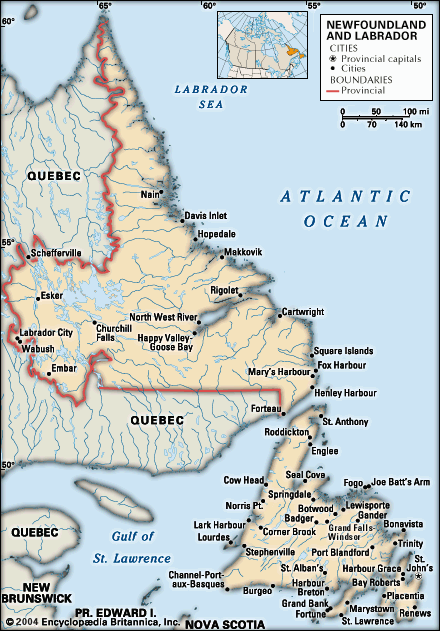
The Labrador Sea is a northwestern arm of the North Atlantic Ocean, situated between Labrador, Canada, to the southwest and Greenland to the northeast. It serves as a vital maritime connection, linking to Baffin Bay via the Davis Strait and to Hudson Bay through the Hudson Strait.1
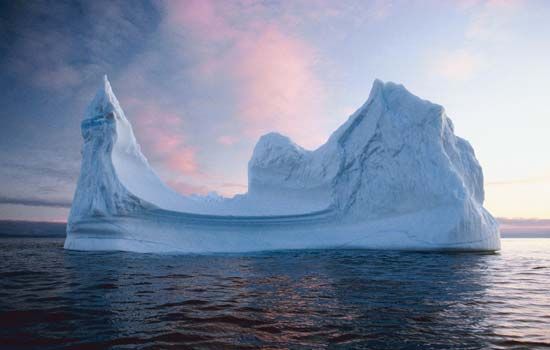
The sea is characterized by two primary currents: the cold, low-salinity Labrador Current flowing southward along the Canadian coast, and the warmer, more saline West Greenland Current moving northward along the Greenland coast. Because the Labrador Current transports numerous icebergs, shipping is largely restricted to the eastern portion of the sea during the navigation season, which lasts from midsummer to late fall. Historically, the region was a focal point for explorers seeking the Northwest Passage. Today, cod fishing remains a significant industry for Greenland’s ports.1
What is the Northwest Passage and why was it so difficult to find?
The Northwest Passage is a historical sea route through the Arctic Archipelago of northern Canada, connecting the Atlantic Ocean to the Pacific Ocean. Since the late 15th century, explorers sought this route as a commercial shortcut to East Asia to bypass traditional overland routes and long voyages around Africa or South America.4
Finding the passage was one of the world’s most difficult maritime challenges due to extreme environmental conditions:
- Hazardous Ice: The route is located hundreds of miles north of the Arctic Circle. Navigators faced massive icebergs drifting south from Greenland and a polar ice cap that frequently blocked shallow coastal waters and straits.4
- Geographic Complexity: The passage consists of a 900-mile series of deep, labyrinthine channels. Many early explorers, such as Henry Hudson, were misled by bays that appeared to be passages but were actually icy traps.45
- Extreme Risk: The environment claimed many lives, most notably the Franklin expedition in 1845, where 129 men vanished.4
The route was not successfully navigated by sea until Roald Amundsen completed the journey between 1903 and 1906.45
How do ocean currents like the Labrador Current affect global climate?
Ocean currents are fundamental drivers of the global climate, acting as a massive heat-distribution system that moves thermal energy from the tropics toward the poles. By transporting warm water to higher latitudes and cold water toward the equator, these currents moderate regional temperatures and influence weather patterns across the globe.678
The Role of the Labrador Current
The Labrador Current is a cold, low-salinity surface current that flows southward along the coast of Canada. Its climatic impact is most notable where it meets the warm Gulf Stream near the Grand Banks of Newfoundland. The interaction between the cold, humid air over the Labrador Current and the warm surface waters of the Gulf Stream creates one of the world’s most fog-prone regions. Furthermore, this mixing zone is critical for ocean circulation; in winter, the cooling of these waters increases their density, causing them to sink and contribute to the deep-water formation that drives global thermohaline circulation.391011
Global Climate Implications
- Heat Moderation: Warm currents like the North Atlantic Current significantly warm the climate of northwestern Europe, preventing it from being much cooler and drier.610
- Weather Patterns: Currents influence the development of tropical cyclones and affect precipitation patterns by altering evaporation rates.78
- Climate Stability: Large-scale circulation, often called the “great ocean conveyor belt,” relies on the sinking of cold, saline water in subpolar regions. There is scientific concern that melting ice and increased freshwater influx—which lower water density—could weaken these currents, potentially dampening the warming effect in higher latitudes.11128
We could dive deeper into how specific changes in ocean temperature are currently impacting marine ecosystems or weather extremes.
What kinds of marine life are found in the cold waters of the Labrador Sea?
The cold, nutrient-rich waters of the Labrador Sea support a diverse array of marine life, ranging from microscopic organisms to large mammals.
Marine Fauna
- Mammals: The coastal waters are frequented by large herds of harp and hooded seals. Various species of whales are also commonly observed during the summer months as they feed in these productive waters.1
- Fish: Cod are a significant species in the region and have historically supported major fishing industries, particularly near Greenland.3
- Seabirds: The offshore islands and headlands host vast colonies of birds, including Atlantic puffins, murres, northern gannets, petrels, and eider ducks.1
Planktonic Foundation
The base of the food web in these cold waters consists of zooplankton, which include both permanent residents and temporary larvae. Crustaceans, such as copepods, are particularly vital as a primary food source for larger marine animals.1415
Sources
- Labrador Sea — Encyclopædia Britannica
- Newfoundland and Labrador - Climate of Newfoundland and Labrador — Encyclopædia Britannica
- Labrador Current — Encyclopædia Britannica
- Northwest Passage — Encyclopædia Britannica
- European exploration - The northern passages — Encyclopædia Britannica
- How Do Ocean Currents Affect the Biosphere? — Encyclopædia Britannica
- Gulf Stream — Encyclopædia Britannica
- Climate - Climate and the oceans — Encyclopædia Britannica
- iceberg - Impact on ocean structure — Encyclopædia Britannica
- sea ice - Interactions with the oceans , atmosphere , and climate — Encyclopædia Britannica
- Global warming - Ocean circulation changes — Encyclopædia Britannica
- ocean warming — Encyclopædia Britannica
- Atlantic Ocean - The North Atlantic — Encyclopædia Britannica
- Newfoundland and Labrador - Plant and animal life — Encyclopædia Britannica
- zooplankton — Encyclopædia Britannica
- plankton - Zooplankton — Encyclopædia Britannica
Published on · 4 min read