Odontoglossum
Odontoglossum is a genus comprising approximately 150 species of orchids native primarily to the mountainous regions of tropical America. These plants are…
What is Odontoglossum?
Odontoglossum is a genus comprising approximately 150 species of orchids native primarily to the mountainous regions of tropical America. These plants are widely cultivated for their showy, long-lasting [flowers], which typically feature ruffled sepals and two distinct toothlike structures on the central labellum.1
Most species are epiphytic, meaning they grow on other plants, though some are terrestrial. They are characterized by large pseudobulbs—swollen stems—that bear leaves and produce flower spikes from their base. Because they are considered relatively easy to grow in warm, humid conditions, they are popular among enthusiasts, and many have been used to create novel hybrids with other orchid genera.1
What is an epiphytic plant?
An epiphyte is any plant that grows upon another plant or object solely for physical support. Unlike parasitic plants, which derive water or nutrients from their hosts, epiphytes do not harm the plants they grow on. They are often referred to as “air plants” because they do not have an attachment to the ground or a traditional nutrient source.234
Key characteristics of epiphytes include:
- Habitat: Most are found in moist tropical regions, where growing high in the tree canopy allows them to access sunlight that is otherwise blocked in dense forests.2
- Nutrient and Water Acquisition: They obtain moisture from rain and water vapor in the air, often absorbing it through their roots or specialized leaves. Nutrients are typically gathered from organic debris that collects on the supporting structure.2
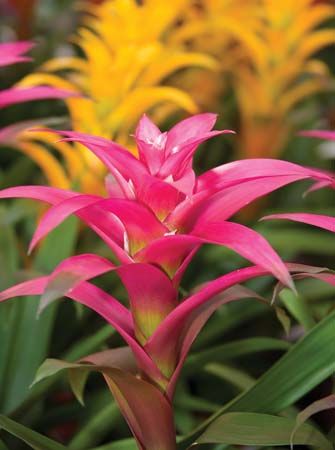
- Diversity: The majority are angiosperms, including many orchids, tillandsias, and members of the Bromeliaceae family. Mosses, ferns, and liverworts are also common.23
How do pseudobulbs help orchids survive?
Pseudobulbs are solid, bulbous enlargements of the stem found in many orchid species, particularly those that are epiphytic.56
While the provided search results identify these structures as thickened stem bases or corms that exhibit diverse morphological types, they do not explicitly detail the physiological mechanisms—such as water or nutrient storage—by which these structures facilitate survival. Consequently, I cannot provide a specific explanation of how pseudobulbs aid in the survival of orchids based on the available data.567
What are some other popular types of orchids?
The Orchidaceae family is incredibly diverse, comprising approximately 26,000 species across 880 genera. While many are prized as ornamentals, they exhibit a wide range of forms and ecological adaptations.89
Some popular and notable types of orchids include:
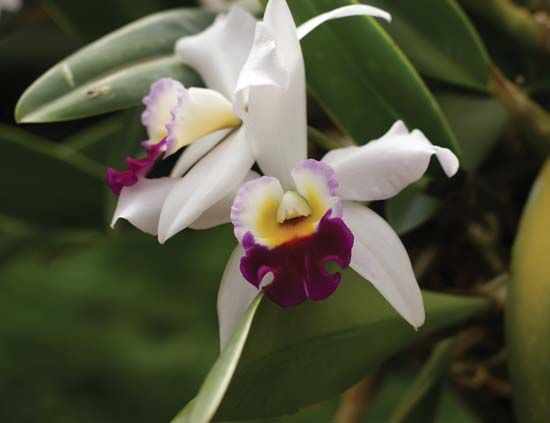
- Cattleya: Often called the “corsage orchid,” this genus is famous for its large, showy, and fragrant flowers. They are frequently used in hybridization to create new ornamental varieties.10
- Moth Orchid (Phalaenopsis): These are among the most popular houseplants due to their long-lasting flowers and relative ease of care. They are typically epiphytic and thrive in indoor environments.11
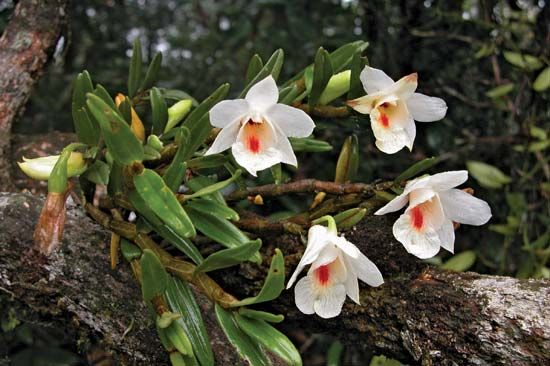
- Dendrobium: A massive genus with about 1,500 species, ranging from the white-flowered pigeon orchid to species with unique, hornlike petals.12
- Lady’s Slipper: Belonging to the subfamily Cypripedioideae, these are easily recognized by their distinct, pouch-shaped labellum.8
- Vanilla: Beyond its ornamental value, this genus is economically significant as the primary source of the popular flavoring.8
Sources
- Odontoglossum — Encyclopædia Britannica
- epiphyte — Encyclopædia Britannica
- Did you know? — Merriam-Webster
- parasitic plant — Encyclopædia Britannica
- pseudobulb — Merriam-Webster
- orchid - Growth forms — Encyclopædia Britannica
- Bulbophyllum — Encyclopædia Britannica
- cattleya — Encyclopædia Britannica
- orchid - Ecology — Encyclopædia Britannica
- list of plants in the family Orchidaceae — Encyclopædia Britannica
- moth orchid — Encyclopædia Britannica
- Dendrobium — Encyclopædia Britannica
- orchid - Structural diversity — Encyclopædia Britannica
Published on · 2 min read