Ovule
An ovule is a specialized plant structure that develops into a seed following fertilization. It serves as the site where female reproductive cells are…
What is an ovule and where is it located in a plant?
An ovule is a specialized plant structure that develops into a seed following fertilization. It serves as the site where female reproductive cells are produced and where the embryo develops.123
The location of the ovule depends on the type of plant:
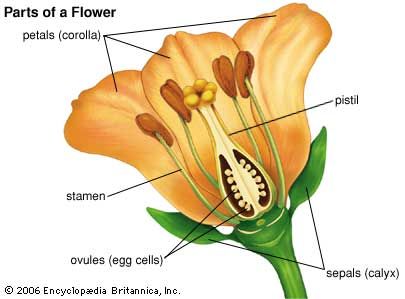
- Angiosperms (flowering plants): The ovules are enclosed within the ovary, which is the basal part of the pistil. They are typically attached to the ovary wall or a central axis via a stalk called the funiculus.13
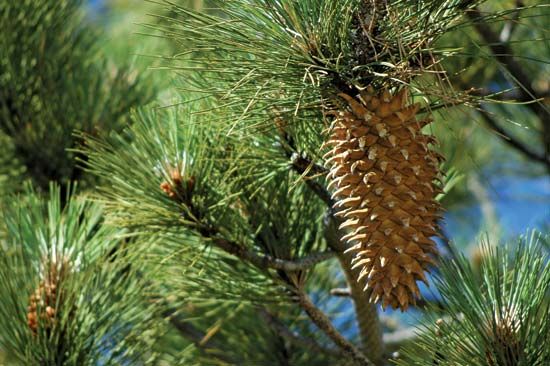
- Gymnosperms (such as conifers): The ovules are not enclosed; instead, they lie exposed on the scales of the cone.12
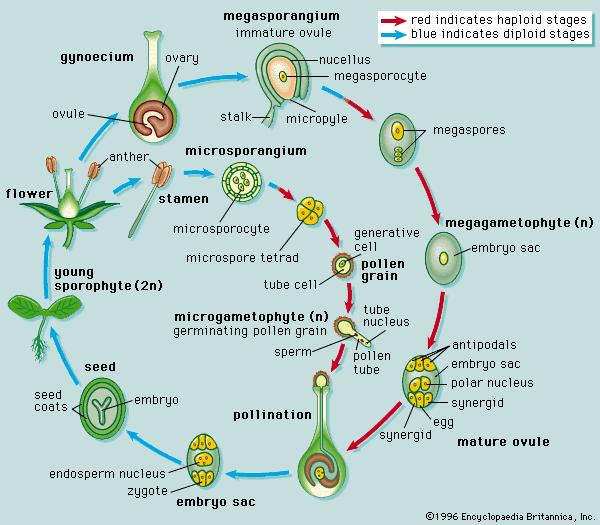
Structurally, a mature ovule consists of a central region containing the embryo sac, protected by one or two layers called integuments, which eventually form the seed coat. A small opening known as the micropyle allows the pollen tube to enter for fertilization.13
What is the role of ovules in plant reproduction?
The ovule plays a central role in plant reproduction by serving as the structure where female reproductive cells are produced and where the embryo develops following fertilization.13
Its primary functions include:
- Gamete Production: Within the ovule, a specialized region called the nucellus houses the embryo sac, which produces the egg cell and polar nuclei necessary for reproduction.35
- Facilitating Fertilization: The ovule features a small opening known as the micropyle, which allows the pollen tube to enter and deliver sperm nuclei to the embryo sac.13
- Seed Development: Once fertilized, the ovule matures into a seed. The protective layers of the ovule, called integuments, harden to form the seed coat, while the internal tissues provide the necessary nutrients for the developing plant.16
In angiosperms, this process often involves double fertilization, where one sperm nucleus fertilizes the egg to form a zygote, and another fuses with polar nuclei to create nutrient-rich endosperm.3
How does the structure of an ovule differ from that of an animal egg?
The primary difference between an ovule and an animal egg lies in their biological complexity and function. While an animal egg (or ovum) is a single gamete cell, an ovule is a complex, multicellular plant structure that contains the female reproductive cells and provides the environment for embryo development.712
Key structural differences include:
- Composition: An animal egg consists of the ovum, protective membranes (such as the vitelline membrane), and often nutritive material like yolk. In contrast, a mature ovule is composed of a central embryo sac protected by layers called integuments, which eventually harden into a seed coat.712
- Developmental Support: Animal eggs are often disproportionately large because they must contain sufficient nutrients to support the embryo until it can feed itself. Plant ovules are not as large because the developing embryo is nourished by the parent plant until it becomes self-supporting.7
- Fertilization Mechanism: In animals, fertilization typically involves the fusion of motile sperm with the egg. In seed plants, the ovule contains a small opening called the micropyle that allows a pollen tube to deliver sperm nuclei directly to the embryo sac.8912
What evolutionary adaptations have plants developed to protect their ovules?
Plants have evolved several sophisticated structural adaptations to protect their ovules and the developing embryos within them. These protections vary significantly between the two main groups of seed plants:
Protection in Angiosperms (Flowering Plants)
The most significant evolutionary advancement in angiosperms is the enclosure of ovules within an ovary. This structure provides a primary layer of defense. As the ovule is fertilized and matures into a seed, the ovary wall matures into a fruit, which serves as an additional protective layer and often aids in dispersal.11112
Structural Defenses of the Ovule
Regardless of the plant group, the ovule itself possesses inherent protective features:
- Integuments: Every ovule is covered by one or two layers of tissue called integuments. Following fertilization, these layers harden to form the testa, or seed coat, which shields the embryo from mechanical damage, desiccation, and environmental stress.11312
- Controlled Access: The micropyle—a small opening in the integuments—allows for the entry of the pollen tube while maintaining a barrier against external threats. In some species, this opening is further regulated by specialized structures like the strophiolar cleft, which controls water uptake.11213
Gymnosperm Protection
In gymnosperms, such as conifers, ovules are not enclosed in an ovary but are instead protected by their placement on the scales of cones.114
Sources
- Ovule — Encyclopædia Britannica
- ovule — Merriam-Webster
- Seed - Angiosperm seeds — Encyclopædia Britannica
- Plant reproductive system - Angiosperms — Encyclopædia Britannica
- Angiosperm - Seeds — Encyclopædia Britannica
- Angiosperm - Ovules — Encyclopædia Britannica
- Egg — Encyclopædia Britannica
- sexual reproduction — Encyclopædia Britannica
- gamete — Encyclopædia Britannica
- Reproduction - Reproduction of organisms — Encyclopædia Britannica
- Plant - Fruits and seeds — Encyclopædia Britannica
- Angiosperm: Top Questions — Encyclopædia Britannica
- Seed - Role of the seed coat — Encyclopædia Britannica
- Carpel — Encyclopædia Britannica
Published on · 4 min read