Carpel
A carpel is a leaflike, seed-bearing structure that forms the innermost whorl of a flower. Botanically, it is defined as a single megasporophyll, or a…
What is Carpel?
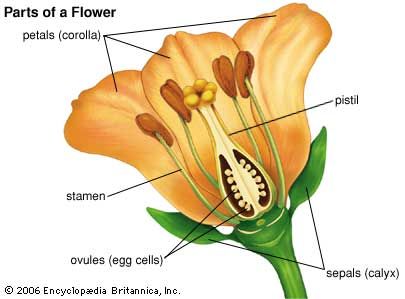
A carpel is a leaflike, seed-bearing structure that forms the innermost whorl of a flower. Botanically, it is defined as a single megasporophyll, or a modified leaf that carries seeds.12
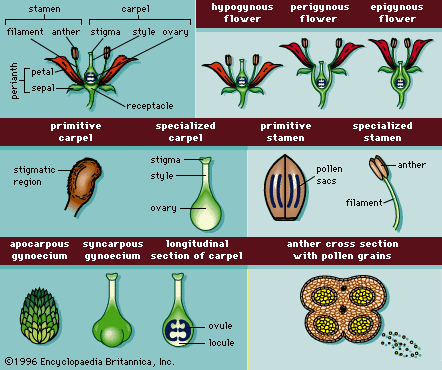
One or more carpels constitute the pistil, which is the female reproductive organ of the plant. A pistil may be composed of a single carpel (a simple pistil) or multiple carpels that are partially or completely joined together (a compound pistil). Within the carpel, ovules are enclosed and protected; when these are fertilized by pollen, they develop into seeds.12
The arrangement and number of carpels are significant in plant taxonomy, helping to distinguish between different families and genera of plants. For example, while some flowers have distinct, separate carpels, others feature united structures that form a multi-chambered ovary.23
What is the role of the stamen in plant reproduction?
The stamen serves as the male reproductive organ of a flower, playing a critical role in the plant’s life cycle by producing pollen.45
Structurally, the stamen typically consists of two main parts:
- Filament: A long, slender stalk that supports the anther.46
- Anther: A two-lobed structure at the tip of the filament containing four saclike microsporangia. These sacs produce pollen grains, which house the sperm cells necessary for fertilization.465
Collectively, all the stamens in a flower are referred to as the androecium. During the reproductive process, the anthers release pollen—often aided by external agents like insects, birds, or wind—to be transported to the pistil of a flower. This transfer, known as pollination, is the essential prerequisite for the development of seeds and fruit. Additionally, many plants feature nectaries at the base of their stamens to provide food rewards, effectively encouraging pollinators to visit and facilitate this reproductive process.457
How does pollination differ from fertilization in flowers?
While pollination and fertilization are both essential stages in the reproduction of flowering plants, they are distinct biological processes.
Pollination is the physical transfer of pollen grains from the stamen (the male reproductive organ) to the receptive surface of the pistil, known as the stigma. This process relies on external agents—such as wind, water, or animals—to move the pollen. Once the pollen lands on the stigma, it germinates and grows a pollen tube down through the style toward the ovule.68
Fertilization is the subsequent event where the male gametes (sperm cells) carried by the pollen tube fuse with the female gametes within the ovule. In angiosperms, this involves double fertilization: one sperm cell fuses with the egg to form a zygote, while the other combines with nuclei in the central cell to initiate the development of endosperm, which provides nourishment for the developing embryo.69
In short, pollination is the delivery mechanism, while fertilization is the actual union of gametes that leads to the formation of a seed.69
What are the main differences between simple and compound pistils?
The primary difference between simple and compound pistils lies in the number and arrangement of carpels—the modified, seed-bearing leaves that form the pistil.21
- Simple Pistil: This type is composed of a single carpel. An example of a plant with a simple pistil is the sweet pea.2
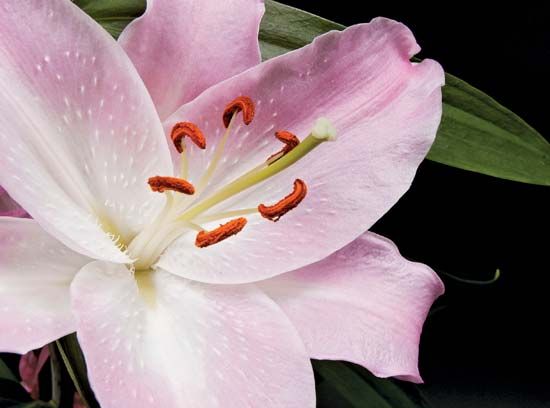
- Compound Pistil: This type is formed by the fusion of two or more carpels, which may be partially or completely joined. A flower with a single compound pistil is described as syncarpous, such as the mustard (two carpels) or the lily (three carpels).2
In contrast, if a flower contains multiple, separate pistils—each consisting of its own individual carpel—the flower is termed apocarpous, as seen in the buttercup. These structural variations in the gynoecium are significant features used by botanists to determine taxonomic relationships between different plant families and genera.2
Sources
- Carpel — Encyclopædia Britannica
- Pistil — Encyclopædia Britannica
- Palm - Flowers — Encyclopædia Britannica
- Stamen — Encyclopædia Britannica
- Anther — Encyclopædia Britannica
- Pollination — Encyclopædia Britannica
- 5 Fast Facts About Flower Anatomy — Encyclopædia Britannica
- Angiosperm - Pollination — Encyclopædia Britannica
- Plant development - Preparatory events — Encyclopædia Britannica
Published on · 3 min read