Pistil
The pistil is the female reproductive organ of a flower, serving as the site where pollination and fertilization occur. It is typically composed of three…
How does the pistil function in plant reproduction?
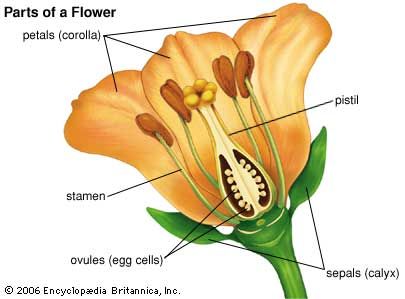
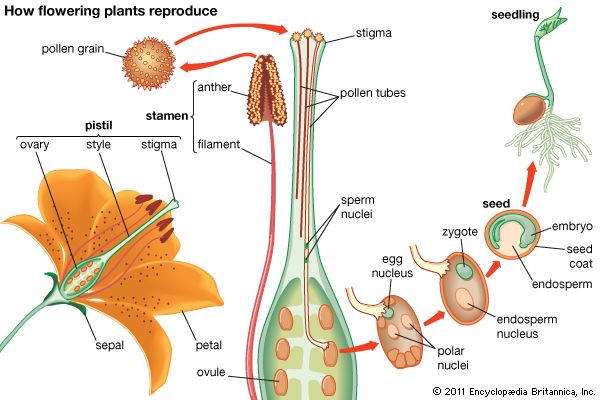
The pistil is the female reproductive organ of a flower, serving as the site where pollination and fertilization occur. It is typically composed of three distinct parts:1
- Stigma: The pollen-receptive tip, which is often sticky or glandular to capture pollen grains.12
- Style: A stalk that connects the stigma to the ovary, containing secretory tissue that nourishes the pollen tube as it grows downward.12
- Ovary: The swollen base that houses the ovules, which contain the female gametes.1
During reproduction, compatible pollen lands on the stigma and germinates, sending a pollen tube through the style to the ovary. Once the sperm reaches the ovule, fertilization occurs, leading to the development of an embryoembryo](https://www.britannica.com/science/embryo-human-and-animal). Following successful fertilization, the ovules mature into seeds, and the ovary ripens into a fruit, which protects and aids in the dissemination of those seeds.1234
What is the difference between a simple pistil and a compound pistil?
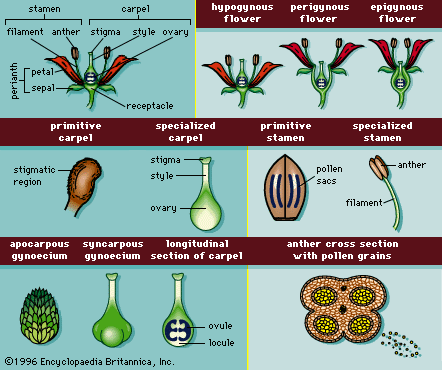
The primary difference between a simple and a compound pistil lies in the number of carpels that compose them. A pistil is the female reproductive structure of a flower, consisting of an ovary, a style, and a stigma, and is formed from one or more modified, seed-bearing leaves known as carpels.15
- Simple Pistil: This structure is composed of a single carpel. An example of a plant with a simple pistil is the sweet pea.1
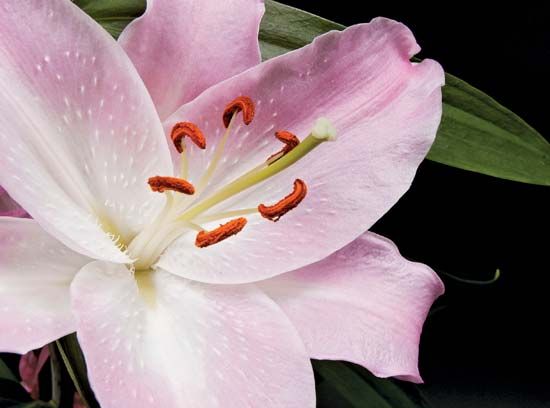
- Compound Pistil: This structure is formed by the fusion of two or more carpels. These carpels may be partially or completely joined together. Examples include the mustard family, which typically features two carpels, and the lily, which features three.1
When a flower contains a single pistil made of multiple united carpels, it is described as syncarpous. In contrast, if a flower contains multiple separate, unfused pistils (and thus separate carpels), it is termed apocarpous.16
What is a pistil and what are its main parts?
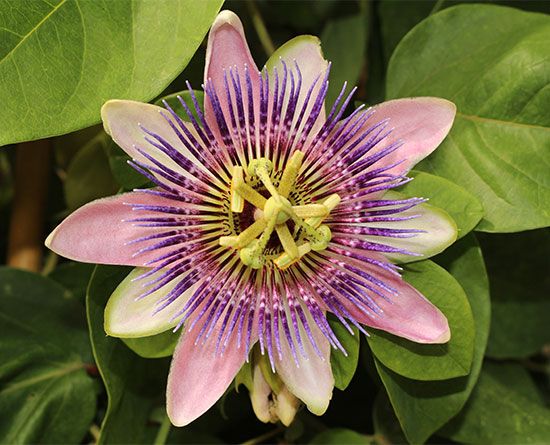
The pistil is the female reproductive organ of a flower, centrally located within the gynoecium. It is responsible for the production of seeds through the process of pollination and fertilization.17
A pistil is typically composed of three main parts:17
- Ovary: The swollen, enlarged basal portion that contains the ovules, which are the potential seeds. Upon fertilization, the ovary matures into a fruit.18
- Style: A stalk-like structure that rises from the ovary, providing a pathway for the pollen tube to reach the ovules.17
- Stigma: The pollen-receptive tip at the top of the style. It is often sticky or glandular to effectively capture pollen grains.17
Each pistil is constructed from one or more modified, seed-bearing leaves known as carpels. A pistil consisting of a single carpel is called a simple pistil, while one formed by two or more joined carpels is known as a compound pistil.17
What role does the pistil play in fruit formation after fertilization?
After fertilization, the pistil undergoes significant transformations to facilitate the development of seeds and the formation of fruit. The process involves the following key changes:
- Ovary Maturation: The ovary, which is the enlarged basal portion of the pistil, matures into the fruit. This structure serves the primary purpose of protecting the developing seeds and aiding in their eventual dissemination.910
- Seed Development: Within the ovary, the ovules develop into seeds, each containing an embryo plant. This development is stimulated by both pollination and fertilization, which trigger rapid cell division in the ovules and the zygote.91
- Floral Changes: As the fruit begins to form, other parts of the flower typically wither or are shed. The anthers and stigma usually wither, the petals drop off, and the sepals may be shed or undergo modifications.9
- Endosperm Formation: Through double fertilization, a reserve food tissue known as endosperm is initiated within the seed to nourish the developing embryo.2
In some cases, fruit can form without fertilization through a process called parthenocarpy. Depending on the species, the mature fruit may incorporate other floral structures, such as the hypanthium or receptacle, in addition to the ripened ovary.10
Sources
- Pistil — Encyclopædia Britannica
- Angiosperm - Pollination — Encyclopædia Britannica
- Angiosperm - General features — Encyclopædia Britannica
- Fruit — Encyclopædia Britannica
- Carpel — Encyclopædia Britannica
- Angiosperm - The gynoecium — Encyclopædia Britannica
- Ovary — Encyclopædia Britannica
- Flower — Encyclopædia Britannica
- Fruit: Top Questions — Encyclopædia Britannica
- Plant reproductive system - Angiosperms — Encyclopædia Britannica
- Angiosperm - Fruits — Encyclopædia Britannica
- Pollination — Encyclopædia Britannica
- Ovule — Encyclopædia Britannica
Published on · 4 min read