Pacific Coast
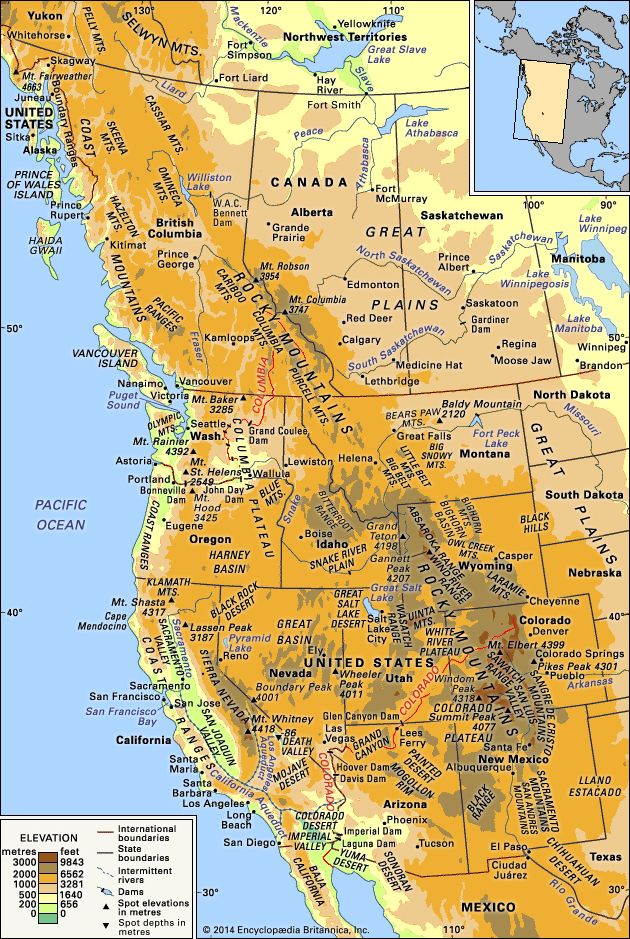
The Pacific Coast region of North America is primarily defined by two major geographical features: the Pacific Ocean to the west and a massive, complex…
What are the main geographical features that define the Pacific Coast region of North America?
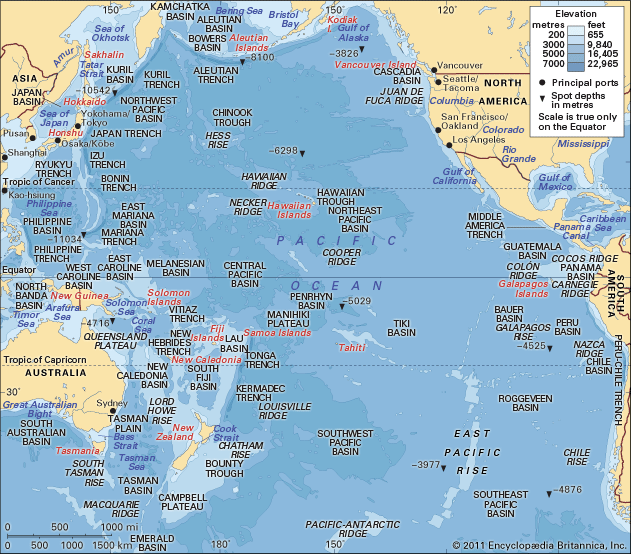
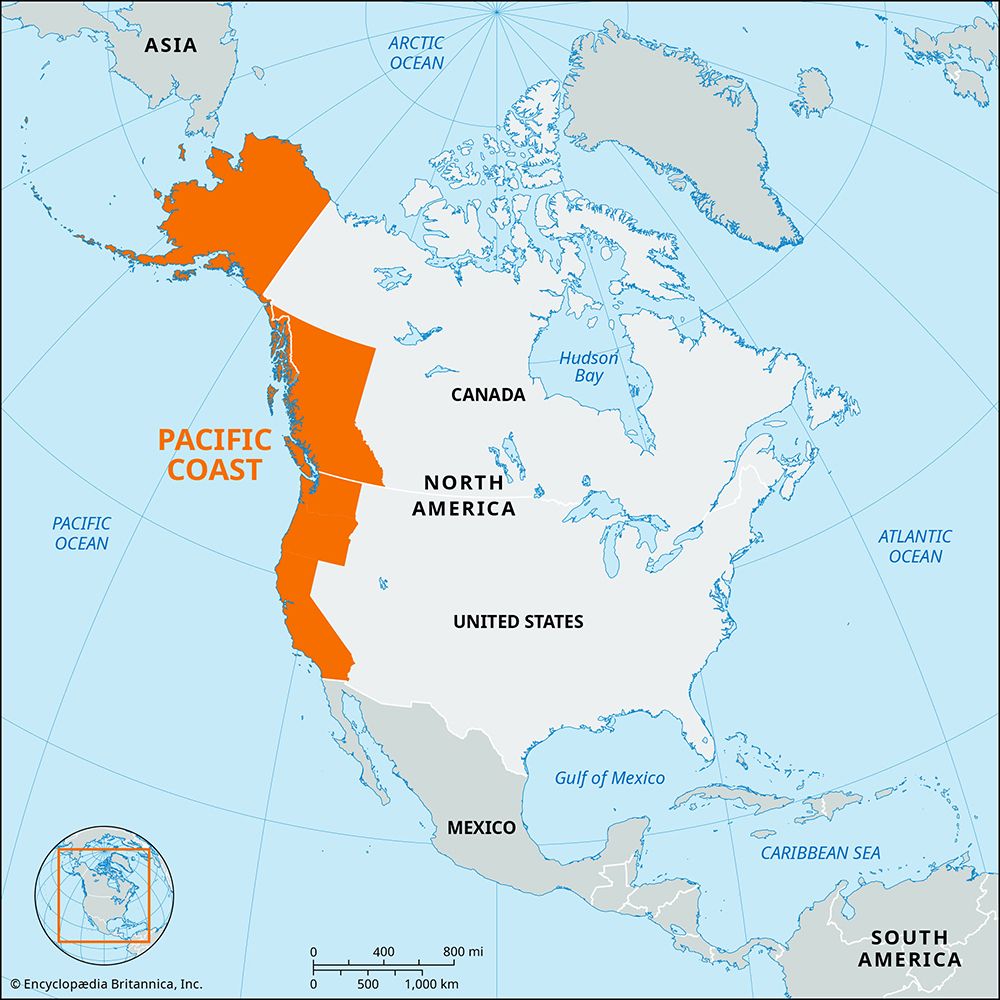
The Pacific Coast region of North America is primarily defined by two major geographical features: the Pacific Ocean to the west and a massive, complex series of mountain ranges to the east.1
The Pacific Mountain System
This extensive mountain system stretches approximately 4,500 miles from northern British Columbia to northwestern Mexico. Its physiography is often visualized as an elongated “H” shape:23
- Western Ranges: Includes the Coast Mountains of British Columbia, Vancouver Island, the Olympic Mountains, and the Coast Ranges of Washington, Oregon, and California.23
- Eastern Ranges: Comprised of the Canadian Coast Mountains, the Cascade Range, and the Sierra Nevada.3
- Cross-links: The Klamath Mountains form the central cross-bar, while the Transverse Ranges create the closed southern base.3
Geological and Coastal Characteristics
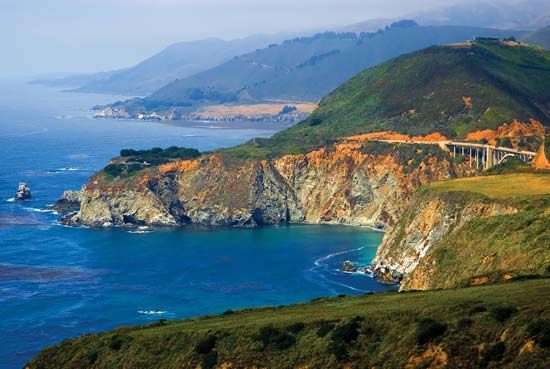
The region is shaped by active plate tectonics, including the San Andreas Fault and the subduction of the Juan de Fuca Plate, which drives volcanic activity in the Cascades. Coastal plains are typically narrow or nonexistent, with a continental shelf that drops abruptly into the ocean.43
How has the Pacific Coast influenced art, literature, and popular culture in North America?
The Pacific Coast has profoundly shaped North American culture, serving as both a creative hub and a frequent subject of artistic exploration. Its influence is most visible in the development of global media, literature, and music.
Film and Television
The region, particularly Hollywood, became the center of the world’s motion-picture industry due to its mild climate, varied terrain, and abundant sunshine. While the industry faced significant challenges following World War II due to the rise of television and antitrust litigation, it successfully reorganized by the late 20th century to maintain its status as a global cultural powerhouse.3
Literature
California and the broader Pacific Coast have inspired a diverse literary tradition:
- Regional Identity: Early writers like John Muir celebrated the region’s natural wonders, while others like John Steinbeck explored social realities.3
- Satire and Noir: The “Hollywood novel” often serves as a vehicle for social critique, with works by Nathanael West, Aldous Huxley, and Evelyn Waugh lampooning the region’s culture. Additionally, the hard-boiled fiction of authors like Raymond Chandler and Dashiell Hammett famously depicted the duality of the West Coast as both optimistic and corrupt.37
- Poetry: The San Francisco Beat movement fostered a distinct, countercultural poetic voice.3
Music
The Pacific Coast has been a cradle for numerous musical movements. From the Cool Jazz of the 1940s to the Beach Boys’ signature sound in the 1960s, the region has consistently defined popular music trends, including psychedelic rock, punk, and gangsta rap11.
How do ocean currents affect the Pacific Coast region?
Ocean currents play a critical role in shaping the climate, ecology, and weather patterns of the Pacific Coast region of North America.
The California Current
The primary current affecting the North American Pacific Coast is the California Current, a cold, southward-flowing surface current that extends from roughly 48° N to 23° N latitude. This current is a key component of the North Pacific circulation system and significantly influences the coastal environment.1314
Upwelling and Biological Productivity
A defining feature of this region is upwelling, a process where cold, nutrient-rich deep water is brought to the surface. This is most dominant during the summer months. These nutrients support abundant plankton populations, which in turn sustain rich fisheries and diverse marine life15. Additionally, the cold water of the California Current cools the overlying air, often leading to the formation of thick coastal fog and low clouds.131516
Climatic Anomalies: El Niño and La Niña
The region is also subject to the El Niño-Southern Oscillation (ENSO), a climate pattern that periodically alters ocean and atmospheric circulation.17
- El Niño: During this warm phase, the weakening of trade winds reduces upwelling, which can disrupt marine ecosystems and fisheries. It is also associated with unseasonably warm conditions and changes in precipitation patterns across North America.17151418
- La Niña: This cool phase strengthens trade winds and enhances upwelling, often leading to cooler conditions and increased precipitation in parts of North America.1718
What are some of the major cities located on the Pacific Coast and how have they developed?
Major cities along the Pacific Coast have developed through a combination of maritime trade, resource extraction, and strategic industrial growth. Their evolution often reflects their ability to adapt to changing transportation systems and global economic shifts.
Key Pacific Coast Cities
- San Francisco: Established as a military post and mission in 1776, the city’s rapid growth was ignited by the California Gold Rush in 1848–49. It became a vital rail hub and port, eventually serving as a major disembarkation point during World War II. Today, it remains a financial and administrative capital, with a strong economic focus on the technology and service sectors.202122
- Los Angeles: Originally a small village founded in 1781, Los Angeles expanded through aggressive annexations and the securing of a reliable water supply from the Owens River. The city grew by incorporating neighboring communities and developing a major harbor, transforming into a sprawling metropolitan center.23
- Seattle: Seattle experienced significant 20th-century growth, bolstered by international events like the 1962 World’s Fair. It underwent extensive urban renewal and later became a global hub for high technology and internet commerce. The city has balanced this rapid development with efforts toward historic preservation and progressive environmental policies.24
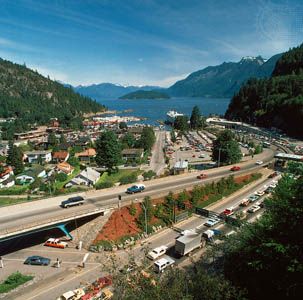
- Vancouver: Starting as a small sawmilling settlement, Vancouver was incorporated in 1886 and became the western terminus of the Canadian Pacific Railway. The opening of the Panama Canal in 1914 was pivotal, enabling the export of grain and lumber. Post-World War II, it emerged as a primary business hub for trade with the Pacific Rim.25
These cities illustrate how early mercantile beginnings, combined with infrastructure development and access to global markets, created the prosperous urban centers seen today.3
Sources
- Pacific mountain system — Encyclopædia Britannica
- Pacific mountain system - Geology — Encyclopædia Britannica
- Pacific Coast — Encyclopædia Britannica
- Pacific mountain system - Physiography — Encyclopædia Britannica
- Pacific Ocean - Climate — Encyclopædia Britannica
- Pacific Ocean - The trade winds — Encyclopædia Britannica
- United States - The problem of “ the West ” — Encyclopædia Britannica
- Oceanic art and architecture - Effects of European contact — Encyclopædia Britannica
- Northwest Coast Indian — Encyclopædia Britannica
- Indigenous peoples of California — Encyclopædia Britannica
- California - The arts — Encyclopædia Britannica
- Los Angeles - Literature — Encyclopædia Britannica
- Pacific Ocean - Surface currents — Encyclopædia Britannica
- Climate - Circulation, currents, and ocean-atmosphere interaction — Encyclopædia Britannica
- California Current — Encyclopædia Britannica
- What Is the Difference Between El Niño and La Niña? — Encyclopædia Britannica
- El Niño: Top Questions — Encyclopædia Britannica
- Climate - Thermohaline circulation — Encyclopædia Britannica
- Marine ecosystem - Upwelling — Encyclopædia Britannica
- Vancouver - History — Encyclopædia Britannica
- Seattle - The contemporary city — Encyclopædia Britannica
- Los Angeles - City site — Encyclopædia Britannica
- San Francisco - Economy — Encyclopædia Britannica
- United States - Classic patterns of siting and growth — Encyclopædia Britannica
- San Francisco - Exploration and early settlement — Encyclopædia Britannica
- San Francisco - Expansion during the world wars — Encyclopædia Britannica
Published on · 5 min read