California Current
The California Current is a cold, southward-flowing surface oceanic current that runs along the west coast of North America, spanning latitudes from 48° N to…
What is California Current?
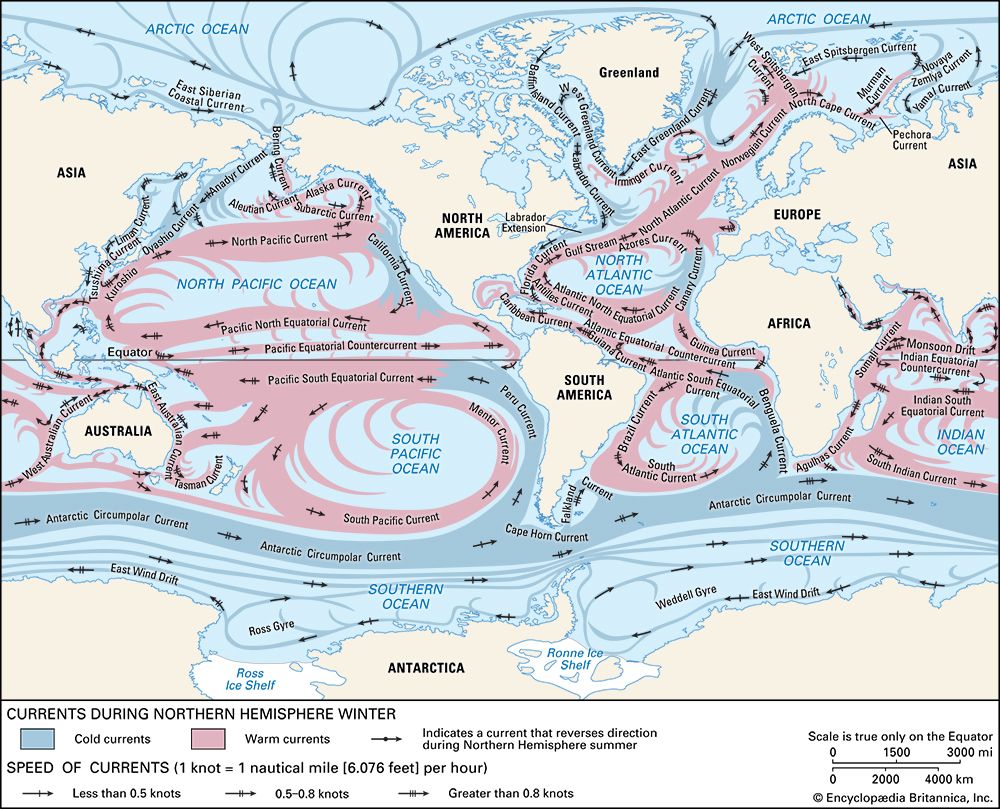
The California Current is a cold, southward-flowing surface oceanic current that runs along the west coast of North America, spanning latitudes from 48° N to 23° N. It serves as a continuation of the Aleutian Current, which divides as it approaches the North American coast to form both the Alaska and California currents.12
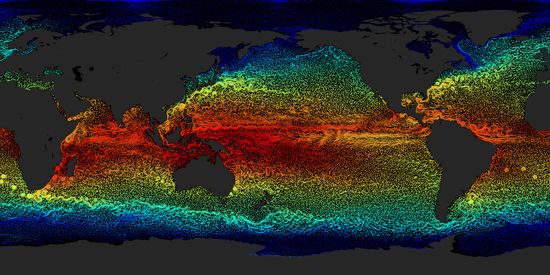
Characterized by relatively slow surface velocities, the current plays a vital role in marine ecology. During the summer, dominant upwelling processes bring cold, nutrient-rich water to the surface, which supports abundant plankton and diverse animal life, making the region highly productive. The current’s temperature and salinity fluctuate seasonally, with temperatures typically ranging between 48 and 79 °F (9 to 26 °C). Additionally, a subsurface countercurrent develops near the coast during the summer months.13
What is coastal upwelling and why is it important for marine life?
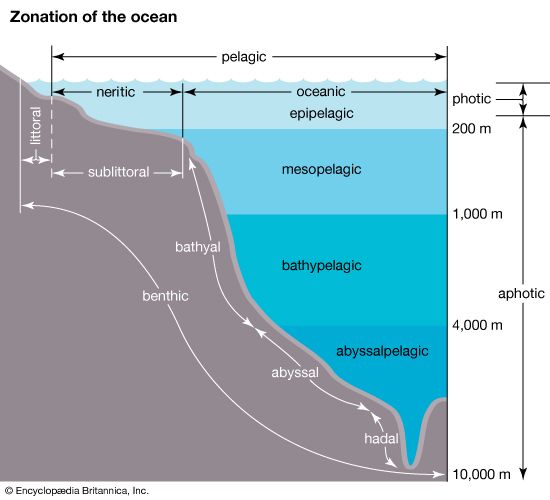
Coastal upwelling is a physical process in coastal waters that brings deep, nutrient-rich water toward the surface. Because essential nutrients like nitrogen and phosphorus are often limited in the sunlit photic zone, this upward movement is critical for replenishing the resources necessary to sustain marine life.51
The importance of upwelling for marine ecosystems cannot be overstated:
- Biological Productivity: The influx of nutrients triggers rapid reproduction of [phytoplankton]. These organisms form the base of the marine food web, supporting grazing zooplankton and, subsequently, larger nekton.5
- Fisheries: Regions of consistent upwelling, such as those off the coasts of Peru and California, host some of the world’s most productive fisheries.56
- Economic Stability: By concentrating nutrients that support large populations of commercially valuable species—such as sardines, anchovies, and tuna—upwelling zones provide significant economic resources for coastal nations.57
When upwelling fails, often due to atmospheric shifts like El Niño, the impact on marine populations and the industries that rely on them can be devastating.5
How do ocean currents like the California Current influence regional weather patterns?
Ocean currents like the California Current exert a significant influence on regional weather patterns by regulating the temperature and stability of the lower atmosphere.1
The California Current, which carries cold water southward along the North American coast, is closely linked to the process of upwelling. As surface winds move warmer water away from the coast, cold, deep water rises to the surface. This creates a zone of cold coastal surface waters that stabilizes the lower troposphere, effectively reducing the likelihood of convection.8
Because convection is necessary for the development of heavy rain, these stabilized conditions often lead to arid weather along the coast, though they frequently result in the formation of low stratus clouds and fog. More broadly, ocean currents act as massive reservoirs of heat, and their temperature anomalies can persist for seasons or years, directly impacting the climate of adjacent coastal regions.81
What are some other major ocean currents found around the world?
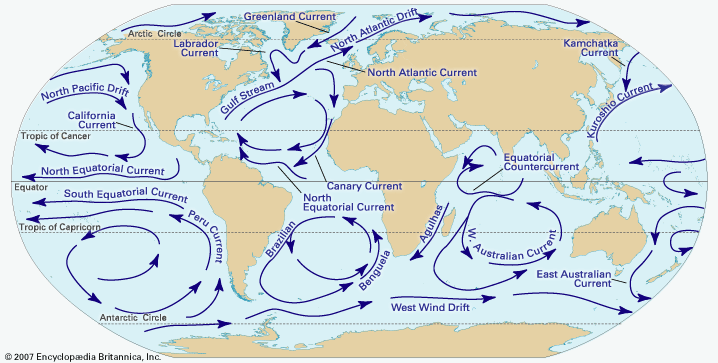
Ocean currents are primarily driven by wind and organized into large circular systems known as gyres. These currents are categorized by their position and characteristics, such as their speed and temperature.
Western Boundary Currents
These are fast, deep, and narrow currents that flow along the eastern coasts of continents, transporting warm water from the tropics toward the poles.
- Gulf Stream: The most prominent western boundary current in the North Atlantic, known for its significant heat transport.212
- Kuroshio: The North Pacific equivalent to the Gulf Stream, sharing similar characteristics like the formation of warm and cold eddies.1213
- Agulhas Current: A powerful current flowing along the eastern margin of Africa.12
Eastern Boundary Currents
In contrast, these currents are generally slower, shallower, and carry cooler water toward the equator along the western coasts of continents.
- Peru (Humboldt) Current: Flows along the west coast of South America.2
- Benguela Current: Located off the coast of western Africa.2
- California Current: Influences the western coast of North America.2
Circumpolar and Equatorial Currents
- Antarctic Circumpolar Current: A massive, cold, eastward-flowing current that encircles Antarctica, connecting the Atlantic, Pacific, and Indian oceans.214
- Equatorial Currents: Large, wind-driven currents that flow westward in the tropics, such as the North and South Equatorial currents found in the Pacific and Atlantic oceans.2
We could dive deeper into how these currents interact with global climate systems or explore the mechanics of deep-ocean thermohaline circulation.
Sources
- California Current — Encyclopædia Britannica
- ocean current - Distribution of ocean currents — Encyclopædia Britannica
- plankton - Plankton and biological productivity — Encyclopædia Britannica
- Aleutian Current — Encyclopædia Britannica
- Marine ecosystem - Upwelling — Encyclopædia Britannica
- Marine ecosystem - Physical and chemical properties of seawater — Encyclopædia Britannica
- Indian Ocean - Fisheries — Encyclopædia Britannica
- Atlantic Ocean - The North Atlantic — Encyclopædia Britannica
- Atlantic Meridional Overturning Circulation: Top Questions — Encyclopædia Britannica
- Atmosphere - Effect of oceans on air movement — Encyclopædia Britannica
- Climate - Climate and the oceans — Encyclopædia Britannica
- How Do Ocean Currents Affect the Biosphere? — Encyclopædia Britannica
- subtropical gyre — Encyclopædia Britannica
- Climate - The Kuroshio — Encyclopædia Britannica
- ocean current - The Antarctic Circumpolar Current — Encyclopædia Britannica
Published on · 3 min read