Passamaquoddy Bay
Passamaquoddy Bay is an inlet of the Bay of Fundy located at the mouth of the St. Croix River, straddling the border between southwestern New Brunswick…
What is Passamaquoddy Bay?
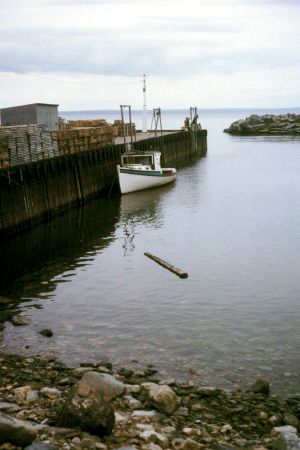
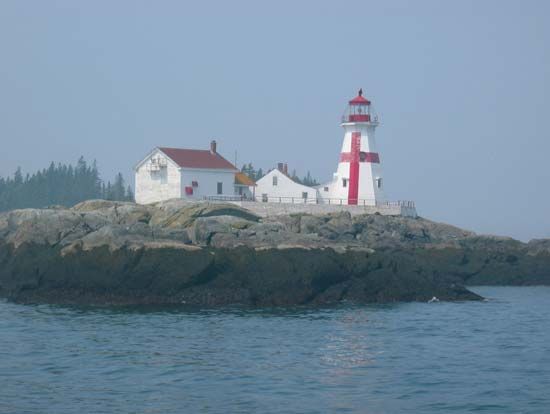
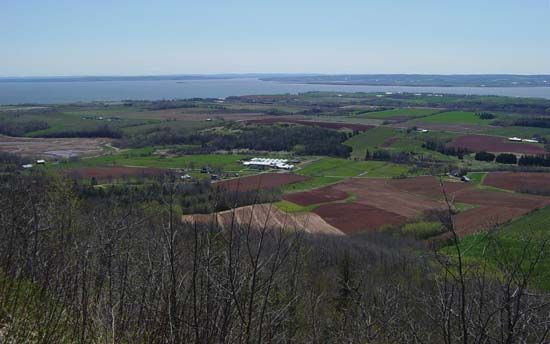
Passamaquoddy Bay is an inlet of the Bay of Fundy located at the mouth of the St. Croix River, straddling the border between southwestern New Brunswick, Canada, and southeastern Maine, United States. The name is derived from an Amerindian term meaning “place where pollock leap out of the water,” reflecting the region’s historical connection to the Passamaquoddy people.12
The bay is characterized by an immense tidal flow, with approximately 70 billion cubic feet of water moving in and out twice daily. Due to this significant movement, the area has been the subject of long-standing investigations into the feasibility of harnessing tidal power. However, development has been consistently hindered by high costs, complex engineering challenges, and environmental concerns. The southern portion of the bay includes Campobello Island and Deer Island.13
How do the tides in the Bay of Fundy compare to other places in the world?
The Bay of Fundy is globally renowned for having the highest tides in the world, with rises reaching as high as 70 feet (21 meters) in some areas. This extreme range is significantly greater than those found in most other parts of the world, where tidal oscillations are often much smaller.245
To provide context, here is how the Bay of Fundy compares to other notable tidal regions:
- Bay of Fundy (Canada): Features the world’s highest tides, frequently exceeding 40 feet (12 meters), with specific locations like the Minas Basin and Chignecto Bay experiencing ranges of 53 feet (16 meters) and 46 feet (14 meters), respectively.25
- Gulf of Khambhat (India): Among the highest in the Indian Ocean, reaching up to 38 feet (11.6 meters).4
- Brittany (France): Known for significant tidal ranges of approximately 16 feet (5 meters).5
- Open Ocean & Enclosed Seas: Many regions, such as Mauritius or parts of the Mediterranean Sea, experience very low tidal ranges, often less than 3 feet (1 meter).45
The extreme nature of the Bay of Fundy’s tides is caused by the bay’s unique shape and narrowness, which magnify the tidal surge as it moves inland.2
Who are the Passamaquoddy people and what is their history?
The Passamaquoddy are an Algonquian-speaking people whose traditional territory encompasses the region around Passamaquoddy Bay, the St. Croix River, and Schoodic Lake, straddling the border between modern-day Maine and New Brunswick. Their name, which refers to the “place where pollock leap out of the water,” reflects their historical reliance on fishing and hunting.31
At the time of European contact, the Passamaquoddy were part of the Abenaki Confederacy. Their society was traditionally organized into villages featuring conical dwellings and a council house, with governance managed by a tribal council of civil and war chiefs. As colonial settlement expanded, the tribe faced significant encroachment on their lands. By 1866, the population had largely coalesced at Sipayik and on Lewis Island.3
Today, the Passamaquoddy are one of the five federally recognized tribes in Maine and remain one of the few groups to persist in significant numbers. Early 21st-century estimates suggest a population of approximately 6,000 individuals of Passamaquoddy descent.63
Why is it so difficult to generate electricity from tidal power?
Generating electricity from tidal power is not inherently “difficult” in terms of physical potential, but it faces significant hurdles to becoming a major industrial-scale energy source. While the total energy contained in global tides is estimated at 3,000 gigawatts, current technologies contribute only a negligible fraction of global energy demand.7
The primary challenges include:
- Scalability and Commercialization: Many tidal technologies are not yet available at an industrial scale. While some stations, such as the Sihwa Lake Tidal Power Station in South Korea, are operational, the industry is still in the early stages of widespread deployment.7
- Environmental Impact: Tidal barrage systems, which use dams to block water, can disrupt sensitive estuarine ecosystems during both construction and operation. While newer technologies like tidal fences and turbines have minimal impact, they still face concerns regarding the safety of migratory fish.7
- Infrastructure and Maintenance: Similar to wave power, the harsh marine environment poses risks. Salt water is highly corrosive to steel and other metals, and the physical force of water currents can fatigue infrastructure over time.78
Sources
- Passamaquoddy Bay — Encyclopædia Britannica
- Bay of Fundy — Encyclopædia Britannica
- Passamaquoddy — Encyclopædia Britannica
- Indian Ocean - Tides — Encyclopædia Britannica
- Atlantic Ocean - Tides of the Atlantic Ocean — Encyclopædia Britannica
- Maine - History — Encyclopædia Britannica
- tidal power — Encyclopædia Britannica
- turbine - Tidal plants — Encyclopædia Britannica
- wave power — Encyclopædia Britannica
Published on · 3 min read