Passion Flower
No, not all species of passion flower plants produce edible passion fruit. The genus Passiflora contains more than 500 species, and while many are cultivated…
Are passion fruits produced by all species of passion flower plants?
No, not all species of passion flower plants produce edible passion fruit. The genus Passiflora contains more than 500 species, and while many are cultivated for their showy, unusual flowers, only some are grown specifically for their fruit.12
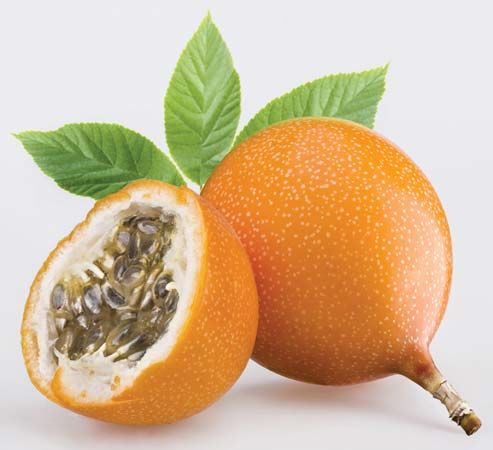
While many Passiflora species produce fruit that ripens into a berry or capsule, the edibility and culinary use vary significantly among them. Some species, such as the purple passion fruit (P. edulis), the giant granadilla (P. quadrangularis), and the wild passion flower (P. incarnata), are well-known for their edible fruits. Conversely, other species within the broader Passifloraceae family or even within the Passiflora genus may not be palatable, and some are known to be poisonous or are used for other purposes, such as medicinal applications or ornamental displays.123
Can passion flower plants be cultivated at home, and what care do they require?
Yes, many species of passion flower (Passiflora) can be cultivated at home, as they are highly esteemed by gardeners for their large, showy, and unusual flowers.24
Because these plants are primarily native to tropical and warm temperate regions, they generally thrive in warm environments. When cultivating them, consider the following:24
- Growth Habit: Most Passiflora species are woody or herbaceous vines that climb using tendrils. They require a sturdy trellis, fence, or other structure to support their growth.24
- Climate: They are best suited for tropical and subtropical climates. If you live in a cooler region, you may need to grow them in containers that can be moved indoors during colder months.
- Variety Selection: Choose your species based on your goal. Some are grown strictly for their ornamental flowers, while others, such as the purple granadilla (P. edulis), are cultivated for their edible fruit.24
- Caution: Be aware that while some species produce edible fruit, others may be toxic or have specific medicinal uses, so it is important to identify your specific plant correctly.4
Where do passion flower plants naturally grow, and in what climates do they thrive?
Passifloraceae, the passion-flower family, is widely distributed throughout the tropics and subtropics, with the highest diversity found in the Neotropics and Africa.42
The largest genus, Passiflora, is primarily native to the tropical and warm temperate regions of the Americas. While most of its 525 species are concentrated in the Neotropics, a small number of species are native to Asia and Australia, and one is found in Madagascar; notably, no Passiflora species are indigenous to Africa.42
In contrast, other genera within the family, such as Adenia, are native to tropical Africa and Asia. Because these plants are adapted to these regions, they thrive in warm, tropical, and subtropical climates. They generally require these frost-free environments to flourish, which is why commercially cultivated varieties, such as the purple granadilla, are typically grown in warmer regions4.421
How did the passion flower get its common name, and what is its cultural significance?
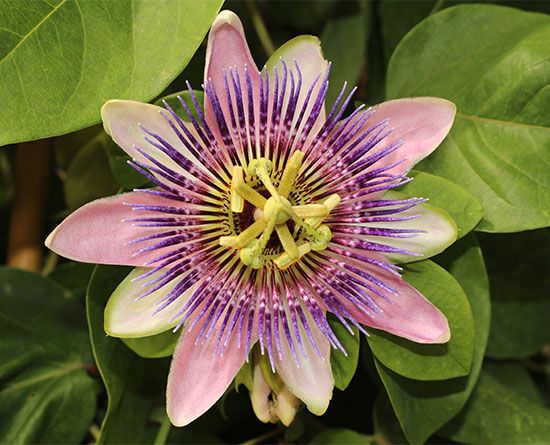
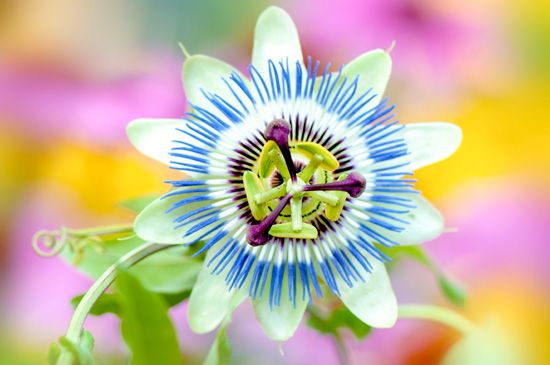
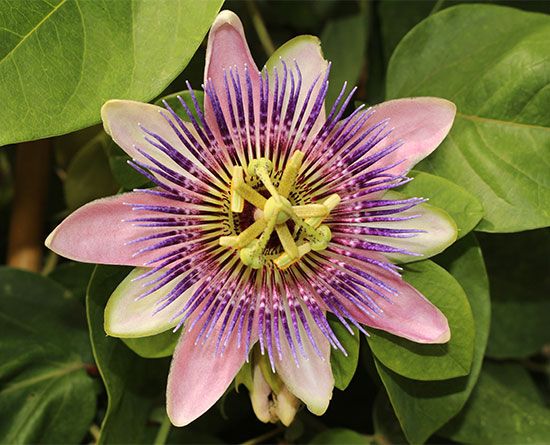
The common name “passion flower” stems from the plant’s deep cultural and religious symbolism, which was identified by Christian missionaries who encountered the unusual blossoms in the Americas. They perceived the various parts of the flower as representations of the Passion of Jesus Christ during his final hours and the Crucifixion.35
The symbolic associations are as follows:
- Corona: The threadlike filaments represent the crown of thorns.35
- Stamens: The five stamens symbolize the five wounds of Christ.35
- Styles: The three styles are seen as the nails used to pin Jesus to the cross.35
- Sepals and Petals: The five sepals and five petals together represent 10 of the Apostles, excluding Judas Iscariot, who betrayed him, and St. Peter, who denied him.35
This interpretation has been associated with the genus since at least the 17th century, with the first known use of the name recorded in 1633.6
Sources
- passion fruit — Merriam-Webster
- Passifloraceae — Encyclopædia Britannica
- passion flower — Encyclopædia Britannica
- Malpighiales - Passifloraceae — Encyclopædia Britannica
- Purple passion fruit — Encyclopædia Britannica
- passionflower — Merriam-Webster
Published on · 3 min read