Periwinkle
In botany, periwinkle refers to various plants within the Apocynaceae family. The term primarily identifies plants of the genus Vinca, such as the lesser…
What is Periwinkle?
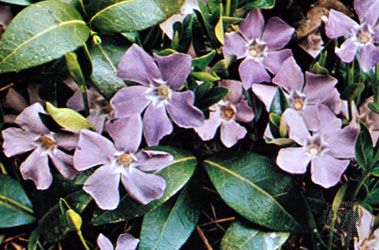
In botany, periwinkle refers to various plants within the Apocynaceae family. The term primarily identifies plants of the genus Vinca, such as the lesser periwinkle (V. minor) and the greater periwinkle (V. major), which are trailing, evergreen perennials known for their blue or lilac-blue flowers.1
The name is also applied to the rosy periwinkle (Catharanthus roseus), a subshrub native to the Old World tropics. This species is medically significant as a source of several antineoplastic drugs. Additionally, the term “periwinkle” describes a specific color, often characterized as a pale violet or blue-violet hue.234
What are some other common evergreen plants?
Evergreen plants are defined by their ability to retain functional, green foliage throughout the year and into the following growing season. While many people associate the term with cone-bearing trees, the category includes a wide variety of species.67
Coniferous Evergreens
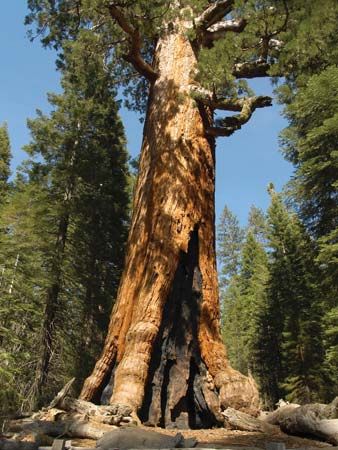
In cold-temperate and Arctic regions, most evergreens are conifers, which typically feature needlelike or scalelike leaves. Common examples include:6
- Pines (Pinus species)68
- Firs (Abies species)68
- Spruces (Picea species)8
- Hemlocks (Tsuga species)8
- Douglas firs (Pseudotsuga species)8
Broad-Leaved and Ground-Cover Evergreens
Many tropical and subtropical plants are broad-leaved evergreens. In garden settings, several perennial plants are used as evergreen ground covers to provide color and texture:69
- Ivies (Hedera species)910
- Japanese spurge (Pachysandra terminalis)9
- Ajuga or bugleweed (Ajuga reptans)9
- Stonecrops (Sedum species)9
- Common periwinkle (Vinca minor)9
Additionally, certain shrubs like rhododendrons and azaleas are popular evergreen choices for gardens, valued for their colorful blossoms in semishaded areas.10
How do plants in the dogbane family protect themselves?
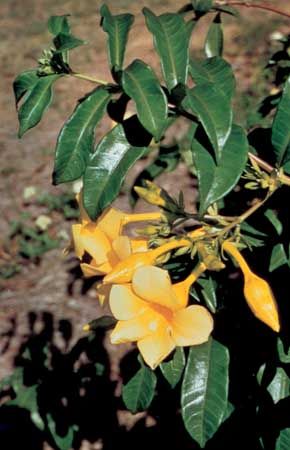
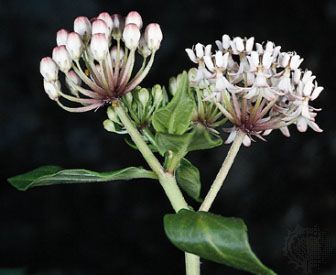
Plants in the Apocynaceae family, commonly known as the dogbane family, primarily protect themselves through the production of toxic chemical compounds. Nearly all members of this family contain a milky, poisonous sap that serves as a potent defense mechanism against herbivores.1213
These plants utilize several types of chemical defenses:
- Cardiac Glycosides: Many species produce these compounds, which are highly toxic to animals and can cause severe physiological reactions, including circulatory failure.1213
- Alkaloids: These nitrogen-containing compounds are often bitter in taste and can cause strong, sometimes fatal, reactions in animals that ingest them.141213
- Specialized Adaptations: Some species, such as milkweeds, store these toxins in their latex. While some specialized predators like the monarch butterfly have evolved to sequester these poisons to make themselves unpalatable to birds, the toxins remain an effective deterrent against many other potential threats.13
The effectiveness of these defenses is well-documented; for example, the oleander is so toxic that ingesting even a single leaf can be fatal to an infant.13
What is the history of color naming in art?
The history of color naming in art is deeply intertwined with cultural evolution, the development of pigments, and the specific associations artists and societies have formed over time. Color terminology is not universal; it is culturally conditioned and varies significantly across different historical periods and regions.16
Origins of Color Names
Many color names in art have emerged from the materials used to create them or from the subjects they depict:
- Artistic Inspiration: Some colors are named directly after the artists who famously utilized them. For example, the color titian—a brownish-orange—was inspired by the distinctively colored hair often found in the paintings of the 16th-century Italian artist Titian.17
- Nature and Geography: Other names derive from natural sources or geographic locations. The color damask (a grayish-red) honors the damask rose, a flower that traveled to Europe during the Middle Ages.18
- Pigment History: Historically, colors were identified by their source materials, such as earth pigments like ochres, siennas, and umbers. As technology advanced, the development of synthetic pigments—from early Egyptian dyes to modern petrochemical-derived colors—expanded the palette and the vocabulary used to describe them.1920
Cultural and Psychological Context
Color naming and symbolism are heavily influenced by psychological and cultural factors. While some emotional responses to color, such as the perception of “warm” versus “cool” hues, appear widespread, the specific meanings attached to these colors are not. For instance, the color of mourning varies globally, appearing as black in the West, while other cultures may use white, purple, or gold.16
Because color terminology is often metaphorical—such as “green with envy” or “feeling blue”—these names frequently lose their symbolic meaning when translated literally between languages. Ultimately, the history of color in art reflects a continuous effort to categorize the spectrum, balancing the physical properties of light and pigment with the subjective, evolving human experience of color.1621
Sources
- Periwinkle — Encyclopædia Britannica
- red periwinkle — Merriam-Webster
- old lavender — Merriam-Webster
- dusty periwinkle blue — Merriam-Webster
- rosy periwinkle — Merriam-Webster
- Evergreen — Encyclopædia Britannica
- gardening - Lawns and ground covers — Encyclopædia Britannica
- gymnosperm - Pinophyta — Encyclopædia Britannica
- Perennial — Encyclopædia Britannica
- evergreen — Merriam-Webster
- gardening - Shrubs and vines (climbers) — Encyclopædia Britannica
- Apocynaceae — Merriam-Webster
- poison - Plant poisons (phytotoxins) — Encyclopædia Britannica
- Apocynaceae — Encyclopædia Britannica
- Gentianales - Apocynaceae — Encyclopædia Britannica
- Painting - Color — Encyclopædia Britannica
- 10 Words for Uncommon Colors | Titian — Merriam-Webster
- 10 Words for Uncommon Colors | Damask — Merriam-Webster
- Pigment — Encyclopædia Britannica
- paint — Encyclopædia Britannica
- colour - The psychology of colour — Encyclopædia Britannica
Published on · 3 min read