Peru-Chile Trench
The Peru-Chile Trench (also known as the Atacama Trench) is a major submarine trench located in the eastern Pacific Ocean, approximately 100 miles off the…
What is Peru-Chile Trench?
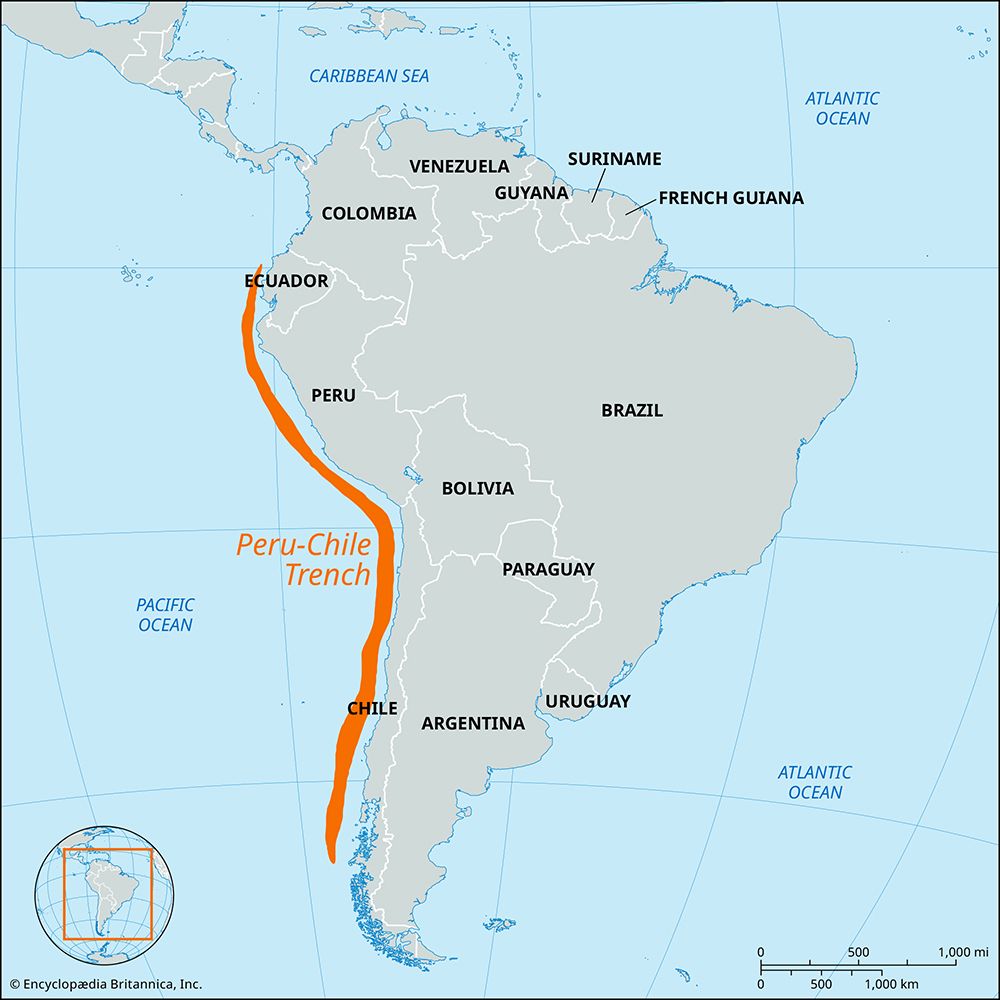
The Peru-Chile Trench (also known as the Atacama Trench) is a major submarine trench located in the eastern Pacific Ocean, approximately 100 miles off the coasts of Peru and Chile.1
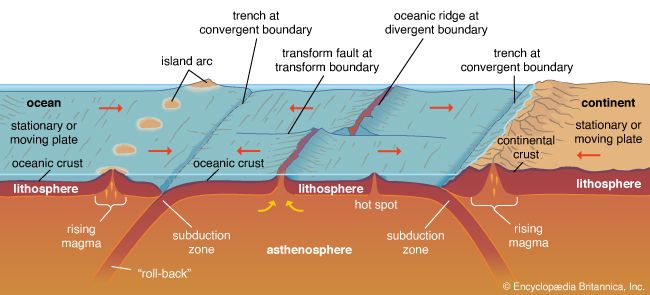
Extending about 3,666 miles (5,900 km) in length, it is the longest trench on Earth. It reaches a maximum depth of 26,460 feet (8,065 meters) in an area known as Richards Deep. Geologically, the trench marks the subduction zone where the oceanic Nazca Plate is forced beneath the continental South American Plate.123
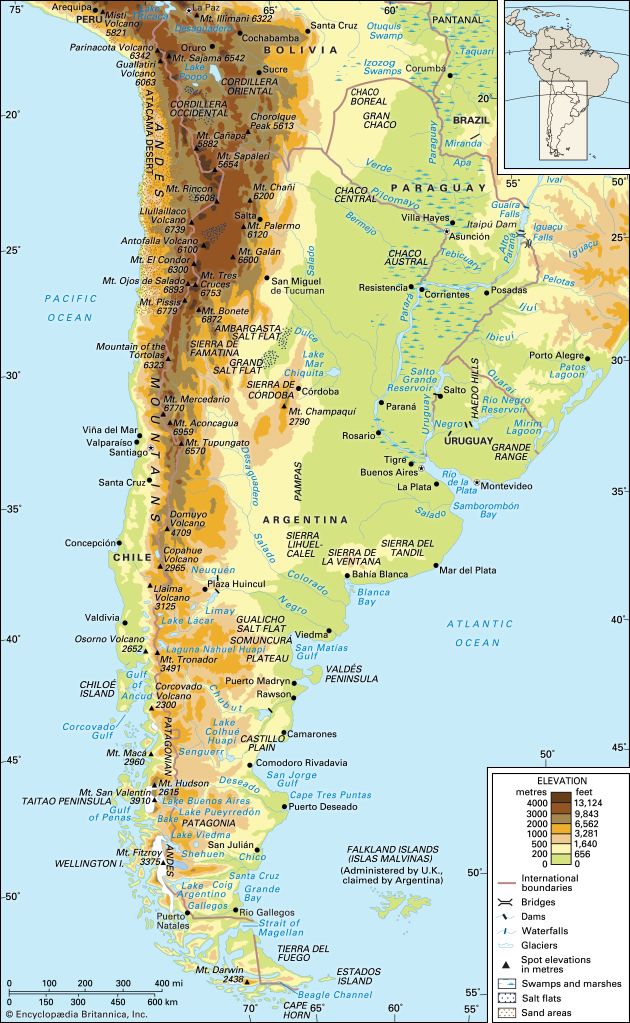
This tectonic process is responsible for the rise of the Andes Mountains and contributes to the region’s high levels of volcanism and frequent, powerful earthquakes. The trench itself is characterized by a narrow width and is filled with layers of oceanic deposits and volcanic sediments.132
What is the Ring of Fire and how does it relate to this trench?
The Ring of Fire is a vast, horseshoe-shaped belt that fringes the Pacific Ocean basin, characterized by intense seismic activity and a high concentration of the world’s volcanoes and earthquake epicenters. It encompasses various tectonic plate boundaries, including those involving the Nazca Plate, the South American Plate, and the Pacific Plate.456
The Peru-Chile Trench is an integral component of this system. It serves as a marginal trench that marks the subduction zone where the Nazca Plate is forced beneath the South American Plate. This convergent boundary is a primary driver of the geological phenomena associated with the Ring of Fire in this region:17
- Seismic Activity: The intense pressure and friction from the subducting plate generate frequent, powerful earthquakes.57
- Volcanism: As the subducting plate descends into the asthenosphere, it melts to produce magma, which fuels the volcanic activity that helped form the Andes Mountains the volcanic activity that helped form the Andes Mountains.61
How do subduction zones trigger earthquakes?
Subduction zones trigger earthquakes through the intense interaction of tectonic plates at convergent boundaries. As a dense oceanic plate descends into the Earth’s mantle beneath a lighter continental or oceanic plate, the two slabs experience significant frictional drag and compression.89
The process generates earthquakes in several ways:
- Stress Accumulation: As the plates move, they do not slide smoothly. Instead, they become locked due to friction. Stress and strain accumulate along the fault line until they exceed the strength of the rocks.10
- Elastic Rebound: When the accumulated stress finally overcomes the rock’s strength, the rocks fracture and slip suddenly. This releases stored energy in the form of seismic waves, causing the ground to shake as the rocks “rebound” to a position of less strain.10
- Wadati-Benioff Zones: The path of the descending slab is marked by a plane of seismic activity known as the Wadati-Benioff zone. Earthquakes here can occur at depths of 300 to 700 km, indicating that the subducting crust retains enough rigidity to fracture even deep within the mantle.89
What are some other major deep-sea trenches found in the Pacific Ocean?
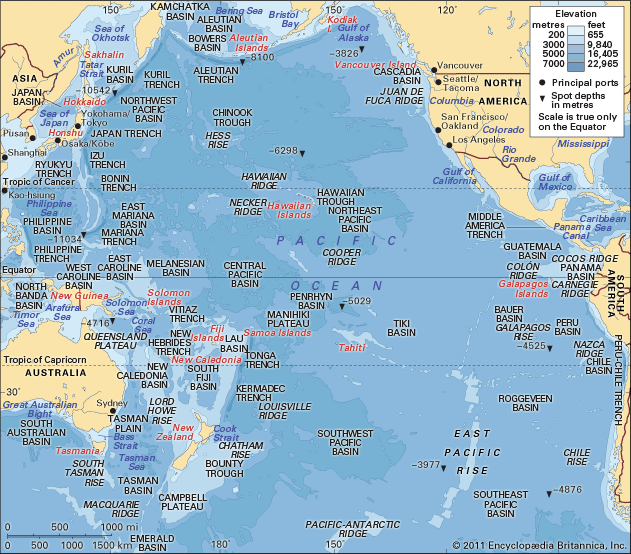
The Pacific Ocean basin contains the vast majority of Earth’s deep-sea trenches, with 17 of the 20 major trenches located within its boundaries. These features are typically associated with subduction zones where tectonic plates collide.1314
Some of the other major deep-sea trenches in the Pacific include:
- Aleutian Trench: Extends from the Gulf of Alaska to the Kamchatka Peninsula, serving as a marginal trench in the east and an island arc system in the west.13
- Kuril Trench: A deep submarine depression stretching about 1,800 miles along the east side of the Kamchatka Peninsula, the Kuril Islands, and Hokkaido.15
- Tonga Trench: Located in the South Pacific, this trench reaches depths of over 35,000 feet and forms the eastern boundary of the Tonga Ridge.3
- Kermadec Trench: Extends south from the Fiji Islands toward New Zealand, completing the Tonga-Kermadec Arc.313
- Philippine Trench: Part of the western Pacific system of island arc trenches.1315
- Java Trench: A major feature extending from northern Australia to the northwestern end of Sumatra.13
Sources
- Peru-Chile Trench — Encyclopædia Britannica
- Andes Mountains - Geology — Encyclopædia Britannica
- deep-sea trench - Types — Encyclopædia Britannica
- plate tectonics: Top Questions — Encyclopædia Britannica
- Ring of Fire — Merriam-Webster
- Ring of Fire — Encyclopædia Britannica
- Ring of Fire: Top Questions — Encyclopædia Britannica
- Nazca Plate — Encyclopædia Britannica
- plate tectonics - Subduction zones — Encyclopædia Britannica
- How do earthquakes occur? — Encyclopædia Britannica
- earthquake - Tectonic associations — Encyclopædia Britannica
- plate tectonics - Principles of plate tectonics — Encyclopædia Britannica
- Pacific Ocean: Top Questions — Encyclopædia Britannica
- Tonga Trench — Encyclopædia Britannica
- Mariana Trench — Merriam-Webster
- Kuril Trench — Encyclopædia Britannica
- deep-sea trench - Structure — Encyclopædia Britannica
Published on · 3 min read