Great Tit
The great tit (Parus major) is a small, colorful songbird belonging to the family Paridae. It is widely recognized by its black head and chin, olive-colored…
What is Great tit?
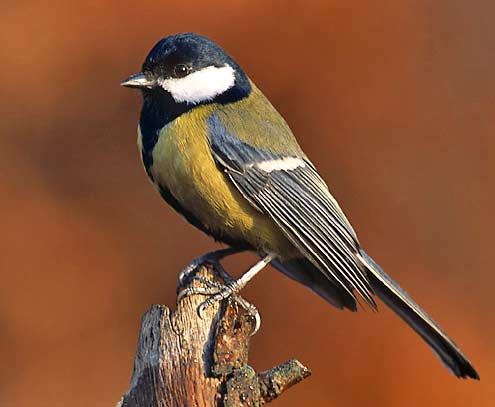
The great tit (Parus major) is a small, colorful songbird belonging to the family Paridae. It is widely recognized by its black head and chin, olive-colored back, and yellow breast featuring a vertical black stripe. These birds are known for their distinctive “tea-cher” vocalization and possess a vast geographic range spanning across Eurasia, from Morocco and Spain to Japan and Indonesia.1
Great tits are highly adaptable omnivores that inhabit diverse environments, including forests, grasslands, and urban areas. They are notably territorial and aggressive during the breeding season, often defending their nesting sites against other animals. While they are currently classified as a species of least concern by the IUCN, researchers are monitoring how global warming might affect the timing of their breeding cycles relative to the emergence of their insect prey.1
What is sexual dimorphism in birds?
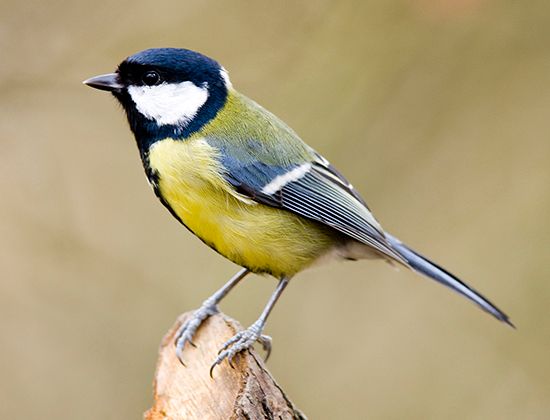
Sexual dimorphism refers to the physical differences between males and females of the same species, including variations in color, size, shape, and structure. In birds, this phenomenon is often pronounced, frequently manifesting as a contrast between the vibrant, colorful plumage of the male and the duller, cryptically colored feathers of the female.23
These differences are primarily driven by sexual selection. Males often display striking traits to attract mates or compete with rivals, signaling their health, genetic quality, or the strength of their territory. Conversely, the female’s more muted coloration serves as a vital adaptation for protection, allowing her to remain concealed while nesting. While this pattern is common, exceptions exist; for instance, in phalaropes, sex roles are reversed, and females exhibit the brighter plumage used for courtship.42
How does global warming affect bird migration and nesting?
Global warming significantly disrupts the delicate timing of bird life cycles, primarily through a phenomenon known as phenological mismatch.5
Impact on Migration and Nesting
Migratory birds typically rely on internal rhythms and environmental cues, such as changes in day length, to initiate their journeys. However, the timing of their arrival at breeding grounds is often mismatched with the availability of essential resources.675
- Resource Mismatch: Many plants and insects emerge earlier in the spring due to rising temperatures. Because birds often use day length—which remains constant—as a primary cue for migration, they may arrive at their breeding grounds after the peak abundance of food (such as insects) has already passed.85
- Reproductive Consequences: When birds arrive “out of sync” with their food supply, they may struggle to find enough energy to successfully raise their young, leading to reduced reproductive success.5
- Adaptive Challenges: While some species are more resilient, those unable to adjust their migration or nesting schedules to these rapid climatic shifts face increased risks of population decline or even extinction.85
Furthermore, migratory birds face additional obstacles as they attempt to relocate to more favorable climates, including man-made structures like highways and walls that impede their movement.8
What are some other common songbirds found in urban areas?
Many songbirds have successfully adapted to urban environments, often thriving alongside human populations due to their status as generalists capable of navigating modified landscapes.
Common songbirds frequently encountered in urban areas include:
- European starlings: Widely introduced across the globe, these birds are highly adaptable and often nest in building cavities or structures, though they can become pests by fouling buildings with excrement.1011
- House sparrows: One of the most familiar birds worldwide, they thrive in urban settings and frequently construct nests using straw and feathers in human-made structures.11
- Northern mockingbirds: Known for their remarkable ability to mimic the songs of many other species, these birds are common throughout the continental United States and Mexico.11
- Eurasian magpies: These intelligent birds are native residents across much of Eurasia and are well-adapted to living in proximity to human settlements.11
Urban birds often exhibit behavioral adaptations to city life; for instance, many species have been observed singing at a higher pitch and volume to communicate effectively over the constant noise of urban transportation and infrastructure.12
Sources
- Great tit — Encyclopædia Britannica
- Sexual dimorphism — Encyclopædia Britannica
- Why are male animals more colorful? — Encyclopædia Britannica
- Did you know? — Merriam-Webster
- How do birds know when to fly south? — Encyclopædia Britannica
- Global warming - Environmental consequences of global warming — Encyclopædia Britannica
- The Perils of an Early Spring — Encyclopædia Britannica
- Migration - Origin and evolution of migration — Encyclopædia Britannica
- Migration - Physiological stimulus of migration — Encyclopædia Britannica
- Passeriform - Aesthetic and economic importance — Encyclopædia Britannica
- 15 of the Best Birdsongs (According to Britannica) — Encyclopædia Britannica
- Urban ecosystem - The structure of urban ecosystems — Encyclopædia Britannica
Published on · 3 min read