Pink Salmon
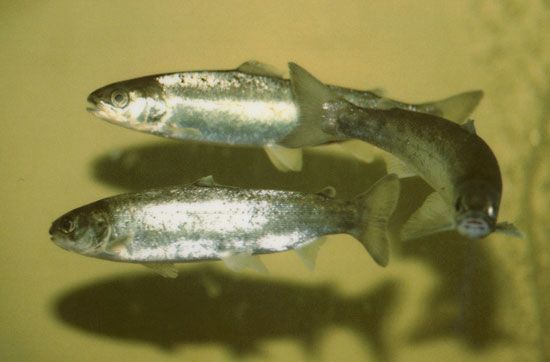
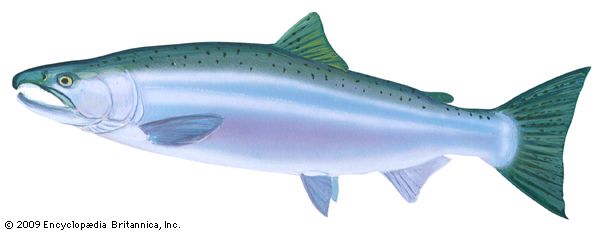
The pink salmon (Oncorhynchus gorbuscha), also known as the humpback salmon, is a North Pacific food fish belonging to the family Salmonidae. Typically…
What is pink salmon?
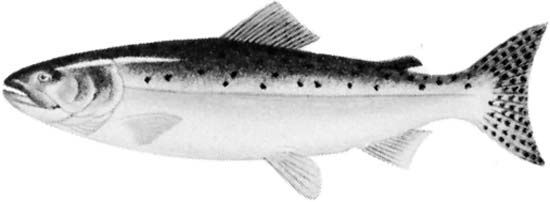
The pink salmon (Oncorhynchus gorbuscha), also known as the humpback salmon, is a North Pacific food fish belonging to the family Salmonidae. Typically weighing between 3 and 6 pounds (1.3–2.7 kg), these fish are characterized by large, irregular spots on their bodies.12
The name “humpback” refers to the distinct hump that develops on the back of breeding males. Unlike many other species that spend significant time in freshwater, young pink salmon migrate to the sea almost immediately after hatching. As adults, they return to their home streams to spawn, a process during which they undergo color changes and males develop hooked jaws.12
Pink salmon are a vital component of the commercial fishery, accounting for nearly half of the total annual catch of Pacific salmon.2
Why do male pink salmon develop a hump during the breeding season?
The development of a hump on the back of male pink salmon (Oncorhynchus gorbuscha) is a secondary sexual characteristic that emerges during the breeding season.1
While the provided search results do not explicitly detail the specific evolutionary function of the hump itself, they note that such secondary sexual characteristics—including changes in body shape, nuptial coloration, and enlarged fins—are common among many fish species during the breeding season. These features are primarily related to courtship, mating, and the defense of territories or nests. In the case of the pink salmon, this physical transformation, along with the development of hooked jaws, is a distinct part of the male’s preparation for the spawning migration and the reproductive process.31
How do Pacific salmon navigate back to their home streams?
Pacific salmon navigate back to their home streams through a remarkable combination of sensory mechanisms, with olfaction playing the most critical role in the final stages of their journey.562
The Role of Olfaction and Imprinting
During their early development, young salmon undergo a process called imprinting, where they learn the specific chemical signature of their natal stream. This signature is created by the unique combination of vegetation, substrate, and environmental factors, as well as chemicals produced by other salmon populations.5
As adults prepare to return to these waters, hormonal changes—specifically involving thyroxine and reproductive hormones—increase the sensitivity of their olfactory system, allowing them to detect and follow these familiar odors back to their original spawning sites.562
Long-Distance Navigation
While olfaction guides them once they enter their home river system, the methods used to navigate from the open ocean to the river mouth remain less certain. Researchers believe that salmon may utilize:5
- Geomagnetic orientation: At least one species, the sockeye salmon, is known to sense differences in Earth’s magnetic field to assist in navigation.52
- Celestial cues: Steering by the position of the Sun may also play a role in their long-distance migration.5
- Topographical features: Physical landmarks are believed to be important for recognizing their original habitat.6
What are the main differences between Pacific and Atlantic salmon?
The primary differences between Pacific salmon (genus Oncorhynchus) and Atlantic salmon (Salmo salar) involve their life cycles, reproductive behavior, and biological classification.2
Life Cycle and Spawning
- Survival: A major distinction is that adult Pacific salmon die shortly after spawning. In contrast, many Atlantic salmon survive the spawning process, return to the sea, and may spawn again multiple times—sometimes up to three or four times in their lifetime.26
- Development: Young Pacific salmon often migrate to the sea within their first year, whereas young Atlantic salmon typically remain in freshwater streams for two to three years, and occasionally up to six years, before heading to the ocean.26
Classification and Diversity
- Species: The term “salmon” originally referred to the Atlantic salmon. Pacific salmon comprise six distinct species, including the sockeye, coho, chum, chinook, pink, and cherry salmon.2
- Physical Traits: While both undergo dramatic changes during the breeding season, such as color shifts and the development of hooked jaws in males, these transformations are generally more striking in Pacific salmon.2
Sources
- pink salmon — Encyclopædia Britannica
- salmon — Encyclopædia Britannica
- protacanthopterygian - Life cycle and reproduction — Encyclopædia Britannica
- ostariophysan - Secondary sexual characteristics — Encyclopædia Britannica
- Chemoreception - Homing — Encyclopædia Britannica
- Migration - Anadromous fish — Encyclopædia Britannica
Published on · 3 min read