Potoo
Potoo birds, which belong to the family Nyctibiidae, are native to the tropical regions of Central America, South America, and the West Indies.
In which regions of the world can potoo birds be found?
Potoo birds, which belong to the family Nyctibiidae, are native to the tropical regions of Central America, South America, and the West Indies.12
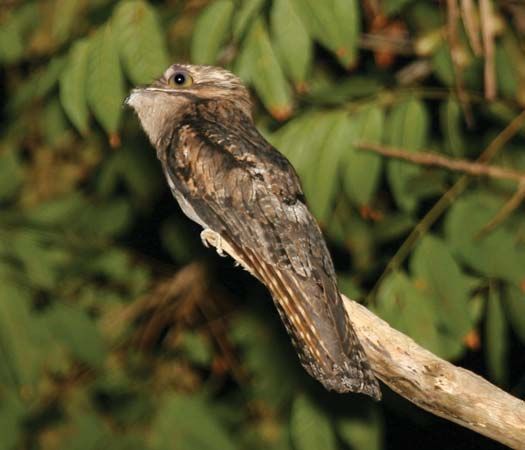
These solitary, nocturnal birds are primarily found throughout the American tropics. They are well-known for their cryptic plumage, which allows them to blend in with tree bark and branches to remain camouflaged during the day.12
How do potoo birds reproduce and care for their young?
Potoos are highly specialized nesters that do not construct traditional nests. Instead, they locate a branch or stub featuring a crevice or depression precisely sized to hold a single egg. This egg, which is white with gray and brown markings, is incubated by both parents for a period of 30 to 35 days.13
Once hatched, the young are semi-dependent and covered in whitish down. Both parents participate in feeding the nestling throughout its development. During the first half of the nestling period—which typically lasts between 40 and 50 days—the parents provide shelter for the young. By the time this brooding phase ends, the young have developed juvenile plumage, characterized by white mottling with brown, and are already capable of mimicking the adult “broken branch” posture for camouflage.31
Observations of the common potoo indicate that nestlings may begin wandering the boughs of their nest tree around four weeks of age, with initial trial flights occurring near 47 days and final departure from the nest tree at approximately 50 days.13
What are the feeding habits and diet of potoo birds?
Potoo birds are nocturnal, insectivorous predators that rely on their keen vision to hunt in the dark. They are specialized to feed by making quick, short, and silent sallies from exposed arboreal perches, such as stumps or broken branches.145
Their feeding habits include:
- Prey Selection: Potoos primarily consume flying insects, such as moths, which they spot using their exceptionally large eyes. Their diet is generally similar to that of nightjars, consisting of various insects captured during flight.14
- Hunting Technique: They utilize a “sit-and-wait” strategy, perching upright on elevated branches or stumps. When prey is detected, they launch a rapid, short flight to capture the insect in their wide, gaping mouths before returning to their perch.145
- Foraging Range: While they may forage within a few dozen meters of a mate, they are essentially solitary creatures.1
What are some interesting behaviors or adaptations of potoo birds for nocturnal living?
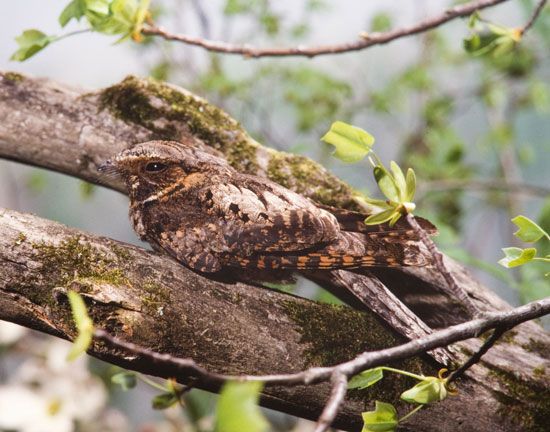
Potoos possess several remarkable adaptations that facilitate their nocturnal lifestyle in the American tropics. Their most notable defense is their plumage, which features complex patterns of gray, black, and brown that mimic the appearance of tree bark.5
During the day, potoos remain motionless, perched vertically on stumps or broken branches. When alarmed, they adopt a specialized “broken-branch” posture: they flatten their feathers, stretch their bills upward, and keep their eyes nearly closed, rendering them virtually indistinguishable from dead wood.158
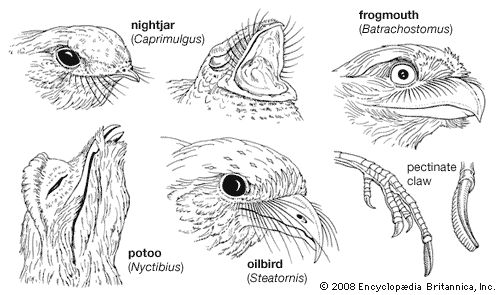
For nocturnal activity, potoos are equipped with exceptionally large eyes, which allow them to spot moths and other flying insects in the dark. They also possess an astonishingly wide, gaping mouth, which acts as a highly effective tool for capturing prey during their quick, silent, and short hunting flights. These physical traits, combined with their solitary nature and cryptic behavior, make them highly specialized predators within the order Caprimulgiformes.581
Sources
- Potoo — Encyclopædia Britannica
- potoo — Merriam-Webster
- Caprimulgiform - Reproduction — Encyclopædia Britannica
- Caprimulgiform - Food habits — Encyclopædia Britannica
- Caprimulgiform - Natural history — Encyclopædia Britannica
- bat - Activity patterns — Encyclopædia Britannica
- bat - Food habits — Encyclopædia Britannica
- Caprimulgiform - Form and function — Encyclopædia Britannica
Published on · 3 min read